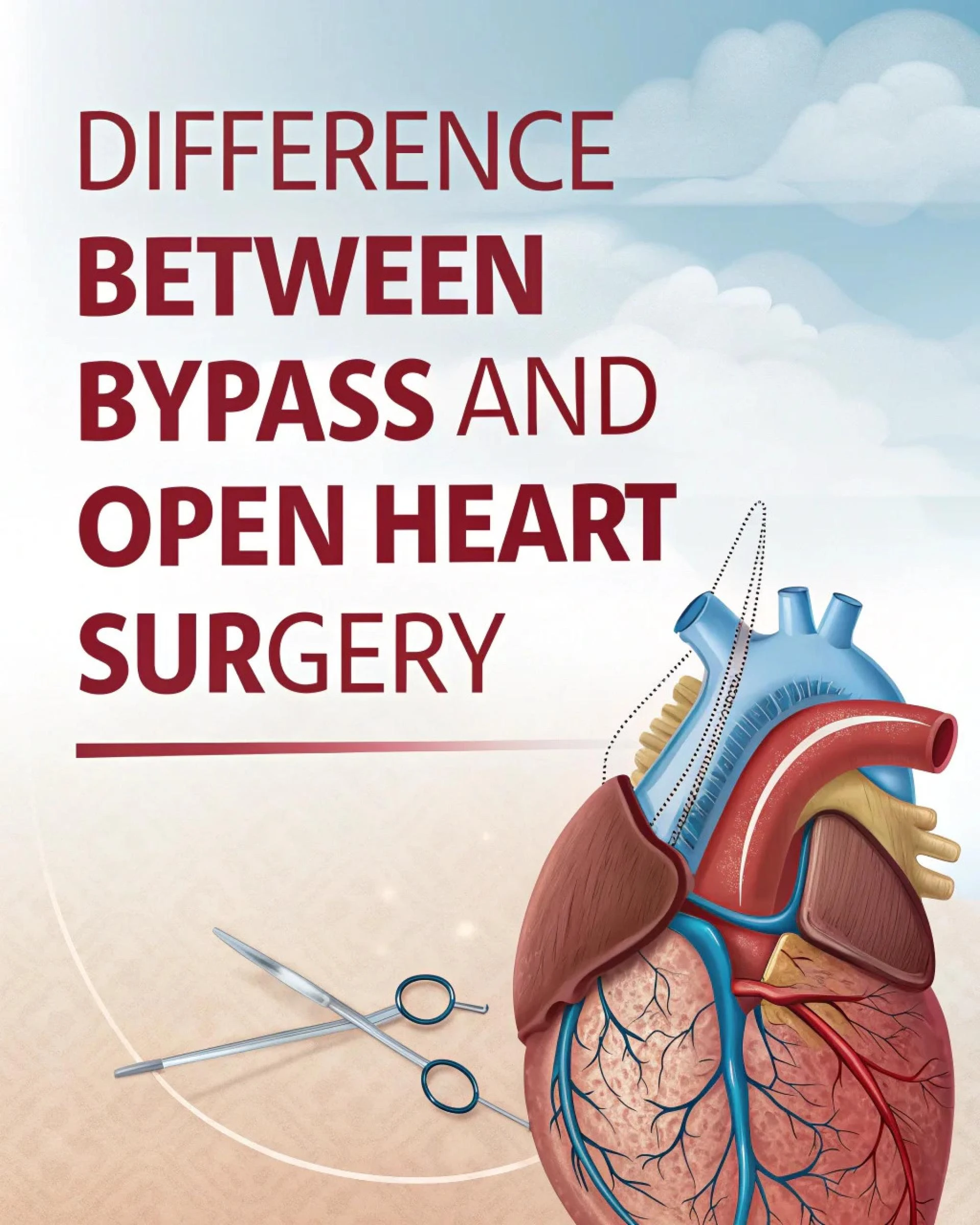

When people hear that they need heart surgery, terms like bypass and open-heart surgery can sound confusing and intimidating. Many patients believe both are identical, but in reality, they serve different purposes. Learning the difference between bypass and open heart surgery is essential for making informed decisions about cardiac care and treatment options.
This guide breaks down these two major procedures—what they mean, how they differ, and what to expect before and after surgery.
At a Glance: Quick Overview
Open Heart Surgery
- A broad category of surgical operations involving opening the chest and working directly on the heart.
- Performed to repair valves, fix congenital defects, replace heart sections, or carry out transplants.
- Usually requires a heart-lung machine (cardiopulmonary bypass).
- Recovery time: 6–12 weeks on average.
Bypass Surgery (CABG)
- A specific type of open-heart surgery.
- Performed to bypass blocked coronary arteries and restore proper blood flow.
- Uses veins or arteries taken from the patient’s own body.
- Recovery time: typically 6–10 weeks.
Key takeaway:
All bypass surgeries are open-heart surgeries, but not every open-heart surgery is a bypass. The difference between bypass and open heart surgery lies mainly in the condition being treated.
Why Heart Surgery Is Needed
Your heart works tirelessly to pump blood throughout your body, but when coronary arteries narrow due to plaque buildup (atherosclerosis), blood flow decreases. This leads to chest pain, breathlessness, and increased heart attack risk.
Surgery becomes necessary when medications or less invasive treatments (like stenting) can’t solve the issue.
Common Reasons for Heart Surgery
- Blocked coronary arteries
- Damaged or leaking heart valves
- Structural heart defects present at birth
- Heart failure or weakened heart muscles
- Life-threatening rhythm disorders
What Is Open Heart Surgery?
Open-heart surgery refers to procedures in which surgeons open the chest (sternotomy) to operate directly on the heart. The patient is placed under general anesthesia, and a heart-lung machine temporarily takes over the function of the heart and lungs during surgery.
This allows surgeons to perform delicate repairs on a still, blood-free heart.
Common Types of Open-Heart Surgeries
- Heart valve replacement or repair
- Congenital heart defect correction
- Coronary artery bypass grafting (CABG)
- Heart transplant
- Aortic aneurysm repair
- Maze procedure for arrhythmias
What Is Bypass Surgery?
Bypass surgery, also known as Coronary Artery Bypass Grafting (CABG), is specifically designed to treat coronary artery disease (CAD).
When one or more arteries supplying blood to the heart muscle become blocked, surgeons create a “bypass” route using healthy blood vessels taken from other parts of the body — usually the leg (saphenous vein), arm (radial artery), or chest (mammary artery).
Procedure Steps
- General anesthesia is administered.
- A chest incision (6–8 inches) is made to access the heart.
- Healthy vessels (grafts) are harvested from the body.
- Grafts are connected above and below the blocked sections of the artery.
- Blood flow is rerouted through the grafts, restoring oxygen supply.
- The heart is restarted, and the chest is closed with surgical wires.
The number of grafts determines the type — single, double, triple, or quadruple bypass.
The Difference Between Bypass and Open Heart Surgery
Comparison FactorOpen Heart SurgeryBypass Surgery (CABG)DefinitionAny surgery that involves opening the chest to operate on the heartA specific open-heart surgery to bypass blocked arteriesPurposeRepairs valves, defects, or replaces heart tissueRestores blood flow in blocked coronary arteriesHeart-Lung MachineCommonly usedUsed in most CABG operationsTarget DiseaseMultiple heart conditionsCoronary artery disease onlyRecovery Period6–12 weeks6–10 weeksScopeBroad categoryOne specialized procedure
In simple terms:
Bypass surgery is one type of open-heart surgery. The difference between bypass and open heart surgery lies in the scope — open-heart surgery includes many different operations, while bypass surgery specifically focuses on improving heart blood flow.
Step-by-Step: How the Procedures Differ
Open Heart Surgery Process
- Surgeon opens the chest (sternotomy).
- Heart is stopped using medication.
- Cardiopulmonary bypass machine supports blood circulation.
- Damaged heart parts (valves or chambers) are repaired or replaced.
- The heart is restarted and chest closed.
Bypass Surgery Process
- The goal is to redirect blood around blocked arteries.
- Veins or arteries from elsewhere in the body are used as grafts.
- The surgery can be performed on-pump (heart stopped) or off-pump (heart beating).
The difference between bypass and open heart surgery becomes clear in these steps — bypass is about rerouting blood flow, while open-heart surgery can address various heart issues.
Recovery and Aftercare
Hospital Stay
- Most patients stay 5–7 days after surgery.
- ICU observation for the first 24–48 hours.
Home Recovery
- Rest and gradual walking encouraged.
- Avoid heavy lifting or driving for six weeks.
- Follow a heart-healthy diet and prescribed medications.
- Attend cardiac rehabilitation sessions for guided exercise and recovery.
Full Recovery Time
- Bypass: 6–10 weeks
- Other open-heart surgeries: 8–12 weeks
Possible Risks:
Bleeding, infection, irregular heartbeat, stroke, or temporary memory issues. These are minimized when surgery is performed in accredited cardiac centers.
Cost of Surgery
Type of SurgeryGovernment/Trust Hospital (₹)Private Hospital (₹)Abroad (USD)Single Bypass2,00,000 – 3,50,0004,00,000 – 6,00,00015,000 – 25,000Multiple Bypass3,00,000 – 5,00,0005,00,000 – 8,00,00025,000 – 45,000Valve Replacement2,50,000 – 4,50,0004,50,000 – 7,00,00020,000 – 40,000Heart Transplant10,00,000 – 20,00,00015,00,000 – 30,00,00080,000 – 150,000
Government programs like Ayushman Bharat and private insurance can help cover the expenses of cardiac surgeries.
When Is Bypass Surgery Recommended?
Bypass surgery is suggested when:
- Angioplasty or stenting is not possible.
- Multiple coronary blockages are found.
- Severe chest pain or breathlessness persists.
- The left main coronary artery is significantly narrowed.
- The patient has diabetes with multivessel coronary disease.
Types of Open Heart Surgery
- Coronary Artery Bypass Grafting (CABG)
- Heart Valve Repair or Replacement
- Aortic Surgery for Aneurysm or Dissection
- Congenital Heart Defect Repairs
- Heart Transplant Surgery
- Maze Procedure for Arrhythmias
Living After Heart Surgery
- Begin light walking as soon as your doctor allows.
- Follow a low-salt, low-fat diet.
- Take medications on time (blood thinners, statins, beta-blockers).
- Attend all follow-up appointments.
- Manage stress and sleep adequately.
- Avoid tobacco and alcohol completely.
Maintaining a heart-healthy lifestyle is the best way to ensure long-term success after surgery.
Which Procedure Is Better?
Neither surgery is “better” — it depends on your heart condition.
- Bypass surgery is ideal if coronary arteries are blocked.
- Other open-heart surgeries are necessary if there are valve problems, congenital issues, or structural heart diseases.
Your cardiologist and cardiac surgeon will decide which procedure offers the best long-term result.
Conclusion: Knowing the Difference Between Bypass and Open Heart Surgery
Understanding the difference between bypass and open heart surgery gives patients clarity and confidence during the treatment process.
Open-heart surgery refers to a broad group of operations where the heart is accessed through the chest, while bypass surgery specifically targets blocked coronary arteries to restore normal blood flow.
Both procedures save lives every day and continue to improve outcomes thanks to advances in surgical techniques and cardiac care.
Post-Surgery Checklist
- Follow a healthy diet and regular exercise routine.
- Take medications exactly as prescribed.
- Join a cardiac rehab program.
- Keep blood pressure, sugar, and cholesterol under control.
- Schedule routine checkups with your cardiologist.
With proper care and medical supervision, most patients return to normal life stronger and healthier than before.




























Sign in to leave a comment.