
As a doctoral researcher immersed in the field of biochemistry, I find myself constantly exploring the intricacies of various biochemical agents and their applications. One such agent that stands out prominently in the realm of protein research is Sodium Dodecyl Sulfate (SDS). This article delves into the multifaceted role of SDS, elucidating its biochemical properties, mechanisms of action, and diverse applications in biochemical research.
Biochemical Properties of SDS:
SDS, chemically known as sodium lauryl sulfate, is a potent anionic detergent with a hydrophobic alkyl tail and a hydrophilic sulfate head group. This unique structure imparts amphipathic properties to SDS, allowing it to solubilize and denature proteins effectively. In aqueous solutions, SDS molecules form micelles wherein the hydrophobic tails cluster inward, shielding themselves from the surrounding water molecules, while the hydrophilic head groups orient outward, interacting with the aqueous environment.
https://www.dnatestingexperts.com/sds-sodium-dodecyl-sulfate-what-does-sds-do-in-dna-extraction/
Mechanism of Action:
The primary mechanism of action of SDS lies in its ability to disrupt the non-covalent interactions stabilizing protein structure. Upon exposure to SDS, proteins undergo denaturation as SDS molecules bind to the hydrophobic regions of the protein, effectively masking their hydrophobic surfaces. This results in the unfolding of the protein into a linear polypeptide chain, with the bound SDS molecules conferring a net negative charge proportional to the protein\'s length. Consequently, the denatured proteins adopt a uniform negative charge per unit mass, facilitating their separation based on size during electrophoresis.
Applications in Biochemical Research:
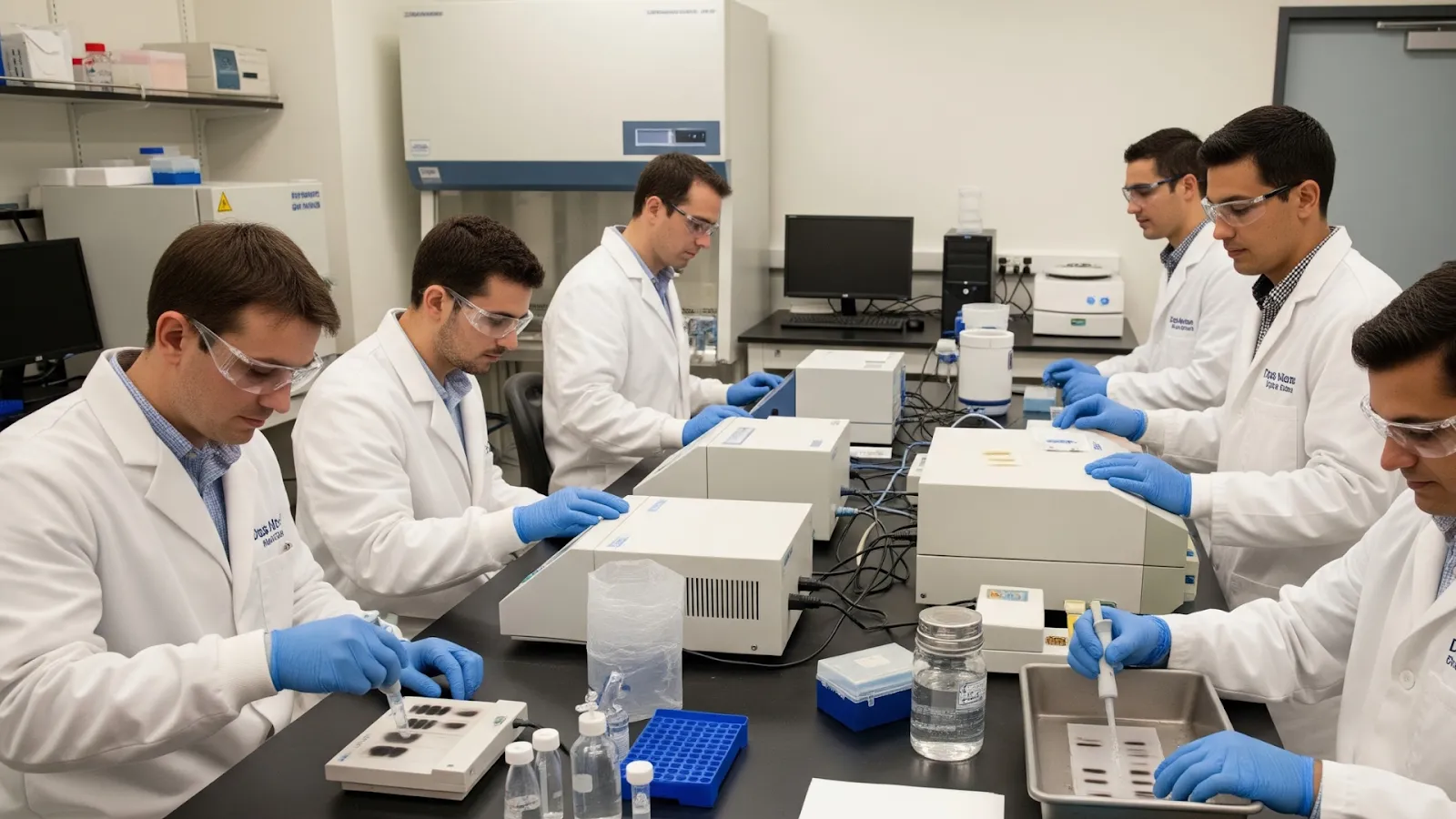
SDS-PAGE (Polyacrylamide Gel Electrophoresis): SDS finds widespread use in SDS-PAGE, a fundamental technique employed for separating proteins based on their molecular weight. In this technique, proteins are first denatured by SDS and β-mercaptoethanol to disrupt disulfide bonds. Subsequently, the denatured proteins are loaded onto a polyacrylamide gel matrix and subjected to electrophoresis under denaturing conditions. SDS imparts a negative charge to the proteins proportional to their size, facilitating their migration through the gel matrix. Upon completion of electrophoresis, proteins can be visualized, quantified, and analyzed based on their molecular weight.
Protein Purification: SDS is also utilized in protein purification protocols to solubilize and denature proteins, thereby facilitating their extraction from cellular lysates or inclusion bodies. SDS can efficiently disrupt protein-protein interactions, membranes, and other cellular structures, enabling the isolation of target proteins with high purity.
Protein Characterization: Beyond its role in protein separation, SDS enables the characterization of proteins by determining their molecular weight, subunit composition, and oligomeric state. By comparing the migration of protein standards of known molecular weights with target proteins on SDS-PAGE gels, researchers can accurately estimate the molecular weight of unknown proteins.
Western Blotting: In Western blotting, SDS-PAGE is often coupled with immunoblotting techniques to detect specific proteins within complex biological samples. Following electrophoresis, proteins are transferred onto a membrane and probed with specific antibodies to identify and quantify the target protein of interest.
Structure-Function Studies: SDS-mediated denaturation facilitates structure-function studies of proteins by disrupting their native conformation. By analyzing the effects of denaturation on protein activity, stability, and interactions, researchers can gain insights into the functional roles of specific protein domains and amino acid residues.
Conclusion:
In conclusion, Sodium Dodecyl Sulfate (SDS) stands as a cornerstone in biochemical research, offering invaluable tools for protein solubilization, denaturation, separation, and characterization. Its amphipathic nature, coupled with its ability to impart uniform negative charge to proteins, underpins its widespread applications in techniques such as SDS-PAGE, protein purification, Western blotting, and structure-function studies. As researchers continue to unravel the complexities of cellular processes and molecular interactions, SDS remains an indispensable ally in the pursuit of scientific discovery and understanding.

























Sign in to leave a comment.