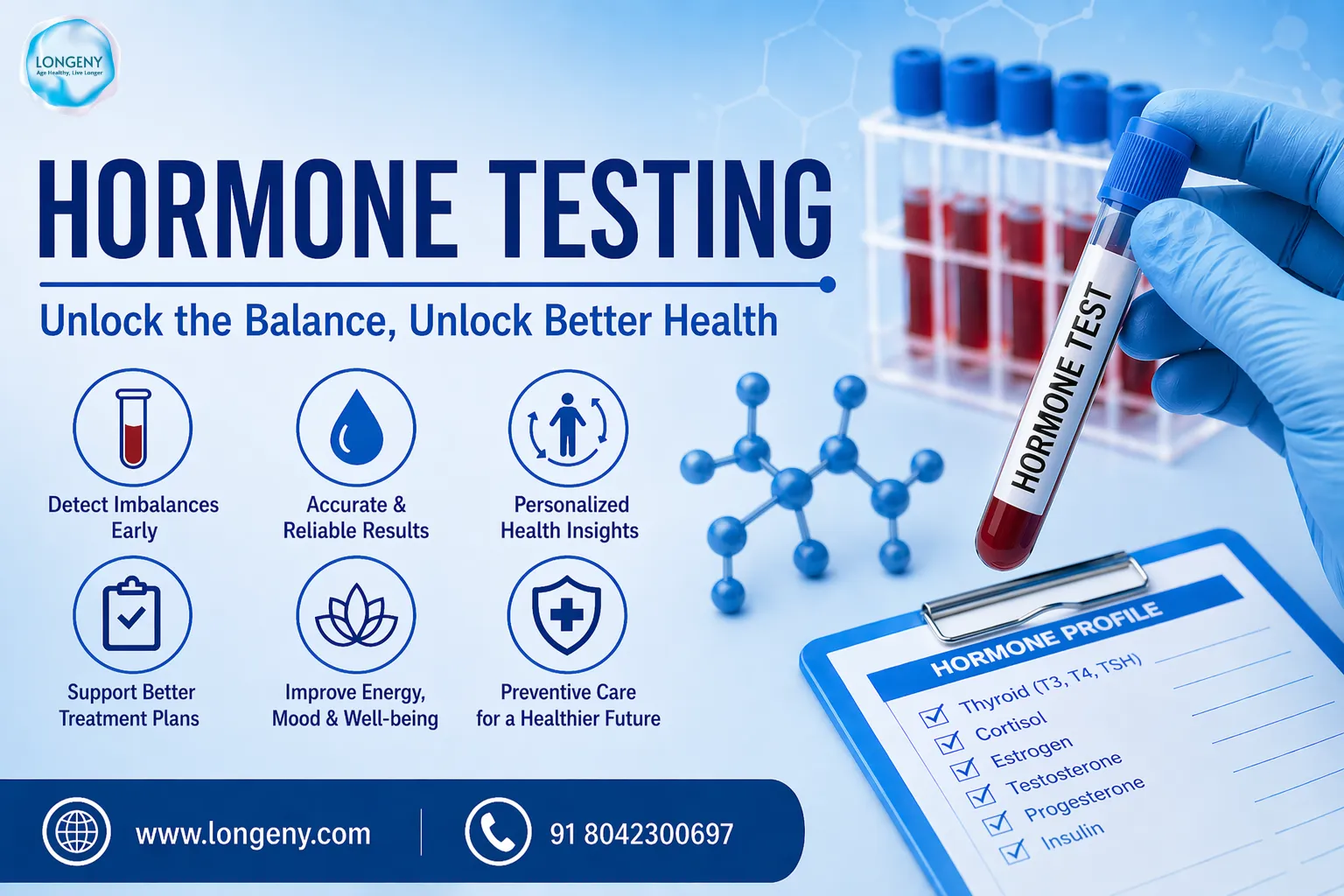

The human body speaks subtly, and in most cases, it tends to be able to help in creating signs of imbalances way before they become visible. Listening to these inner signals can result in some serious changes in long-term health. Hormone testing is one of the most efficient methods to decipher these signals and one of the potent diagnostic methods that allows detecting fluctuations and imbalances that could otherwise remain unnoticed. Understanding their hormone levels will help people learn more about their general health and take action to improve their health management.
What is Hormone Testing?
Hormones are chemical substances that control vital body processes like metabolism, mood, growth, sleep, and even reproduction. Hormone testing is the measurement of the amount of certain hormones in the body by blood, saliva, or urine samples. These examinations are meant to identify the abnormalities that may be associated with different health problems. Be it thyroid imbalance, reproductive or stress related disorders, the knowledge of hormone levels will give one clarity and direction on how to treat or change lifestyle.
The importance of the balance of hormones.
Balancing hormones is necessary for physical and emotional stability. Any little imbalance can result in observable alterations in the functioning of your body.
For example, irregular hormone levels may result in:
- Persistent fatigue
- Anxiety or mood swings.
- Gaining weight or losing weight problems.
- Sleep disturbances
- Reduced energy levels
Ignored, these symptoms may eventually affect the overall quality of life. Early intervention and improved health outcomes are achievable by determining the root cause using tests.
Types of Hormone Tests
Hormone testing is not a one-size-fits-all approach. The tests vary according to the symptoms and health concerns.
1. Blood Tests
Blood tests are the most prevalent technique, and they test the level of hormones at a certain moment. They are commonly used to test thyroid hormones, estrogen, testosterone, and cortisol.
2. Saliva Tests
Measuring the level of free hormones, especially stress hormones such as cortisol, is usually performed through saliva testing. It may give information about the day-to-day hormonal changes.
3. Urine Tests
Urine testing compares metabolites of hormones as a time course, providing a bigger picture of hormonal activity and balance.
All the methods have their merits, and medical specialists suggest the most appropriate one depending on personal needs.
Who ought to think of Hormone Testing?
Hormone testing is effective in people with unexplained symptoms or those interested in improving their health. It is particularly helpful for:
- Women with abnormal menstrual cycles or changes in menopause.
- Men with low energy or low testosterone levels.
- Patients with chronic stress or burnout.
- Individuals with unaccounted weight gain or loss.
- Everybody with an interest in preventive healthcare.
Instead of letting the ailments progress, there is early testing, which can aid in detecting imbalances before they turn into severe ailments.
Common Hormones Evaluated
Depending on the reason why a hormone test is conducted, a detailed hormone test can include some of the most important hormones.
- Thyroid Hormones (T3, T4, TSH): Control metabolism and energy.
- Cortisol: This hormone is referred to as the stress hormone.
- Estrogen and Progesterone: Crucially important in reproductive health.
- Testosterone: Affects muscle mass, energy, and mood
- Insulin: Helps in regulating blood sugar.
Keeping track of these hormones will assist in developing a better understanding of the way your body operates internally.
Symptoms: You could be in need of hormone testing
The initial symptoms of hormonal imbalance are ignored by many individuals. Being aware of these symptoms can lead to early testing and treatment.
- Weight gain or loss, acute.
- Sleepiness even after taking sufficient rest.
- Skin or hair problems or thinning.
- Low libido
- Difficulty concentrating
All these symptoms are usually ignored and are considered as transient problems, yet they could be indicative of underlying hormonal problems that need to be addressed.
Benefits of Hormone Testing
Hormone testing does not only provides a diagnosis to people but also provides them with knowledge and power over their health.
Early Detection
Early detection of imbalances will help to avoid complications in the long term.
Personalized Treatment
The results of the tests assist the health care providers in drawing specific treatment plans based on the needs of the person.
Enhanced Quality of Life
Hormonal problems may be dealt with and result in improved energy levels, stability of mood, and well-being.
Preventive Care
Frequent checkups can keep the body on track and minimise the chances of chronic illnesses.
Prior to taking a Hormone Test
The correct preparation guarantees correct results. Although instructions can be different based on the type of test, there are some general guidelines, such as:
- Starvation is needed prior to having a blood test.
- Avoiding some drugs or supplements (as recommended)
- Placing tests at certain points in time of the day or month.
- Sleeping before the test: normal sleeping is observed.
These steps will enable the enhancement of the reliability of the results.
The Hormonal Health of Lifestyle
Although testing is a good way to get insights, daily habits are also important in maintaining hormonal balance. Lifestyle influences are important in facilitating the optimum hormone activity.
Nutrition: A healthy and balanced diet with high amounts of whole foods helps the production of hormones.
Exercise: Physical activity can be used to control hormones.
Sleep: Adequate sleep is a necessity in hormonal revitalization.
Stress Management: Stress reduction avoids the imbalance of cortisol.
The integration of testing and healthy lifestyle decisions forms a powerful support base towards sustained health.
Preventive Healthcare and Hormone Testing
Preventive healthcare is concerned with detecting possible problems before they are severe. An important part of this approach is the use of hormone testing, which provides some early information on internal imbalances. People are able to be proactive about their health instead of responding to symptoms. Such a change not only enhances the present health but also lessens the chances of developing complications in the future.
Looking Beyond: A Whole Person Approach to Health
Health is not described based on a single parameter, but the equilibrium of many systems in harmony with one another. Metabolism, immunity, and mental well-being are closely related to hormonal health. Taking this in the larger context, incorporating more sophisticated diagnostics into the regimen of a longevity test can give you more information about aging, cellular health, and vitality. These tests are used in complement to hormone analysis, to provide a more in-depth perspective of long term health and wellness.
Frequently Asked Questions (FAQs)
What is hormone testing used for?
Hormone testing is used to evaluate the levels of hormones in the body and detect imbalances that may affect health, mood, metabolism, and reproductive functions.
Is hormone testing necessary for everyone?
Not everyone requires routine hormone testing, but it is beneficial for individuals experiencing symptoms of imbalance or those interested in preventive health monitoring.
How often should hormone testing be done?
The frequency depends on individual health conditions and goals. Some people may need it annually, while others may require more frequent monitoring.
Are hormone tests accurate?
Yes, when conducted under proper conditions and interpreted by healthcare professionals, hormone tests provide reliable and valuable insights.
Can lifestyle changes improve hormone balance?
Absolutely. Diet, exercise, sleep, and stress management all play a significant role in maintaining healthy hormone levels.
































Sign in to leave a comment.