
In 2026, the global business environment is characterized by "perpetual disruption." Organizations are no longer just fighting for market share; they are fighting for operational resilience. A Certified Lean Manager is the architect of this resilience, transforming a company from a rigid, "heavy" entity into a sleek, responsive competitor.
Here is how the role of a Lean Manager has been redefined for modern business success.
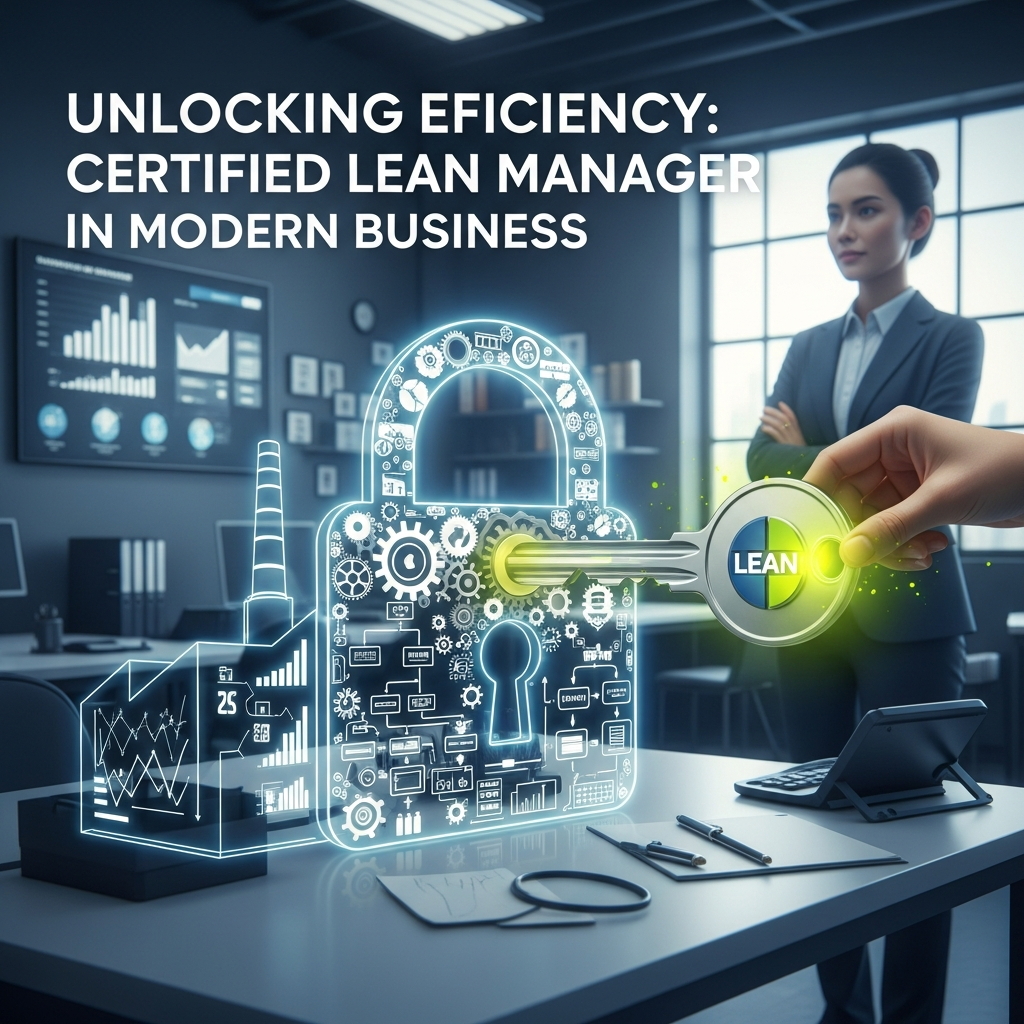
1. Navigating the "Digital Lean" Frontier
In the past, Lean was about sticky notes on whiteboards. In 2026, a Certified Lean Manager masters Digital Lean, where traditional principles meet advanced tech.
- Process Mining: Instead of manual observation, they use software to "mine" system logs, automatically generating real-time value stream maps that reveal bottlenecks hidden in digital workflows.
- Predictive Waste Removal: Using AI-driven analytics, they identify "invisible waste," such as server over-provisioning, API latency, or digital "dead ends" in a customer’s journey.
- IoT-Enabled Gemba: They lead "Digital Gemba Walks," using real-time data from IoT sensors to see exactly where flow is breaking down on a production floor or in a distributed remote team.
2. Optimizing Hybrid and Remote Workflows
One of the most critical roles of a Lean Manager today is applying efficiency to distributed teams. They prevent the "Zoom fatigue" and "Slack clutter" that act as the modern version of overproduction.
- Asynchronous Flow: They design "pull systems" for information, ensuring employees get the data they need exactly when they need it, rather than being buried under "just-in-case" emails.
- Virtual Kanban: They maintain digital clarity, ensuring that work-in-progress (WIP) is visible across time zones, preventing team burnout caused by "hidden" workloads.
3. The "Human-Centric" Efficiency Leader
A Lean Manager in 2026 isn't a "hatchet man" looking to cut costs; they are a Cultural Catalyst. They understand that true efficiency is impossible without high employee engagement.
- Psychological Safety: They empower frontline workers to "stop the line" (Andon) when they spot a defect—even in a software sprint or a marketing campaign—without fear of reprisal.
- Kaizen as a Perk: They frame continuous improvement as a way to remove the "frustrating" parts of a job, making work more meaningful by eliminating repetitive, non-value-added tasks.
4. Driving Environmental & Economic Sustainability (Green Lean)
In 2026, "Lean" and "Green" are inseparable. A Certified Lean Manager is often the primary driver of an organization’s ESG (Environmental, Social, and Governance) goals.
- Resource Circularity: They apply Lean principles to reduce energy consumption, water waste, and carbon footprints, proving that sustainability is actually a byproduct of extreme efficiency.
- Ethical Supply Chains: By establishing "pull systems" with suppliers, they ensure that the company only orders what it needs, reducing the massive environmental cost of excess inventory and logistics.
📊 Summary of Modern Impact
| Traditional Lean Role | Modern 2026 Lean Manager |
| Focus on Manufacturing | Focus on Services, Tech, and Digital Ops |
| Periodic "Kaizen Events" | Continuous AI-augmented improvement |
| Manual Data Collection | Real-time dashboards and predictive insights |
| Cost-Cutting Mandate | Value-Creation and Sustainability Mandate |






















Sign in to leave a comment.