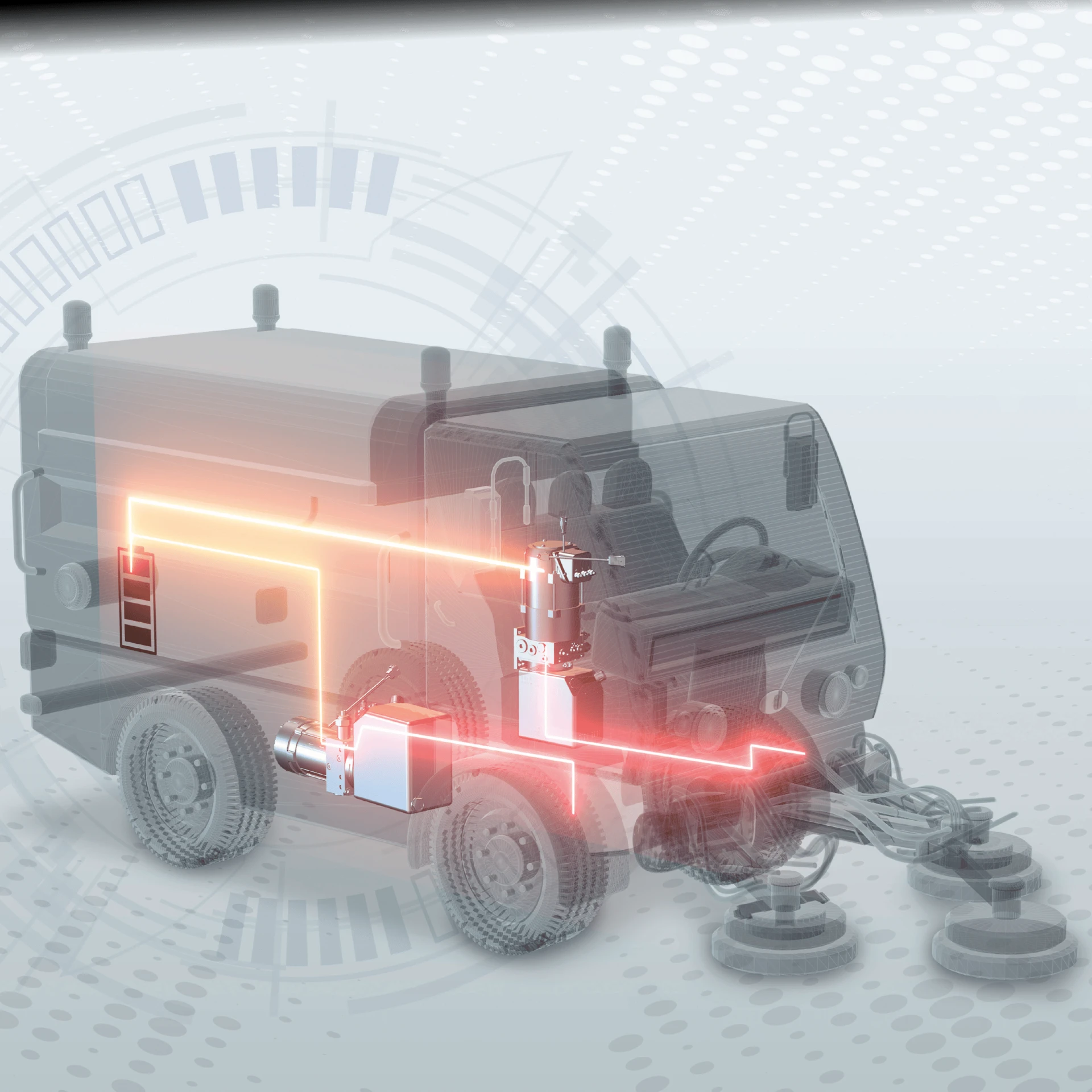
The year is 2026, and the rhythmic "dawn chorus" of a modern city has changed. The abrasive roar of diesel-powered garbage trucks and the high-pitched whine of hydraulic street sweepers have been replaced by a nearly silent hum.
This isn’t just a victory for local noise ordinances; it is the visible manifestation of a profound technological shift. We are witnessing the birth of the Autonomous City, where electric municipal machines have transitioned from passive tools to intelligent, self-sustaining nodes in an urban ecosystem.
The Shift to "Invisible" Operations
For decades, municipal maintenance was a reactive, labor-intensive industry. Today, the transition toward electromobility serves as the essential foundation for automation; without the constant vibrations and extreme heat of internal combustion engines, sensitive sensors like LiDAR and high-resolution cameras operate with significantly higher reliability and precision.
Small, autonomous electric sweepers and lawnmowers now navigate parks and bike lanes overnight. These machines aren't just cleaning; they are data-gathering hubs. Using AI-driven computer vision, a sweeper can identify a pothole, log its coordinates, and automatically trigger a work order for a repair crew before a citizen even reports it.
Bridging the Energy Gap: V2G and Wireless Charging
The primary challenge of 2026 isn't battery capacity—it’s grid management. With the "AI Power Crunch" straining city infrastructures, municipal fleets are evolving into Virtual Power Plants (VPPs).
Through Vehicle-to-Grid (V2G) technology, a fleet of electric school buses or waste trucks acts as a giant distributed battery. During peak afternoon heat, these vehicles discharge stored energy back into the city grid to prevent brownouts. Conversely, they charge overnight when wind and solar energy are abundant and cheap.
Furthermore, we are moving away from the "stop and plug" model. Pioneering cities are implementing dynamic wireless charging—inductive pads embedded beneath the asphalt at bus stops and loading docks. This allows machines to "snack" on power throughout the day, enabling smaller, lighter batteries and 24/7 operational uptime.
The Circular Economy of Volts
Sustainability in 2026 is no longer just about tailpipe emissions; it’s about the lifecycle of the machine. When a municipal truck's battery reaches 80% capacity—no longer ideal for heavy-duty hauling—it isn't scrapped. Instead, these batteries are being transitioned into "second-life" stationary storage for city buildings, powering everything from streetlights to emergency shelters.
The Human Element
Critics once feared that automation would erase municipal jobs. Instead, the role of the city worker is being upskilled. The "driver" of yesterday is the "fleet orchestrator" of today, managing a swarm of autonomous units via a digital twin of the city. This shift has reduced workplace injuries and eliminated the inhalation of toxic fumes for thousands of public servants.
Conclusion: A Responsive Urban Organism
The electrification of municipal machines was the first step; their "intelligence" is the second. We are moving toward a city that maintains itself—a responsive urban organism that cleans, repairs, and powers itself with surgical precision. For the modern taxpayer, the result is a city that is not only cleaner and quieter but more fiscally resilient.
























Sign in to leave a comment.