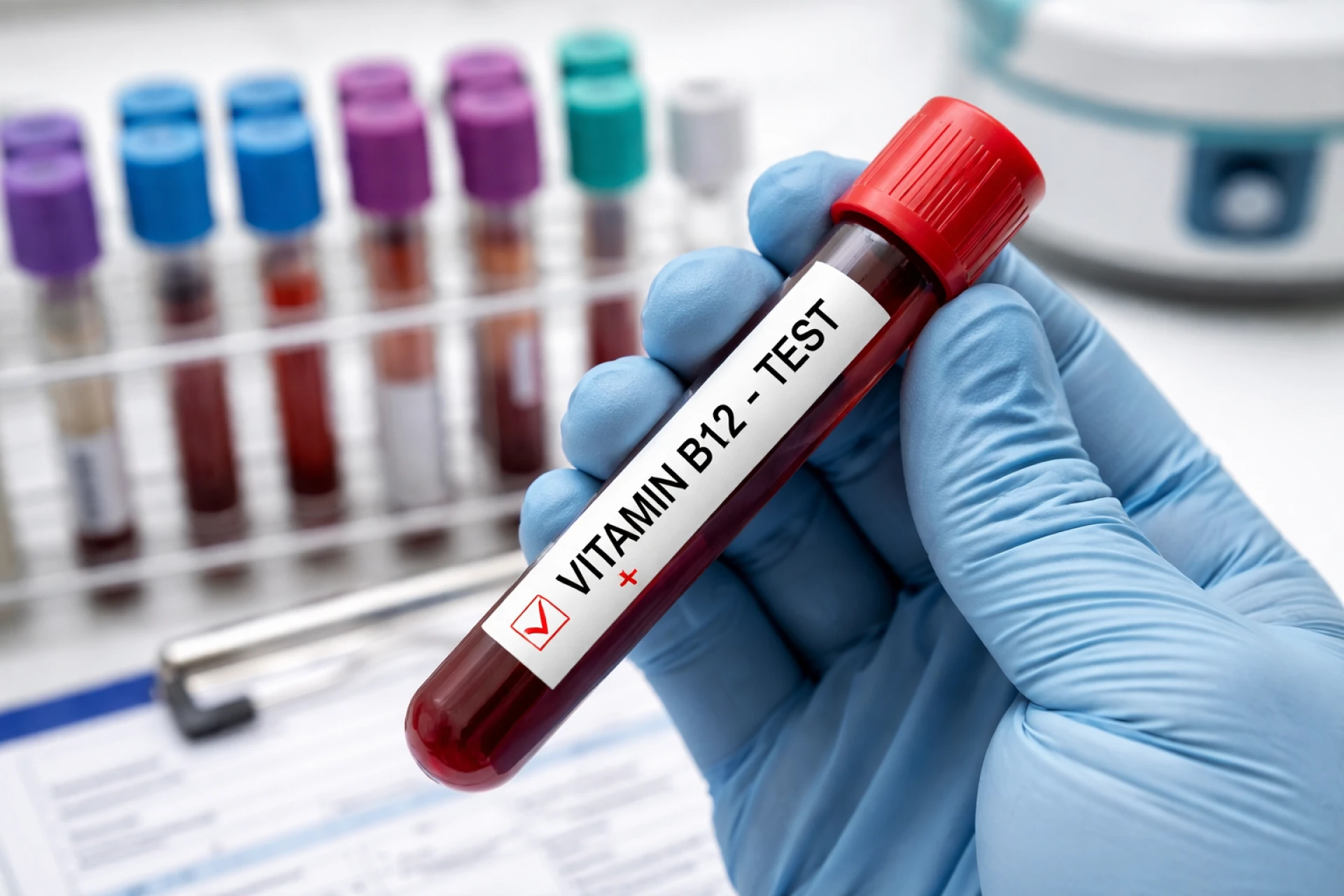

Many people ignore symptoms like tiredness, low energy, poor focus, or frequent weakness thinking it is just stress. But sometimes these symptoms may indicate Vitamin B12 deficiency. A Vitamin B12 blood test helps identify whether your body is lacking this essential nutrient.
This test is important because Vitamin B12 supports your nervous system, helps in oxygen circulation through red blood cells, and keeps your brain active. If deficiency is detected early, it can be corrected easily through diet or treatment.
Quick understanding of the test:
• Detects Vitamin B12 deficiency
• Helps find the cause of weakness
• Important for brain and nerve health
• Recommended in fatigue cases
• Supports preventive health monitoring
How do you know if you might have low Vitamin B12?
Your body often gives warning signs before deficiency becomes severe.
Common early warning signs include:
• Feeling tired even after proper sleep
• Low stamina during routine work
• Frequent headaches
• Reduced concentration
• Irritability
• Mild numbness in fingers
• Feeling mentally slow
If these signs appear regularly, testing may help identify the cause.
What problems can happen if Vitamin B12 deficiency is ignored?
Ignoring deficiency for a long time can lead to serious health problems.
Possible complications include:
• Chronic fatigue
• Nerve weakness
• Anemia
• Memory decline
• Balance issues
• Burning sensation in feet
• Mood disorders
Early diagnosis makes treatment simple and effective.
How does Vitamin B12 affect your daily energy levels?
Vitamin B12 helps in red blood cell formation. These cells carry oxygen throughout the body. When Vitamin B12 becomes low:
• Oxygen supply reduces
• Muscles feel weak
• Brain gets less energy
• You feel tired faster
• Recovery becomes slow
This is why people with deficiency often complain of low productivity and tiredness.
Can lifestyle increase the risk of Vitamin B12 deficiency?
Yes. Modern lifestyle habits can increase deficiency risk.
Common lifestyle causes:
• Skipping balanced meals
• Excess junk food
• Poor protein intake
• Long term dieting
• Excess tea or coffee
• Stress related eating habits
Improving nutrition can reduce risk.
Can Vitamin B12 deficiency happen even if you eat properly?
Yes. Sometimes deficiency is not related to diet but absorption problems.
Possible causes include:
• Weak digestion
• Gut health problems
• Long term medication use
• Diabetes medicines
• Age related absorption issues
This is why testing becomes important instead of guessing.
What happens during the testing process?
The Vitamin B12 test is simple and stress free.
What you can expect:
• Blood sample from arm vein
• Takes only a few minutes
• No major pain
• No recovery time required
• Resume daily routine immediately
It is one of the most basic health tests.
What small precautions improve test accuracy?
For accurate results:
• Inform about supplements
• Follow doctor advice
• Avoid self medication
• Share medical history
• Follow testing instructions
Small precautions ensure correct diagnosis.
Can Vitamin B12 levels be improved naturally?
Yes. Mild deficiency can often be improved with diet changes.
Helpful habits include:
• Including dairy products
• Adding protein rich foods
• Taking fortified foods
• Improving gut health
• Following regular meal timing
Moderate or severe deficiency may require medical treatment.
Why do doctors include Vitamin B12 in preventive health checkups?
Preventive health testing helps detect silent deficiencies.
Doctors include this test because:
• Deficiency symptoms appear late
• Many people have hidden deficiency
• Early correction prevents complications
• Helps maintain long term energy
• Supports healthy ageing
Preventive testing is becoming common in routine health checkups.
What are the long term benefits of maintaining normal Vitamin B12 levels?
Maintaining proper Vitamin B12 levels supports:
• Stable energy levels
• Better concentration
• Healthy nervous system
• Improved metabolism
• Healthy blood formation
• Better immunity response
Balanced nutrition supports long term wellness.
FAQs About Vitamin B12 Blood Test
Can Vitamin B12 deficiency cause daily tiredness?
Yes. It reduces healthy red blood cell formation which affects oxygen supply and causes fatigue.
Is Vitamin B12 test part of routine blood tests?
Sometimes yes. It may be included in preventive health packages or advised based on symptoms.
Can stress reduce Vitamin B12?
Stress itself does not reduce B12 directly but poor eating habits during stress may contribute.
Is Vitamin B12 deficiency reversible?
Yes. In most cases deficiency can be corrected with supplements and diet if diagnosed early.
Can young people have Vitamin B12 deficiency?
Yes. Poor diet and lifestyle can cause deficiency even in young adults.
How do doctors decide treatment?
Treatment depends on:
• Test level
• Symptoms
• Diet pattern
• Medical history
• Severity of deficiency
Can low Vitamin B12 affect work performance?
Yes. Low levels can reduce focus, energy, and productivity.
Final Insight
A Vitamin B12 blood test is not just a test for deficiency. It is a simple way to understand why your body may feel low on energy or why your recovery feels slow. Many people live with deficiency without knowing the real cause of their symptoms.
Regular health awareness and timely testing can help you stay energetic, focused, and healthy.





























Sign in to leave a comment.