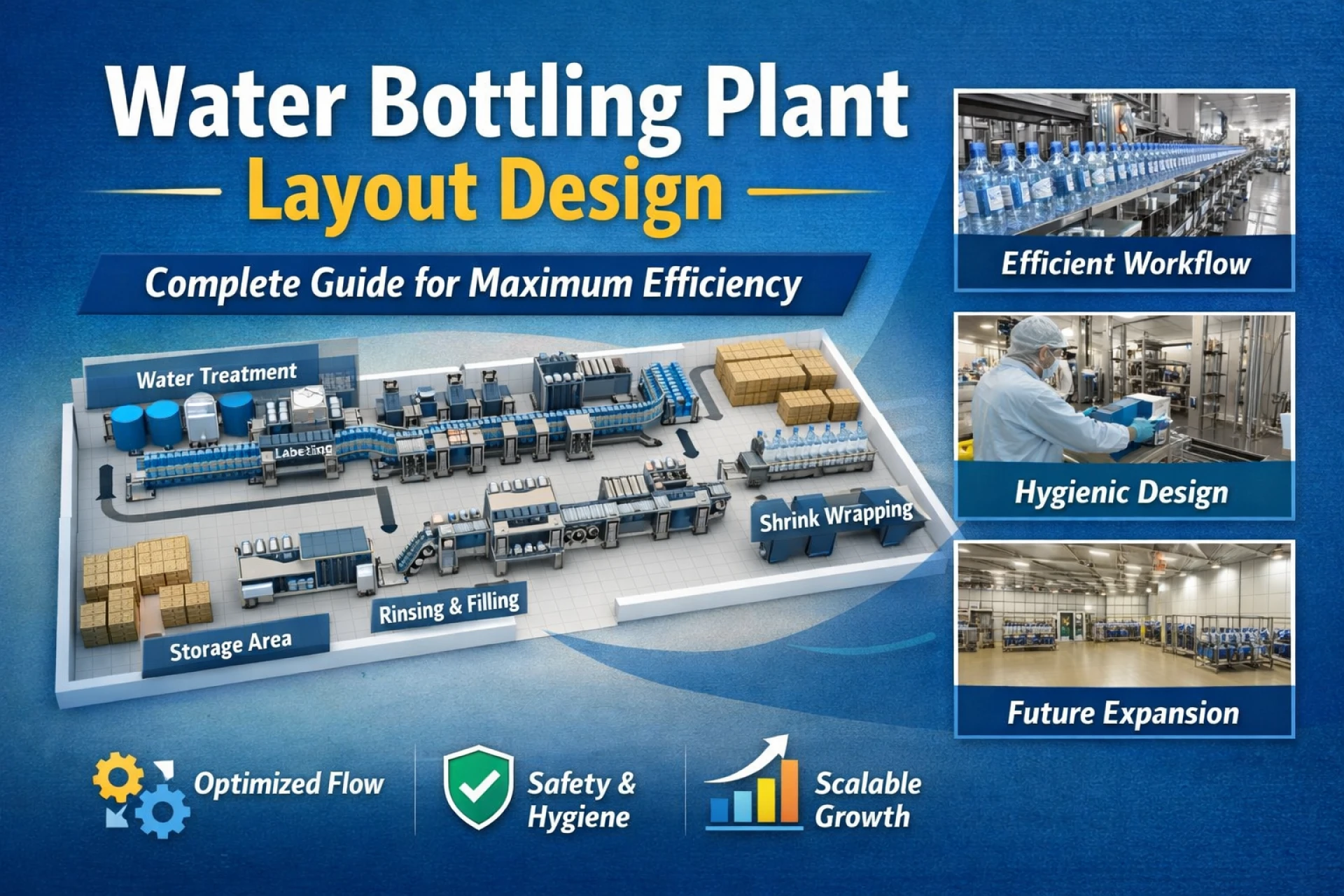

Water Bottling Plant Layout Design for Maximum Efficiency: Complete Guide
Designing an efficient water bottling plant layout is one of the most critical steps in setting up a successful packaged drinking water business. Even with high-quality machines, a poorly planned layout can lead to production delays, hygiene issues, higher operating costs, and frequent breakdowns. A well-structured layout, on the other hand, ensures smooth workflow, better space utilization, and long-term scalability.
This guide explains how to design a water bottling plant layout for maximum efficiency, focusing on practical, real-world considerations followed by experienced plant owners and Beverage Filling & Packaging Machinery Manufacturer recommendations.
Why Plant Layout Matters in Water Bottling
A water bottling plant involves multiple sequential processes—water treatment, bottle blowing or supply, rinsing, filling, capping, labeling, and packaging. The layout determines how smoothly these processes connect with each other.
An optimized layout helps:
- Reduce material handling time
- Minimize contamination risk
- Improve production speed
- Lower labor and energy costs
- Simplify maintenance and supervision
Efficiency in layout directly reflects in output consistency and product quality.
Step 1: Understand the Bottling Process Flow
Before designing the layout, clearly map the complete process flow:
- Raw water storage
- Water treatment (RO, UV, Ozonation)
- Treated water storage tank
- Bottle blowing or bottle feeding area
- Rinsing–Filling–Capping (RFC) section
- Labeling and coding
- Secondary packaging (shrink wrapping/carton packing)
- Finished goods storage
The layout should always follow a linear or U-shaped flow, avoiding backtracking or cross-movement of materials.
Step 2: Separate Wet and Dry Zones
One of the most common mistakes in plant design is mixing wet and dry operations. For hygiene and safety:
- Wet Zone: Water treatment, rinsing, filling, CIP systems
- Dry Zone: Labeling, coding, shrink wrapping, carton packing
Proper separation reduces electrical hazards, improves cleanliness, and ensures compliance with food safety standards.
Step 3: Optimize Space Utilization
Small and medium bottling plants often operate in limited factory space. Smart layout planning helps maximize output without overcrowding.
Key tips:
- Keep sufficient clearance around machines for maintenance
- Avoid tight corners that restrict bottle flow
- Use straight conveyors instead of zigzag paths
- Place control panels for easy operator access
Remember, congested layouts increase downtime and reduce machine life.
Step 4: Plan Utility Lines in Advance
Utilities like water pipelines, compressed air, drainage, and electrical cabling must be planned along with the layout—not after installation.
Best practices include:
- Overhead cable trays for electrical wiring
- Sloped drainage channels in wet areas
- Centralized air compressor location
- Easy access to CIP lines and pumps
Good utility planning prevents future dismantling and saves installation costs.
Step 5: Focus on Hygiene & Compliance
Regulatory bodies require strict hygiene controls in water bottling plants. Layout design plays a big role in compliance.
Important considerations:
- Dedicated hand-wash and foot-dip areas
- Controlled entry to filling zones
- Separate raw material and finished goods areas
- Smooth, washable flooring and walls
A hygienic layout not only meets standards but also builds brand trust.
Step 6: Allow Room for Future Expansion
Many plant owners regret designing layouts only for current capacity. Demand grows, and expansion becomes difficult without major reconstruction.
Always plan:
- Extra space for additional filling heads or machines
- Conveyor extensions
- Higher capacity packaging machines
- Future automation upgrades
A scalable layout saves capital expenditure in the long run.
Step 7: Safety and Workflow Efficiency
An efficient layout also protects workers and improves productivity.
Include:
- Clear walking paths for operators
- Emergency exits and fire safety zones
- Non-slip flooring
- Proper lighting across the production line
When operators move easily and safely, output naturally improves.
Conclusion
Water bottling plant layout design is not just about fitting machines into a building—it’s about creating a smooth, hygienic, and scalable production environment. From process flow and space utilization to hygiene, utilities, and future expansion, every detail impacts efficiency and profitability.
Investing time in proper layout planning at the beginning ensures lower operational costs, better product quality, and sustainable business growth. A thoughtfully designed layout is the backbone of a successful water bottling plant.

























Sign in to leave a comment.