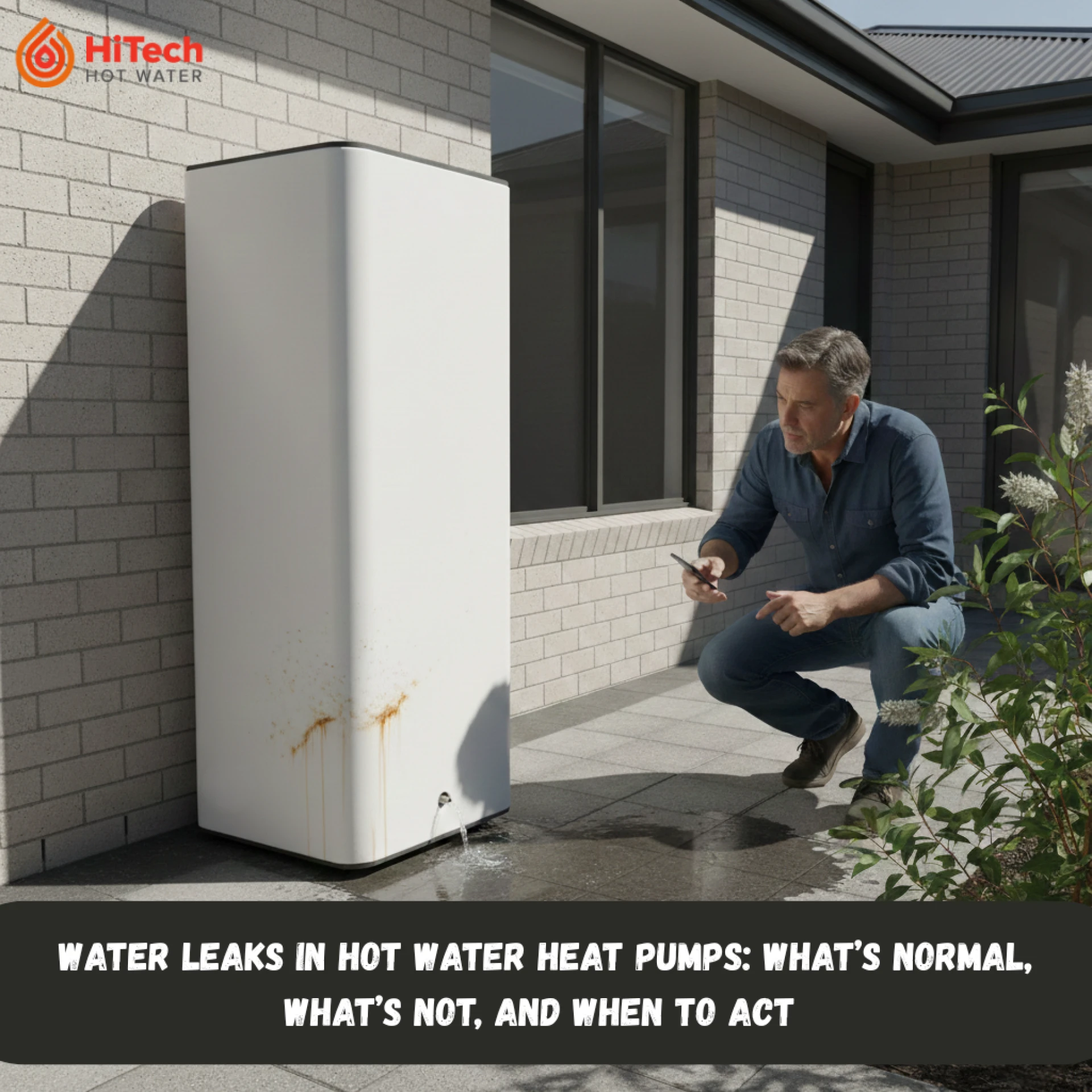

Seeing water around your hot water system can be unsettling. For many Australian homeowners, it raises immediate questions: Is this a fault? Is the system failing? Or is this normal operation?
With modern heat pumps, not all moisture is a problem but some leaks absolutely require attention. Understanding the difference can help you avoid unnecessary panic while also preventing costly damage if a real issue is developing.
Why Water Around a Heat Pump Isn’t Always a Bad Sign
A Hot water heat pump works differently from traditional electric systems. As it draws heat from the air, condensation naturally forms, especially in humid or cooler conditions. This moisture is expected and is usually directed away through a drain line.
In many homes, small amounts of water near the unit are simply condensation doing what it’s meant to do. The key is knowing where the water is coming from and whether it’s consistent with normal operation.
Normal Moisture: What You Can Safely Monitor
Some water discharge is part of everyday heat pump operation, including:
- Condensation from the evaporator, especially in colder mornings
- Relief valve discharge during pressure or temperature regulation
- Drain line output, where water exits cleanly and consistently
If the water appears clear, drains properly, and doesn’t increase over time, it’s generally safe to monitor rather than act immediately.
When a Leak Signals a Real Problem
Not all water should be ignored. A persistent or growing hot water system leaking issue can point to underlying faults that worsen if left unattended.
Common problem sources include:
- Cracked or corroded tanks
- Failing valves that no longer regulate pressure correctly
- Poor drainage setup causing water to pool around the base
- Pipe connection wear or seal failure
Unlike condensation, these leaks often leave visible residue, create damp patches, or worsen steadily.
Condensation vs Tank Leaks: How to Tell the Difference
A simple way to assess the situation is by observing timing and location.
Condensation tends to:
- Appear during or after system operation
- Reduce once heating cycles finish
- Exit through designated drain points
Tank or component leaks:
- Occur constantly
- Leave rust marks or discolouration
- Spread beyond drainage areas
If you’re unsure, drying the area and checking again after a full heating cycle can provide useful clues.
Corrosion-Related Leaks: The Silent Risk
Over time, internal corrosion can weaken a tank from the inside. This often goes unnoticed until moisture appears externally. Corrosion-related leaks rarely fix themselves and usually indicate the system is nearing the end of its service life.
At this stage, homeowners often start weighing repair versus replacement, sometimes after searching a heat pump repair DIY guide to understand what’s realistically manageable and what isn’t.
When Monitoring Is Enough — And When It’s Not
It’s reasonable to monitor the situation if:
- The water is minimal and consistent
- Drainage is functioning correctly
- There’s no impact on performance or pressure
It’s time to act if:
- Water increases over time
- Rust, staining, or odour develops
- The system loses efficiency or shuts down unexpectedly
Early attention often prevents secondary damage to flooring, walls, or electrical components.
Why Early Action Saves Money and Stress
Leaks rarely improve on their own. Addressing issues early reduces repair complexity and protects the overall lifespan of the system. Many major failures begin as small, easily managed leaks that were overlooked.
For Australian homes, timely assessment isn’t about urgency it’s about protecting a system designed to deliver long-term efficiency and reliability.
Final Thoughts
Water near a heat pump doesn’t always mean trouble, but knowing what’s normal and what’s not makes all the difference. By understanding how heat pumps operate and recognising early warning signs, homeowners can act confidently instead of reactively.
If something doesn’t look right, trust the signs. A closer look today can prevent a much bigger issue tomorrow and keep your hot water system running the way it should.

























Sign in to leave a comment.