

Choosing a senior nursing care facility is one of the most significant decisions a family can face. Most adult children don't start thinking about it until a health crisis forces the issue — a fall, a stroke, a surgery that didn't go as planned. At that point, the pressure is high and the options feel overwhelming. This guide cuts through the confusion. Whether you're researching now to plan ahead or you need answers this week, here's what you need to know about Senior Nursing Care Facilities, how they differ from other care types, and how to find the right one for your family.
What Is a Senior Nursing Care Facility?
A senior nursing care facility — also called a skilled nursing facility (SNF) or nursing home — is a licensed residential care setting where older adults receive 24/7 medical support from registered nurses, licensed practical nurses, and certified nursing assistants. Unlike assisted living, which focuses on help with daily tasks and personal independence, a skilled nursing facility is a clinical environment equipped to manage complex medical needs.
These facilities serve two main groups: seniors recovering from an acute event (like a hip replacement or stroke) who need short-term rehabilitation, and those with chronic conditions or advanced age who require ongoing long-term care. Knowing which category your loved one falls into shapes which type of facility and payment structure applies.
For a clear comparison of all care levels available to seniors, visit the care types explained page on Geezer Guide.
How Is a Senior Nursing Care Facility Different from Assisted Living?
This is the question families ask most often — and the distinction genuinely matters because the wrong choice can mean paying for more care than needed or, worse, not getting enough.
Here is a straightforward side-by-side comparison:
| Feature | Assisted Living | Skilled Nursing Facility |
| Medical Care | Help with daily activities (ADLs) | 24/7 nursing and clinical care |
| Staffing | Caregivers; nurse on-call | RN required on-site at all times |
| Length of Stay | Long-term residential | Short-term rehab or long-term |
| Independence | High; resident sets own schedule | Structured schedule, clinical setting |
| Typical Cost | Lower monthly rate | Higher; often covered by Medicare |
| Best For | Seniors needing lifestyle support | Complex medical or rehab needs |
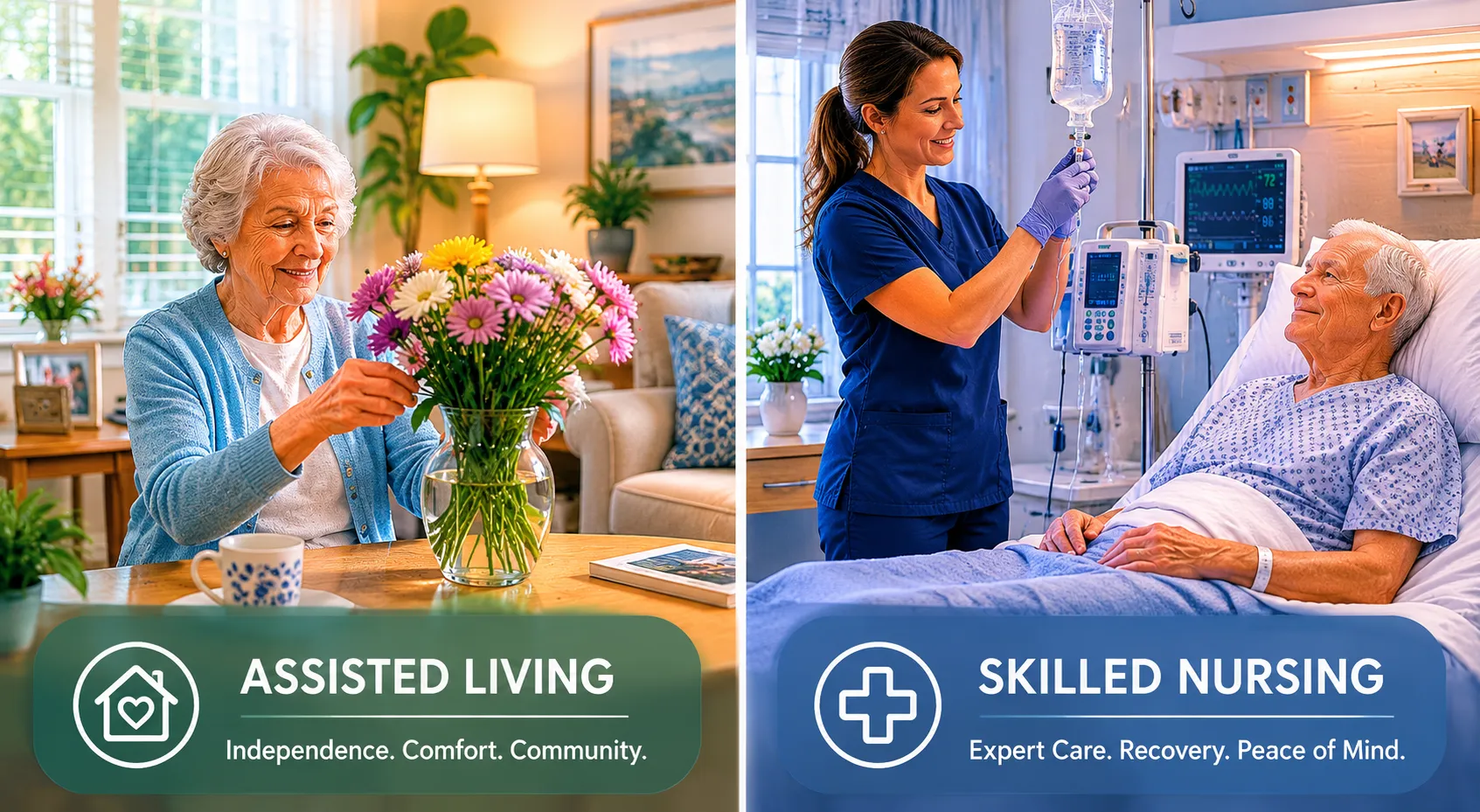
The key rule of thumb: if your loved one needs daily skilled nursing interventions — wound care, IV medications, ventilator management, physical therapy five days a week — a skilled nursing facility is the right fit. If they need help with bathing, dressing, and medication reminders in a social setting, assisted living is likely the better option.
What Are the Signs Your Parent Needs Senior Nursing Home Care?
Families often wait too long to make this call. Here are the clearest signs that a transition to skilled nursing care is necessary:
- Frequent falls or injuries that result in hospitalizations
- A recent major surgery (hip replacement, cardiac procedure) requiring intensive rehabilitation
- Chronic conditions — diabetes, COPD, heart failure — that require daily clinical management
- Advanced cognitive decline, including wandering or inability to follow basic safety routines
- Caregiver burnout where family members can no longer safely manage care at home
- A physician's recommendation for placement following a hospital stay
A real-world example: if your father has early-stage Parkinson's disease and lives alone, assisted living with on-site health support may be sufficient. But if he recently had a stroke and needs daily physical and speech therapy alongside round-the-clock monitoring, a senior care skilled nursing facility becomes the appropriate and safer setting.
For seniors whose needs sit somewhere in the middle, it's worth exploring memory care facilities or boarding home options before defaulting to full skilled nursing.
What Should You Look for When Choosing a Senior Care Living Facility?
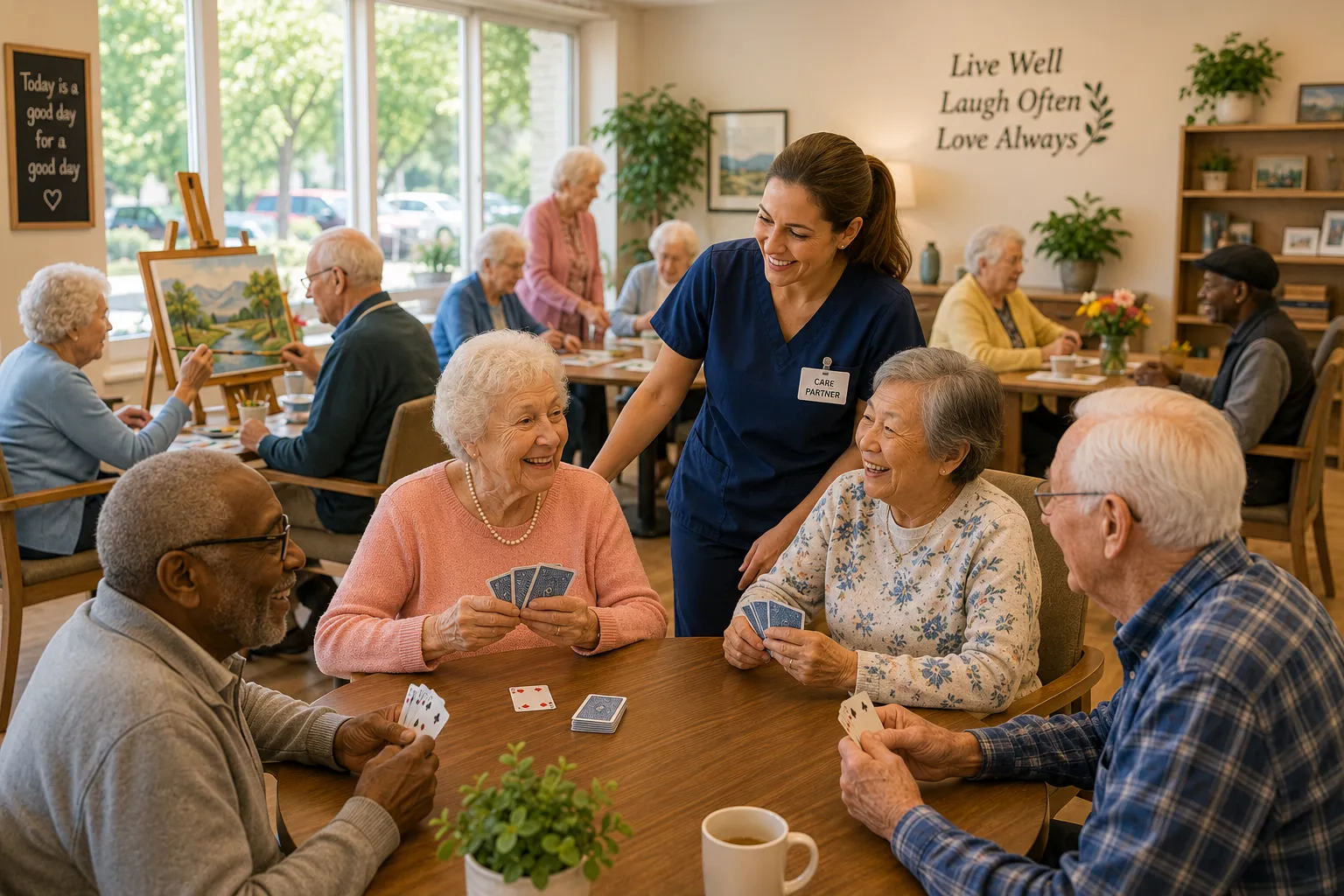
Not all senior nursing care facilities deliver the same standard of care. Top-rated assisted living and skilled nursing facilities share several common qualities that families should evaluate before making a decision.
Staffing Ratios and Consistency
Higher nurse-to-resident ratios directly correlate with better care outcomes. Ask specifically about registered nurse coverage during night shifts and weekends, not just day hours. High staff turnover is a red flag — it signals instability that affects residents directly.
On-Site Health Specialists
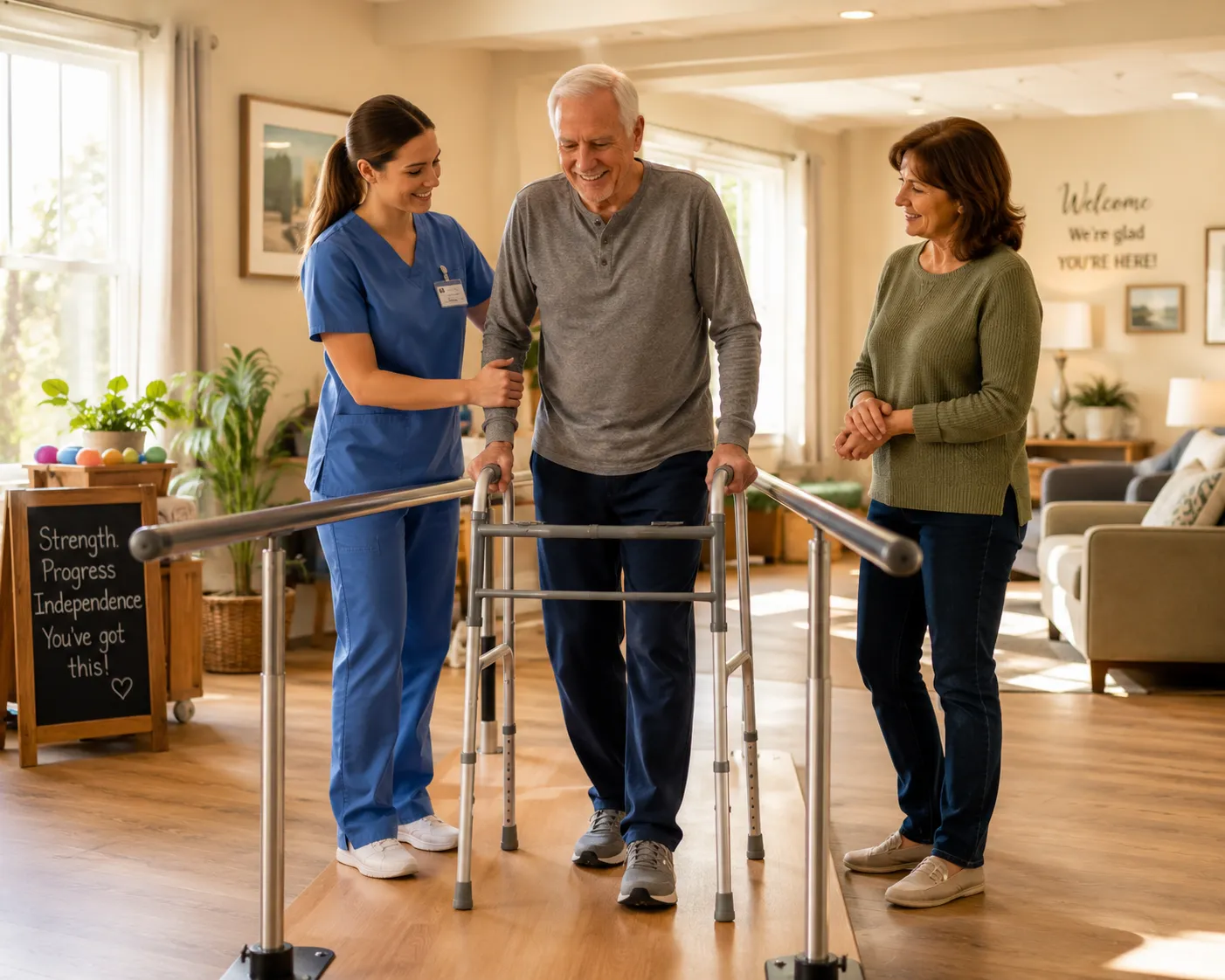
The best senior care facilities with on-site health specialists give residents access to physical therapists, occupational therapists, dietitians, and visiting physicians without leaving the building. This is especially important for post-surgery recovery and chronic disease management.
Activities and Social Engagement
Physical health and cognitive health are inseparable. Look for facilities with structured activities for seniors in assisted living or skilled nursing settings — exercise programs, creative arts, social events, and intergenerational programs. Residents who stay mentally and socially engaged recover faster and report higher quality of life. This is not a nice-to-have; it's a health outcome.
Licensing and Inspection Records
All skilled nursing facilities in the U.S. are regulated at the federal and state level. You can review inspection reports and star ratings on Medicare's Nursing Home Compare tool *(opens in new tab)*. Facilities with consistent five-star ratings for health inspections and staffing are worth shortlisting.
A Note on the Downside of Skilled Nursing Facilities
Skilled nursing facilities are the right choice for specific needs — but they aren't the best environment for every senior. The clinical setting can feel institutional. Residents follow a more structured schedule, privacy can be limited in shared rooms, and the social atmosphere is generally less vibrant than in modern assisted living or life care senior living facilities designed around independence.
If a senior's needs don't require 24/7 medical oversight, placing them in a skilled nursing facility can reduce quality of life unnecessarily. The goal is always to match the level of care to the actual need — no more, no less. If you're unsure which level is right, browse all care options on Geezer Guide to compare and start narrowing down.
Frequently Asked Questions
What is the difference between a skilled nursing facility and a nursing home?
In practice, they are the same thing. Both terms refer to licensed residential facilities that provide 24/7 nursing care and medical support. "Skilled nursing facility" is the official Medicare and insurance term, while "nursing home" is the more common everyday phrase. Some newer facilities prefer the former as it better reflects their rehabilitation and medical services.
Does Medicare cover senior nursing care facilities?
Yes, but only under specific conditions. Medicare covers short-term stays in a skilled nursing facility following a qualifying hospital stay of at least three days. Coverage applies for up to 100 days per benefit period, though full coverage only applies for the first 20 days. After that, a daily co-pay applies. Long-term nursing home care is generally covered by Medicaid for those who qualify based on income and assets.
How do I know if my parent needs assisted living or a skilled nursing facility?
The primary question is whether your parent needs ongoing clinical medical care. If they need help with bathing, dressing, and medication reminders but are otherwise stable, assisted living is likely sufficient. If they need wound care, IV medications, daily rehabilitation therapy, or constant monitoring for a medical condition, a skilled nursing facility is the appropriate level of care.
What activities are available in senior care facilities?
Quality facilities offer a structured calendar of physical, cognitive, and social activities. These can include group fitness classes, memory care programs, arts and crafts, gardening, music therapy, and family visit events. Research shows that regular engagement in activities for seniors in assisted living and skilled nursing settings reduces cognitive decline and improves overall wellbeing.
What should I ask when touring a senior nursing care facility?
Ask about the registered nurse-to-resident ratio on all shifts, staff turnover rates, what on-site specialists are available, how care plans are updated, and how family members are kept informed. Visit during a meal and during an activity period — these give you the clearest picture of daily life for residents.
Finding the Right Facility Starts with the Right Information
Senior nursing care facilities serve a vital role for older adults who need more than a helping hand — they need consistent, skilled medical attention. The key to making a good decision is understanding exactly what level of care is needed, what to look for when evaluating facilities, and what questions to ask before signing anything.
Three things to take away from this guide: match care level to actual need, prioritize staffing quality and on-site specialists, and never skip the in-person visit. What looks good on paper can feel very different when you walk through the door.
Ready to start comparing facilities near you? Search verified senior nursing care listings on Geezer Guide and find the right fit for your loved one.


























Sign in to leave a comment.