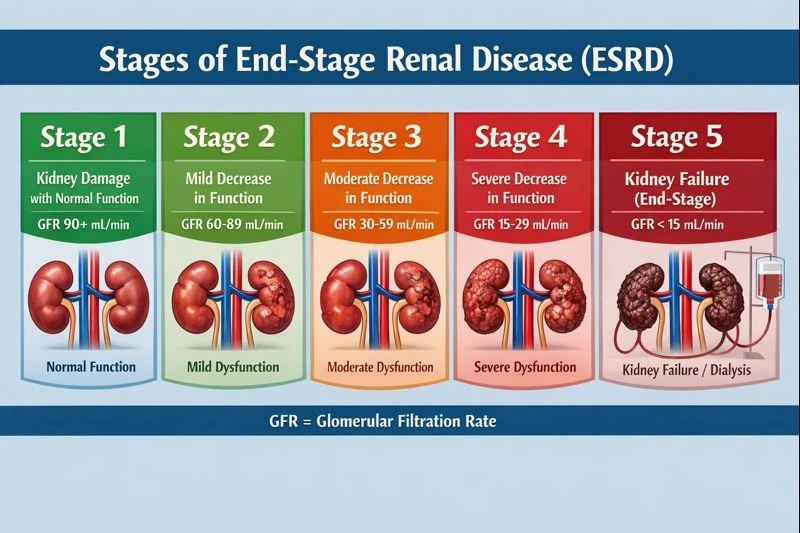

Kidney disease is a progressive condition that affects millions of people worldwide. When kidney function gradually declines over time, it leads to chronic kidney disease (CKD). If left untreated, CKD can progress to End-Stage Renal Disease (ESRD)—the most advanced and serious form of kidney failure.
Understanding the five stages of kidney disease is crucial for early diagnosis, timely treatment, and better long-term outcomes. At Sarvesh Health City, a trusted Kidney Transplant Hospital in Hisar, patients receive comprehensive care at every stage of kidney disease, including advanced dialysis and kidney transplant services.
This guide explains each stage in detail and highlights when expert medical intervention becomes essential.
Understanding Kidney Function and CKD Staging
The kidneys play a vital role in:
- Filtering waste and excess fluids from the blood
- Regulating blood pressure
- Maintaining electrolyte balance
- Producing hormones for red blood cell formation
Kidney disease stages are determined by the glomerular filtration rate (GFR), which measures how efficiently the kidneys filter blood.
Stage 1: Kidney Damage with Normal or High GFR
GFR: 90 ml/min or higher
Stage 1 is the earliest phase of kidney disease. Although kidney function appears normal, there may be signs of kidney damage such as:
- Protein in urine
- Blood in urine
- Structural abnormalities detected via imaging
Symptoms
Most patients experience no noticeable symptoms at this stage.
Management
- Blood pressure control
- Blood sugar management (for diabetics)
- Lifestyle changes (healthy diet, exercise, quitting smoking)
Early diagnosis at this stage can slow or even prevent progression to more severe kidney disease.
Stage 2: Mild Loss of Kidney Function
GFR: 60–89 ml/min
At Stage 2, kidney function is mildly reduced, but damage continues to progress silently.
Symptoms
- Mild fatigue
- Slight changes in urination
- Often asymptomatic
Management
- Treat underlying conditions (diabetes, hypertension)
- Regular kidney function monitoring
- Dietary modifications (reduced sodium and protein intake)
Consulting a nephrologist early improves long-term kidney health.
Stage 3: Moderate Kidney Damage (Divided into 3A and 3B)
Stage 3A GFR: 45–59 ml/min
Stage 3B GFR: 30–44 ml/min
This is a critical turning point, where symptoms become more noticeable.
Symptoms
- Fatigue and weakness
- Swelling in hands, feet, or face
- Changes in urination frequency
- High blood pressure
- Anemia
Management
- Medications to manage complications
- Dietary restrictions (potassium, phosphorus)
- Treatment for anemia and bone health
At Sarvesh Health City, patients at Stage 3 receive personalized care plans to delay progression and prepare for advanced treatment if needed.
Stage 4: Severe Loss of Kidney Function
GFR: 15–29 ml/min
Stage 4 indicates severe kidney damage. At this stage, patients must begin planning for renal replacement therapy.
Symptoms
- Persistent swelling
- Shortness of breath
- Nausea and vomiting
- Loss of appetite
- Difficulty concentrating
Management
- Intensive monitoring by a nephrologist
- Dialysis preparation
- Kidney transplant evaluation
Early referral to a Kidney Transplant Hospital in Hisar like Sarvesh Health City allows patients and families to understand transplant options before ESRD develops.
Stage 5: End-Stage Renal Disease (ESRD)
GFR: Less than 15 ml/min
Stage 5 is known as End-Stage Renal Disease, where kidneys can no longer support life without medical intervention.
Symptoms
- Severe fatigue
- Fluid overload
- Chest pain
- Breathlessness
- Confusion
- Reduced or no urine output
Treatment Options
- Dialysis (Hemodialysis or Peritoneal Dialysis)
- Kidney Transplant (best long-term solution)
A kidney transplant significantly improves quality of life and survival compared to long-term dialysis.
Why Choose Sarvesh Health City for Kidney Care?
Sarvesh Health City is a leading Kidney Transplant Hospital in Hisar, offering advanced renal care under one roof.
Key Highlights
- Experienced nephrologists and transplant surgeons
- State-of-the-art dialysis units
- Comprehensive pre- and post-transplant care
- Multidisciplinary support team
- Patient-focused, ethical treatment approach
From early-stage kidney disease to successful kidney transplantation, Sarvesh Health City ensures complete and compassionate care.
Importance of Early Detection and Timely Treatment
Kidney disease often progresses silently. Regular health check-ups, especially for individuals with:
- Diabetes
- High blood pressure
- Family history of kidney disease
- Heart disease
can help detect kidney problems early and prevent ESRD.
Frequently Asked Questions (FAQs)
1. What is End-Stage Renal Disease (ESRD)?
ESRD is the final stage of chronic kidney disease where the kidneys lose nearly all their function, requiring dialysis or a kidney transplant to survive.
2. Can ESRD be reversed?
No, ESRD cannot be reversed. However, kidney transplantation offers a long-term and effective treatment option.
3. When should I consider a kidney transplant?
A kidney transplant is usually considered during Stage 4 or early Stage 5 of kidney disease for better outcomes.
4. Is dialysis permanent for ESRD patients?
Dialysis can be temporary if the patient is eligible for a kidney transplant. Otherwise, it may be lifelong.
5. Why is Sarvesh Health City a preferred Kidney Transplant Hospital in Hisar?
Sarvesh Health City offers expert specialists, advanced technology, ethical care, and comprehensive transplant services, making it a trusted choice for kidney patients.
Conclusion
Understanding the five stages of End-Stage Renal Disease empowers patients to take timely action and seek appropriate care. Early diagnosis, lifestyle changes, and expert medical guidance can significantly slow disease progression.
For advanced kidney care, dialysis, or transplantation, Sarvesh Health City stands as a reliable Kidney Transplant Hospital in Hisar, committed to restoring health and improving lives.






























Sign in to leave a comment.