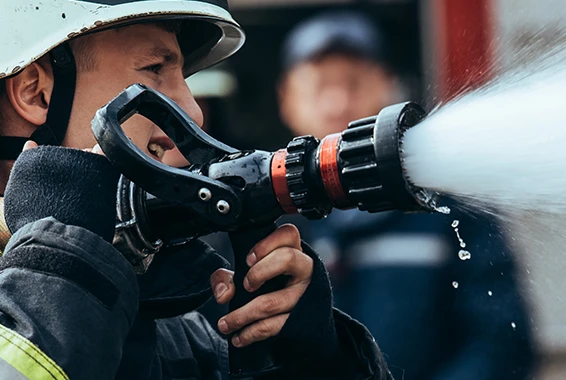

A fire hose is a vital piece of equipment for firefighters, as it allows them to deliver water or other fire extinguishing agents to the source of the fire. However, not all hoses are the same, and choosing the right one can make a difference in the effectiveness and safety of firefighting operations.
In this article, we will discuss some of the key features to consider when choosing it, such as:
Type of hose Diameter and length Material Couplings and nozzles Maintenance and storage
Type of Hose
There are different types of fire hoses designed for different purposes and situations. Some of the main types are:
Attack hose: Also known as a front line or supply hose, it is used to directly combat fires. It is designed to be flexible, lightweight, and resistant to high pressure and abrasion. It usually has a diameter of 1.5 to 2.5 inches and a length of 50 to 100 feet. Supply hose: These are larger hoses, often ranging from 3.5 to 5 inches in diameter, that move large volumes of water from hydrants or pumps to the attack hoses or other appliances. They are designed to be durable, rigid, and resistant to kinking and crushing. They usually have a length of 100 feet or more. Forestry hose: Designed for fighting wildfires in remote areas, these hoses are very lightweight, flexible, and easy to transport and deploy. They are usually made of synthetic materials that withstand high temperatures and low pressures. They typically have a diameter of 1 inch or less and a length of 50 to 100 feet. Booster hose: These are small hoses, usually with a diameter of 0.75 to 1 inch, used for minor fires or mop-up operations. They are often mounted on reels on fire trucks and can deliver water at high pressures. They are usually made of rubber or thermoplastic materials that can resist oil and chemicals.Diameter and Length
The diameter and length of a fire hose affect its water flow rate, friction loss, weight, and manoeuvrability. The water flow rate is the amount of water that can pass through the hose per unit of time, measured in gallons per minute (GPM) or litres per minute (LPM). The friction loss is the reduction in water pressure due to the friction between the water and the hose walls, measured in pounds per square inch (PSI) or kilopascals (kPa). The weight is the mass of the hose when it is filled with water, measured in pounds (lbs) or kilograms (kg). The manoeuvrability is the ease with which the hose can be handled and moved around by the firefighters.
Generally speaking, a larger-diameter hose will have a higher water flow rate but also a higher friction loss, weight, and lower manoeuvrability than a smaller-diameter hose. A longer hose will also have a higher friction loss, weight, and lower manoeuvrability than a shorter hose. Therefore, it is important to balance these factors according to the needs and conditions of each firefighting situation.
For example, an attack hose should have a sufficient diameter and length to deliver enough water to extinguish the fire effectively but not be too large or long that it becomes difficult to handle or causes excessive pressure loss. A supply hose should have a large diameter and length to transport enough water from the source to the scene without losing too much pressure or flow rate. A forestry hose should have a small diameter and length to be lightweight and portable for easy access to remote areas.
Material
The material and construction of a fire hose affect its durability, strength, flexibility, resistance, and lifespan. The material is the substance that makes up the hose's inner lining, outer jacket, or both. The construction is the way that the material is woven or bonded together.
There are various materials used for fire hoses, such as:
Rubber: Rubber is one of the oldest and most common materials for emergency hoses. It is flexible, resilient, waterproof, and resistant to heat, abrasion, chemicals, and ozone. However, it can also be heavy, bulky,prone to cracking, fading, or rotting over time. PVC: PVC (polyvinyl chloride) is a synthetic plastic material that is widely used for fire hoses. It is lightweight, cheap, easy to manufacture, and resistant to heat, abrasion, chemicals, and UV rays. However, it can also be stiff, brittle, or prone to melting under high temperatures. Nylon: Nylon is another synthetic material commonly used for emergency hoses. It is strong, tough, and resistant to heat, abrasion, chemicals, and mildew. However, it can also be expensive, absorbent, and susceptible to UV degradation. Polyester: Polyester is a synthetic material often used for the outer jacket of emergency hoses. It is durable, flexible, and resistant to abrasion, chemicals, and UV rays. However, it can also be explosive, shrinkable, and less resilient than rubber or nylon. Polyurethane: Polyurethane is a synthetic material often used for their inner lining or coating. It is waterproof, abrasion-resistant, and chemical-resistant. However, it can also be expensive, stiff, and sensitive to heat and sunlight.Couplings and Nozzles
The couplings and nozzles are the parts that connect the fire hose to the water source, other hoses, or appliances. The couplings are the fittings that attach the ends of the hose to each other or to other devices. The nozzles are the devices that control the direction, shape, and pressure of the water stream.
There are different types of couplings and nozzles for fire hoses, such as:
Threaded couplings: These couplings have male and female threads that screw into each other to form a tight seal. They are easy to use and widely available but can also be damaged by cross-threading, corrosion, or wear. Storz couplings: These couplings have two identical halves that lock with lugs and slots. They are quick and easy to connect and disconnect, but they can also be expensive and require special tools to tighten or loosen. Camlock couplings: These couplings have two halves that snap together with cams and levers. They are simple and secure to connect and disconnect, but they can also be bulky and prone to leakage. Straight bore nozzles: These are nozzles with a fixed opening producing a solid stream of water. They are simple and effective for penetrating fires but can also cause high back pressure and low reach. Fog nozzles: These have an adjustable opening that produces a spray of water droplets. They are versatile and efficient for cooling fires but can also cause low penetration and high water consumption. Combination nozzles: These have both a straight bore and a fog setting that can be switched by turning a valve or a handle. They are flexible and adaptable for different fire situations but can also be complex and expensive.Maintenance and Storage
The maintenance and storage of a fire hose affect its performance, reliability, and lifespan. The maintenance involves cleaning, inspecting, repairing, testing, and documenting the condition of the hose. The storage involves drying, rolling, folding, hanging, or properly stacking the hose.
Some of the best practices for maintaining and storing fire hoses are:
Clean the hose after each use by rinsing it with clean water and removing any dirt or debris. Inspect the hose regularly for any signs of damage, such as cuts, tears, holes, cracks, abrasions, or leaks. Repair any minor damage with patches, tape, or clamps, or replace any major damage with new sections or couplings. Test the hose periodically for its serviceability, pressure, and flow rate. Document the history of the hose, such as its date of purchase, use, maintenance, and test results. Dry the hose thoroughly before storing it to prevent mould, mildew, or rot. Roll or fold the hose neatly to prevent kinks, twists, or bends. Hang or stack the hose in a cool, dry, and ventilated place away from sunlight, heat, or chemicals.Conclusion
It is an important tool for firefighters that can help them save lives and property from fire. However, choosing the proper fire hose can be challenging due to the many factors. By considering the type of hose, diameter and length, material and construction, couplings and nozzles, and maintenance and storage of the hose, you can make an informed decision that suits your needs and preferences. Always follow the manufacturer's instructions and recommendations when using, maintaining, or storing your emergency hose. Stay safe and fire smart!

























Sign in to leave a comment.