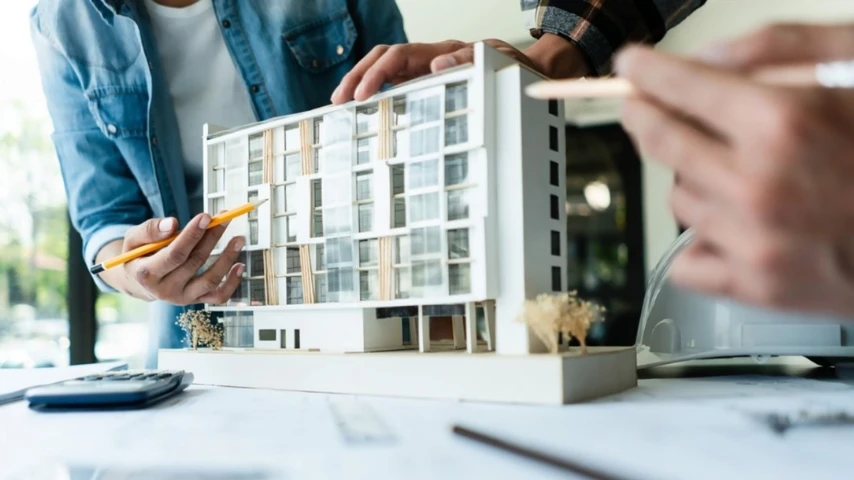

Sand to rock transitions are common in arid and semi-arid landscapes, especially in regions where dunes meet exposed bedrock or compacted terrain. Accurately representing this shift is important for explaining geological conditions, construction feasibility, and environmental character.
In professional model making, base materials are selected not only for appearance but for how well they communicate gradual hardness, texture change, and elevation stability. The aim is to create a believable transition rather than a sharp visual break.
Why Material Choice Matters for Terrain Accuracy
Sand and rock behave very differently in nature. Sand appears soft, mobile, and porous, while rock feels solid, layered, and permanent. If both are represented using similar materials, the terrain loses meaning. Effective base materials help viewers immediately understand where the ground is loose and where it becomes stable. This clarity supports planning discussions and reduces misinterpretation during presentations.
Foam Boards for Foundational Terrain Shaping
High-density foam boards are widely used as a base for both sand and rock zones. They are lightweight, easy to cut, and allow precise control over elevation. For sand areas, foam edges are softened and rounded. For rocky zones, the same foam can be cut into sharper planes and stepped forms. This flexibility makes foam a reliable foundation for gradual terrain transitions without changing base material abruptly.
Layered Cork for Stratified Rock Formation
Cork sheets are especially suitable for representing rock formations. Their natural grain and layered structure resemble sedimentary rock when cut and stacked. Cork can be sanded to soften edges near sandy areas, allowing a smooth visual blend. As terrain moves toward solid rock, cork layers remain more defined. This makes cork ideal for showing geological progression from loose surface material to exposed rock.
Modeling Clay and Plaster Blends for Surface Control
Clay-based compounds and lightweight plaster mixes are often applied over base forms to refine transitions. These materials allow hand shaping, which is essential for natural-looking erosion and weathering effects. Thin layers can be feathered across sand zones and thickened toward rocky outcrops. In model making Dubai, this controllability helps eliminate hard seams between terrain types.
Textured Resin for Durable Rock Surfaces
For permanent or exhibition-grade models, textured resin coatings are used to define rock areas. Resin can be molded or brushed to create fissures, cracks, and rough surfaces. Near sand zones, the resin layer is applied thinner and smoothed out. This gradual change in texture communicates increasing ground hardness without changing color or form abruptly.
Fine Aggregates for Sand Representation
Sand zones are best represented using fine aggregates such as crushed cork, sieved stone powder, or mineral grit. These materials scatter light softly and suggest loose composition. When applied close to rock areas, aggregate density is reduced gradually. This thinning effect visually connects sand to rock and avoids sudden material contrast.
Surface Color as a Transitional Tool
Color plays a supporting role in material transitions. Sand areas use lighter, warmer tones, while rock zones adopt slightly darker or cooler shades. Instead of sharp color changes, gradual blending is applied through dry brushing or airbrushing. This technique reinforces the material shift even when the base structure remains continuous.
Using Sectional Profiles to Guide Transitions
Cross-sectional references help maintain realism when working with multiple materials. Profiles show how deep sand layers sit above rock in real landscapes. By following these references, model makers ensure that rock does not appear to float above sand or sink unnaturally. In model making, these guides keep material choices aligned with geological logic.
Durability and Handling Considerations
Base materials must withstand handling, transport, and lighting conditions. Foam and cork provide stability without excessive weight. Clay and plaster layers are sealed to prevent cracking. Resin adds long-term durability to exposed rock surfaces. Choosing compatible materials ensures the transition remains intact over time and does not degrade visually.
Integrating Built Elements Across Terrain Types
When roads, foundations, or structures cross sand to rock zones, base materials must support clean integration. Rock areas often anchor built elements, while sand zones appear more adaptive. Using firmer materials under structures and softer finishes around them helps communicate construction logic clearly. This integration strengthens the overall narrative of the terrain.
Balancing Realism and Practicality
Not every geological detail needs to be reproduced. The goal is to communicate terrain behavior clearly. By combining a limited set of base materials and varying their treatment, designers achieve realism without unnecessary complexity. In model making, this balance keeps production efficient while maintaining visual authority.
Conclusion
Base materials suited for sand to rock transitions must be flexible, compatible, and visually expressive. Foam, cork, clay, resin, and fine aggregates work best when layered and blended thoughtfully. Together, they transform complex geological changes into readable physical forms. When selected and applied carefully, these materials allow terrain transitions to feel natural, stable, and easy to understand for all viewers.























Sign in to leave a comment.