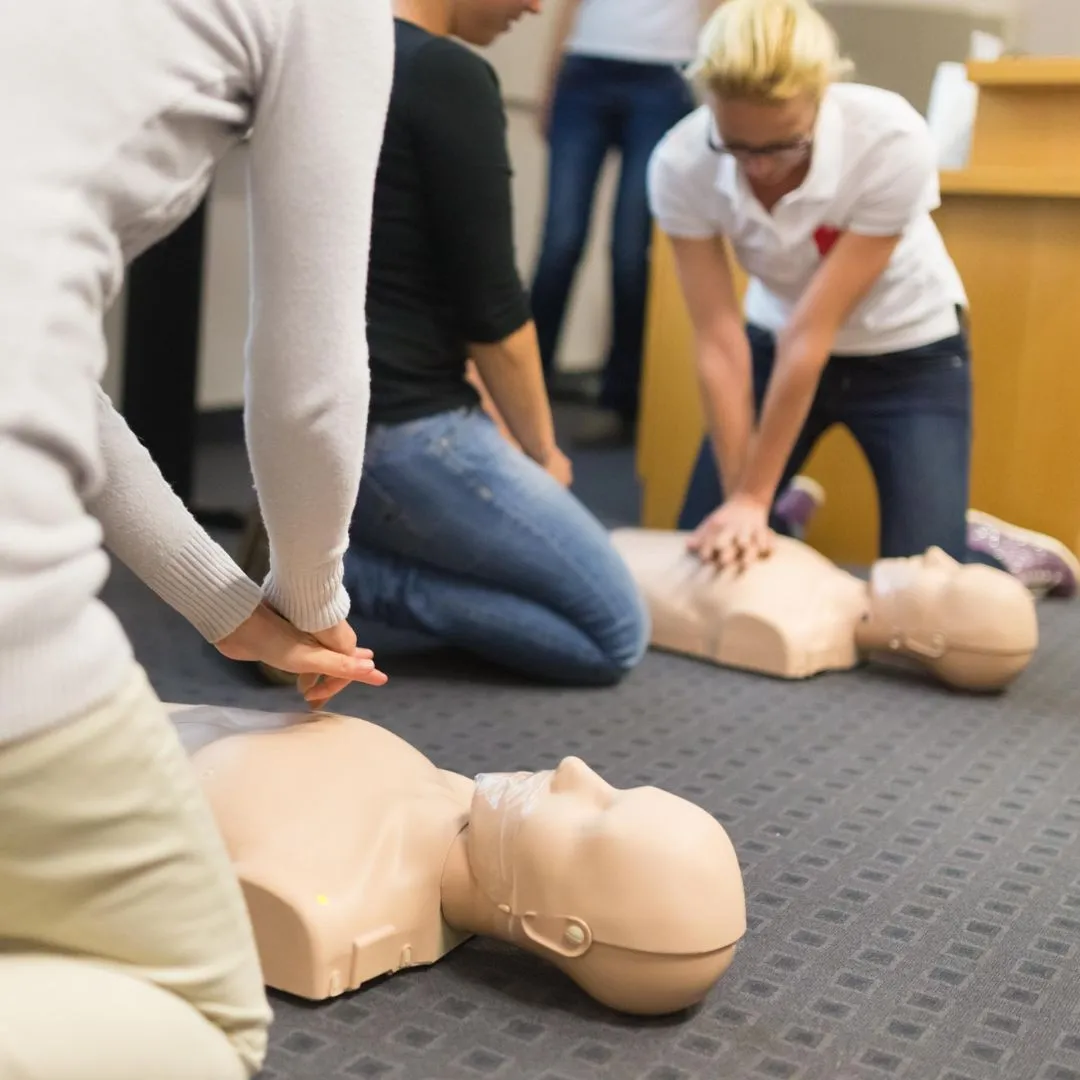

People tend to assume CPR certification is quick and surface-level press hard, breathe, move on. That assumption doesn’t hold up once you’re in the room. The training is structured, repetitive, and exact for a reason. Emergencies don’t allow for hesitation or improvisation. Every step has to be clear before it’s needed.
If you’re considering formal training, it helps to understand what’s actually covered, what you’ll practice, and what you’ll be expected to do without second-guessing. That’s the reality behind AHA CPR Certification in Minneapolis.
The Foundation: Recognizing a Life-Threatening Emergency
Before anything physical happens, the training starts with recognition. This is where most people hesitate in real situations, not out of indifference, but uncertainty.
You learn to:
- Check responsiveness quickly
- Identify abnormal or absent breathing
- Recognize the signs of cardiac arrest
- Activate emergency response systems without delay
It’s straightforward on paper. In practice, this is the moment that determines whether action happens at all. Good instruction doesn’t rush through it.
Core CPR Skills: Precision Over Assumption
Then you move into compressions and breathing, the part most people associate with CPR. Except here, it’s not approximate.
You work on:
- Exact hand placement
- Compression depth and pace
- Allowing full chest recoil
- Coordinating compressions with breaths
It’s physical work. Your arms tire faster than expected. The rhythm takes a few tries to settle in. Instructors at CPR Partner, LLC pay attention to details because details matter when there’s no margin for error.
For those completing AHA CPR Certification in Minneapolis, this is where things shift from understanding to repetition you can rely on.
AED Training: Removing Hesitation
AEDs look intimidating until you use one. Then they don’t.
Training covers:
- When an AED is appropriate
- How to power it on and apply pads
- Following its voice prompts without delay
The device is designed to guide you. Your role is to act quickly enough to let it do its job. A few repetitions are enough to make that feel manageable.
Accidents Involving the Airway and Choking
There are some emergencies that do not involve cardiac arrest. Blocked airways are just as urgent, and in many cases, they are much more immediate.
You will get the ability to:
- Recognize the symptoms of choking in toddlers, children, and teenagers
- Engage in many abdominal thrusts
- When performing back blows on babies
- Make the transition to cardiopulmonary resuscitation if the situation worsens
It does not take any theoretically heavy detours and is straightforward, practical, and immediately relevant.
Differences in Cardiopulmonary Resuscitation (CPR) for Adults, Children, and Infants
This is not a place where one size fits all. Depending on the person you are assisting, your technique will change.
Training through CPR Partner, LLC includes:
- Adult CPR protocols
- Adjustments for children
- Infant-specific techniques with lighter compressions
These distinctions aren’t minor. They’re essential. The course makes sure you don’t default to the wrong approach under pressure.
Team-Based Response (BLS-Level Training)
For healthcare providers and certain professional roles, the training expands into a coordinated response.
This includes:
- Rotating compressors to avoid fatigue
- Clear communication during emergencies
- Managing compressions alongside AED use
- Working through multi-rescuer scenarios
It’s faster, more structured, and less forgiving. CPR Partner, LLC, emphasizes this because real emergencies often involve more than one responder.
Scenario-Based Practice: Where It Becomes Real
Toward the end of the class, everything is combined. You’re no longer practicing isolated skills. You’re responding to a situation where someone collapses, you assess, call for help, begin compressions, and bring in the AED. Sometimes you’re alone, sometimes you’re working with someone else. This is where the training settles in. It stops feeling like instruction and starts feeling like a response.
Certification and What You Receive
Once you demonstrate competency, certification follows without complication. CPR Partner, LLC provides American Heart Association certification that’s widely accepted and valid for two years. Most participants receive their eCard the same day. For many pursuing AHA CPR Certification in Minneapolis, that immediacy matters. You leave with proof in hand, not something pending.
Why the Training Holds Up
AHA CPR training isn’t designed to impress; it’s designed to work. It’s repetitive on purpose, structured for clarity, and focused on what actually happens in emergencies. CPR Partner, LLC keeps that focus intact. No unnecessary additions, no drift into theory. Just the skills, practiced until they hold.
Conclusion
CPR certification isn’t about knowing what to do in a general sense; it’s about being able to do it without hesitation. Recognition, compressions, AED use, and real-world scenarios all build toward that single outcome. CPR Partner, LLC, approaches the training with that clarity, keeping it grounded and practical from start to finish. For individuals going into clinical or higher-responsibility professions, a BLS Certification Same Day Card guarantees you're ready to meet professional expectations instantly.




























Sign in to leave a comment.