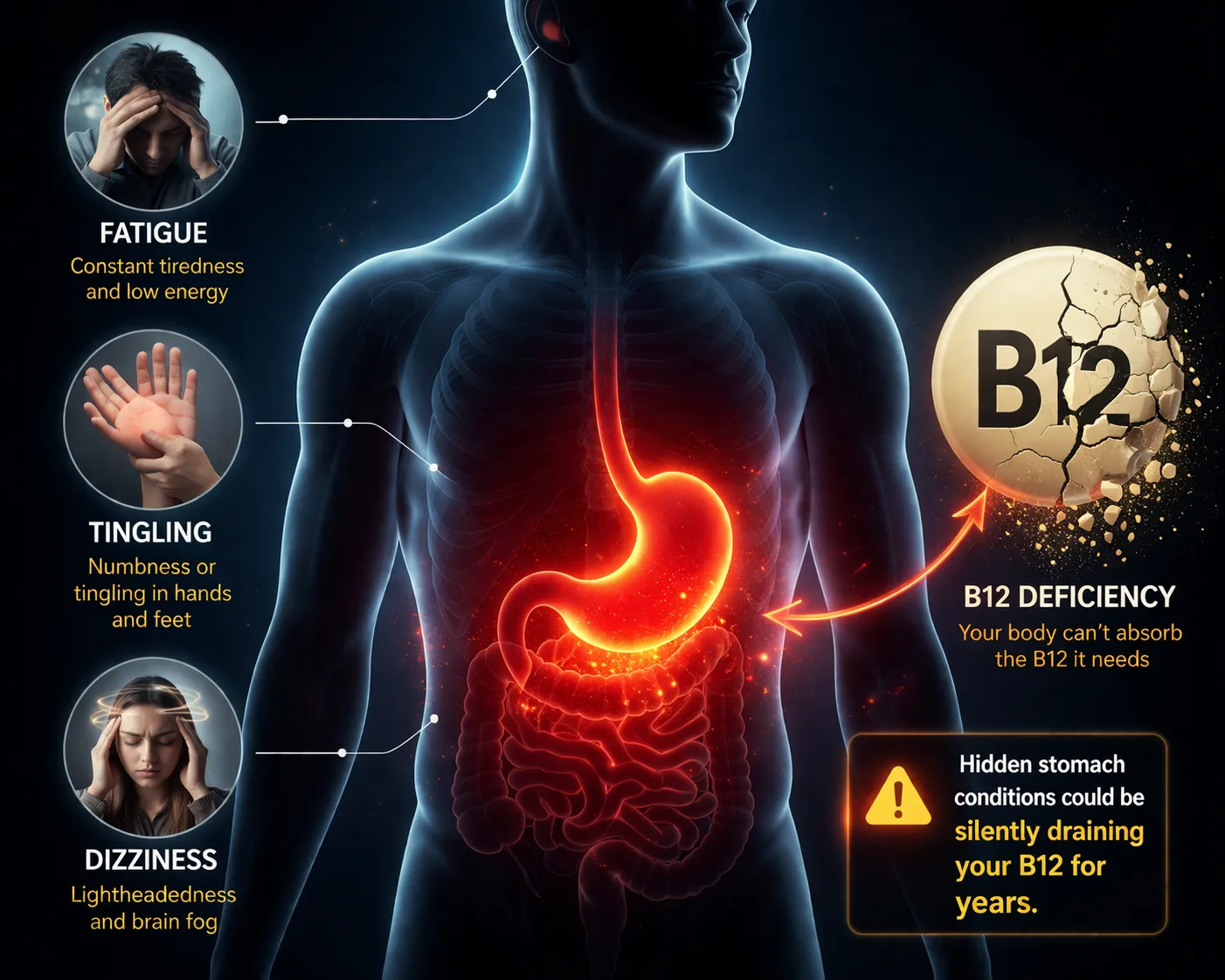

There is a time to say goodbye to feeling tired, having brain fog, or experiencing tingling. Instead of assuming these symptoms are a consequence of everyday stress, take a look at your stomach. It could be the cause of your body not getting enough Vitamin B12 through absorption.
So why do you need Vitamin B12? You cannot live without it because it helps with;
- Making red blood cells
- Making and protecting nerves
- Making DNA
- Keeping your brain healthy and remembering things
Unlike other vitamins and minerals, the absorption process of vitamin B12 is complex and is affected not just by the type of food you’re eating, but also how your stomach processes that food. Many people don’t understand the impact that their stomach has on their ability to absorb B12. Read Here
The two main components your stomach plays in regards to the absorption of vitamin B12 are:
- Stomach acid (HCL): This releases the vitamin from food
- Intrinsic factor: This is a protein that attaches to B12 and aids in the absorption process once in the intestines.
If either of these components of the stomach are not functioning properly, your body will not be able to absorb the vitamin, regardless of how much of it is consumed in your diet.
There are several ways that the stomach can affect the way B12 is absorbed by blocking the absorption of the vitamin in the stomach.
Press enter or click to view image in full size
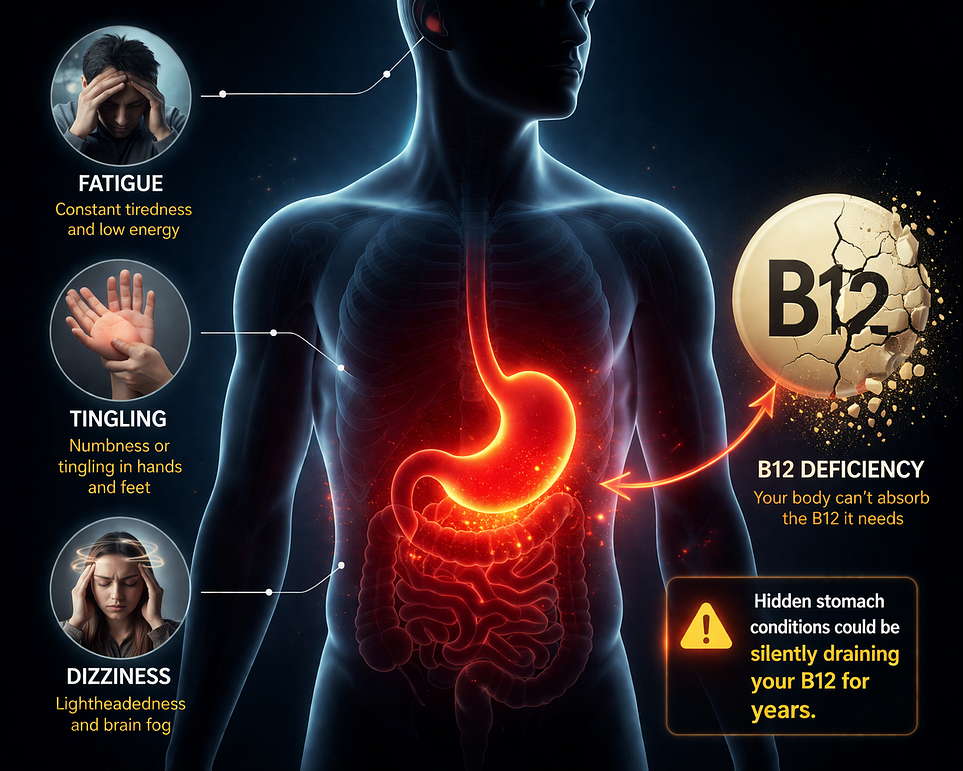
Why your body isn’t absorbing B12 and the warning signs you shouldn’t ignore.
Low Stomach Acid (Hypochlorhydria)
- Most common in older adults
- Stress
- Long-term antacid use
- Prevents food from breaking down properly and allows for the release of vitamin B12 from food.
2. Chronic Gastritis
The stomach lining becomes inflamed and may lead to the destruction of stomach cells that produce intrinsic factor.
3. Autoimmune Gastritis
The body’s immune system attacks cells in the stomach, which leads to a reduction in intrinsic factor and ultimately a significant vitamin B12 deficiency over an extended period of time.
4. H. pylori infection
This bacterial infection can inhibit the functioning of the stomach and may also cause inflammation and nutrient absorption problems.
Signs and Symptoms You Should Never Ignore
Vitamin B12 deficiency due to poor absorption typically occurs over time and is associated with the following signs and symptoms:
Physical Symptoms
- Chronic fatigue or weakness
- Pale or slightly yellowish skin
- Shortness of breath
Neurological Symptoms
- Numbness or “pins and needles” in the fingers and toes
- Poor coordination / balance
- Memory loss or “brain fog”
Digestive Symptoms
- Loss of appetite
- Bloated or discomfort in the stomach
- Vomiting / nausea
Facts About Vitamin B12 Deficiency
- The body can store vitamin B12 for several years; therefore, the signs and symptoms of a B12 deficiency can develop slowly.
- People who are not vegans and vegetarians can also have a B12 deficiency from absorption problems.
- Prolonged vitamin B12 deficiency can result in permanent nervous system damage.
- Standard blood tests may not indicate a vitamin B12 deficiency when it is in its early clinical functional stage.
Why these deficiencies often go undetected?
Many people tend to relate vague symptoms such as fatigue, dizziness, etc. as being due to:
- Stress
- Fatigue / Lack of sleep
- Lifestyle
Many times these individuals have low vitamin B12 levels from their gastrointestinal tract dysfunction, not from their hectic lives. Because the symptoms of vitamin B12 deficiency are vague and develop over time, many do not seek or receive medical attention in time and develop B12 deficiency.
Who Is at Higher Risk?
You may be more vulnerable if you:
- Are over 40 years of age
- Use antacids or acid reducing medications frequently
- Have digestive problems or gut infections
- Follow restrictive diets
- Suffer from auto-immune diseases.
- How to Support Better B12 Absorption
The link between long term medication intake and nutrient absorption gets overlooked by most individuals. Medications that are frequently prescribed such as acid blockers, proton-pump inhibitors (PPIs), and even some diabetes medications can lower stomach acid levels as well as impede vitamin B12 absorption in the body. While these medications can be beneficial for providing quick relief, when used for a long period of time and without proper monitoring, they can cause deficiencies in the body without you being aware of it. When investigating difficult-to-diagnose conditions like fatigue and neurological issues it is crucial that you take into consideration both your prescription medications and your daily habits.
Additionally, a significant amount of research has been done on the negative effects that our modern lifestyle has had on our digestive health. Chronic stress, irregular eating habits, and overly process food consumption weaken our stomachs over time. When we cannot digest our food efficiently, we are unable to extract and absorb the nutrients that we need (including B12) from it. To fully support your gut, it is not only a matter of simply adding vitamin and/or supplement “pills” to your diet; you must create an environment in which your body can naturally absorb what it requires to maintain proper function. Implementing small changes in how you eat (for example; eating mindfully and at regular intervals) as well as reducing any irritation in the gut can provide you with a significant improvement in the nutrient balance of your body over time.
Conclusion:
Your body often talks to you in a whisper before screaming at you. Fatigue, tingling in extremities, or brain fog may not seem like much; however, they could be the first signs of a bigger problem.
If your stomach is quietly stopping you from absorbing B12 do not ignore it, because it could result in long-term ramifications.
Do something today. Start listening to your body, get proper advice & address the cause not just the symptoms. Your health depends on it! Book a free consultation Today!
Questions & Answers
Q1: Can I have B12 deficiency even if I eat well?
Yes. If your stomach isn’t producing enough acid or intrinsic factor, your body may not absorb B12 effectively.
Q2: How long does it take to develop symptoms?
It can take years, because the body stores B12. Symptoms often appear gradually and worsen over time.
Q3: Is B12 deficiency reversible?
Yes, if caught early. However, long-term nerve damage may not fully recover.
Q4: Are supplements enough to fix the issue?
Not always. If the root cause is a stomach problem, addressing that is essential for long-term health.
Q5: Should I get tested?
If you experience ongoing fatigue, tingling, or cognitive issues, it’s wise to consult a healthcare provider for proper evaluation.



























Sign in to leave a comment.