

In the evolving world of network infrastructure, service providers and enterprises constantly seek ways to optimize performance while reducing operational costs. One solution gaining popularity is the Single Fiber SFP (Small Form-factor Pluggable) transceiver. Unlike traditional dual-fiber modules, Single Fiber SFPs use just one optical fiber to transmit and receive data—cutting your fiber usage in half without sacrificing performance.
This blog explores the features, benefits, use cases, and advantages of Single Fiber SFPs, particularly in modern FTTH, ISP, data center, and enterprise applications.
What is a Single Fiber SFP?
A Single Fiber SFP is a compact optical transceiver module designed for bidirectional communication over a single strand of optical fiber. It works by using Wavelength Division Multiplexing (WDM)—transmitting and receiving data over different wavelengths (typically 1310nm and 1490/1550nm) on the same fiber core.
Each transceiver has a specific wavelength for sending and a different one for receiving. For instance:
- One SFP transmits at 1310nm and receives at 1490nm
- The corresponding pair transmits at 1490nm and receives at 1310nm
This paired structure ensures full-duplex communication on a single fiber line.
Key Features of Single Fiber SFP
- Wavelength Division Multiplexing (WDM): Enables simultaneous transmission and reception using different wavelengths.
- Compact Size: Fits into any standard SFP port on switches, routers, or media converters.
- Long-Distance Support: Available in ranges from 10km to 120km, depending on model and wavelength.
- Low Power Consumption: Energy-efficient and optimized for high-density network environments.
- Hot-Swappable: Can be replaced or installed without powering down the system.
How It Works: Single vs. Dual Fiber SFP
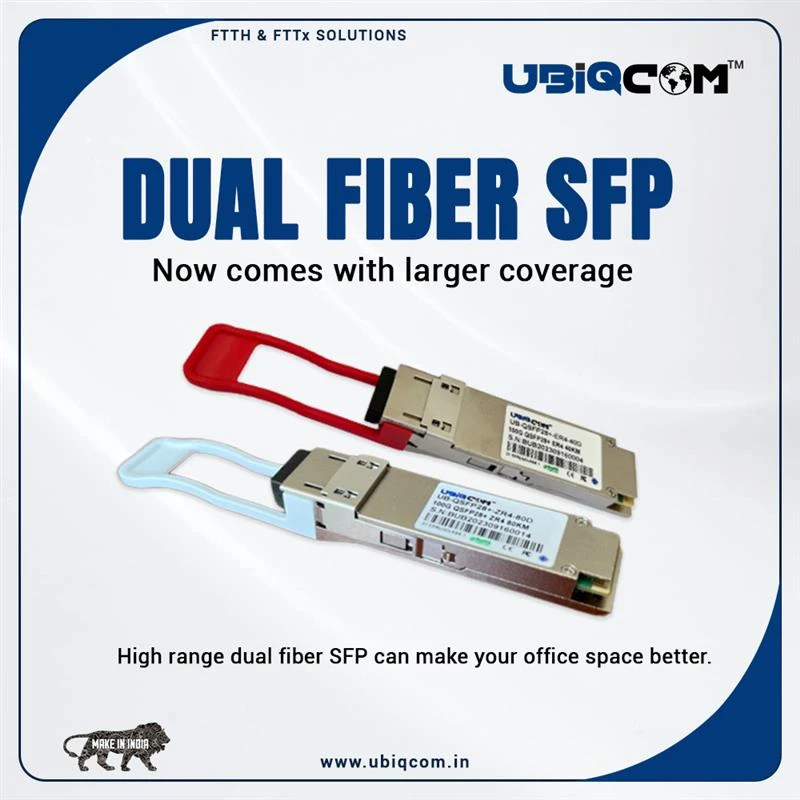
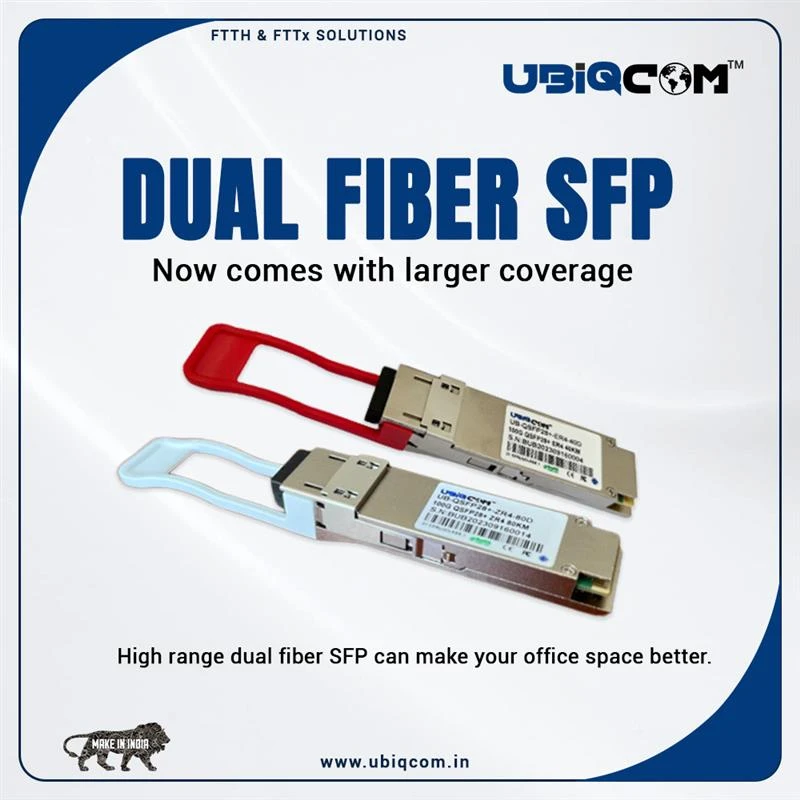
FeatureSingle Fiber SFPDual Fiber SFPFiber Cores Used12Transmission TechniqueWDMSeparate TX and RX linesCost of FiberLowerHigherIdeal ForLong distances, FTTH, ISPShort runs, data centers
In a traditional dual-fiber setup, one fiber transmits and the other receives. With Single Fiber SFPs, a single strand does both—freeing up the second core for another connection or reducing overall cabling costs.
Benefits of Using Single Fiber SFP Modules
1. Reduced Fiber Infrastructure Costs
Single Fiber SFPs immediately cut your fiber consumption in half. This is particularly valuable in metro networks or locations where fiber availability is limited or expensive.
2. Efficient Use of Existing Cabling
Many older buildings or networks already have single-core fiber runs. Instead of rewiring or laying new cables, Single Fiber SFPs make it possible to upgrade network speeds without changing the physical infrastructure.
3. Ideal for Long-Distance Communication
These SFPs are optimized for long-range connectivity—up to 120km. They’re widely used by ISPs for connecting remote access points, POPs (Point of Presence), or OLTs (Optical Line Terminals) to core networks.
4. Simplified Cable Management
Fewer cables mean cleaner setups, easier troubleshooting, and reduced risk of errors. Especially in high-density environments like data centers or telecom racks, this advantage can be significant.
5. High Compatibility
Single Fiber SFPs are available in multiple data rates (1.25G, 10G) and are often compatible with switches and routers from leading vendors like Cisco, Mikrotik, Ubiquiti, D-Link, and more.
Use Cases of Single Fiber SFP
1. FTTH (Fiber to the Home) Networks
ISPs often use single fiber SFPs in GPON or EPON OLTs to maximize the utility of limited fiber lines. It allows easy uplink/downlink management to remote ONUs using just one core.
2. Metro Ethernet Networks
In metropolitan networks where fiber resources are scarce or leased, single fiber connections help reduce costs while maintaining high-performance data delivery.
3. Campus and Enterprise Connectivity
University campuses, hospitals, and enterprises use Single Fiber SFPs to link buildings or departments via long-range fiber connections—saving on infrastructure while ensuring speed and reliability.
4. Surveillance and CCTV Networks
With IP cameras spread across large areas, single fiber SFPs in media converters are ideal for connecting cameras to NVRs over large distances with minimal cabling.
Important Considerations Before Deployment
- Use Compatible Pairs: Since TX and RX wavelengths differ, always use matched transceivers at each end (e.g., 1310/1550 with 1550/1310).
- Check Device Compatibility: Ensure your networking devices support SFP modules and WDM technology.
- Wavelength Isolation: Choose high-quality modules with good isolation to prevent crosstalk or signal degradation.
- Distance Limitations: Match the module to your required range (10km, 20km, 40km, 80km, 120km).
Common Single Fiber SFP Variants
Model TypeTX WavelengthRX WavelengthDistanceData Rate1.25G BIDI SFP1310nm / 1490nm1490nm / 1310nm10-40km1.25Gbps10G BIDI SFP+1270nm / 1330nm1330nm / 1270nm20-80km10GbpsIndustrial Grade1310nm / 1550nm1550nm / 1310nmUp to 80km1.25Gbps
Note: Always verify your fiber optic cable type (SMF vs. MMF) and connector type (LC, SC) before purchase.
Why ISPs and Enterprises Prefer Single Fiber SFPs
As bandwidth demands grow, Single Fiber SFPs offer a practical, scalable, and cost-effective upgrade path without overhauling infrastructure. ISPs, in particular, benefit from this technology to extend services to more users without incurring the high costs of laying additional fiber.
With Single Fiber SFPs, they can:
- Maximize ROI on existing fiber
- Extend network reach to underserved areas
- Achieve high-speed connectivity (1G to 10G and beyond)
Conclusion
Single Fiber SFPs represent a smart, efficient approach to modern networking challenges. By enabling high-speed, bidirectional communication over a single strand of fiber, they empower ISPs, enterprises, and data centers to reduce costs, simplify deployments, and improve scalability.




























Sign in to leave a comment.