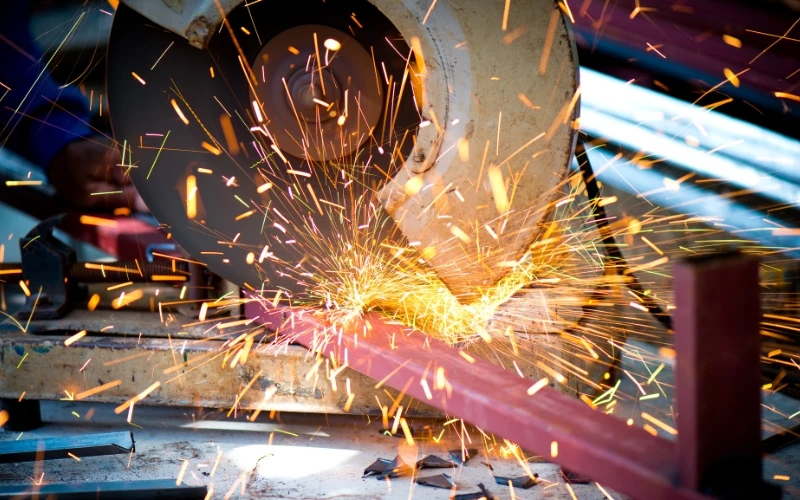

Casting is a manufacturing process in which a liquid material is poured into a mold that contains a hollow cavity of the desired shape, and is then allowed to cool and solidify.
The solidified product, called a casting, is then removed from the mold and finished to meet the desired specifications. Castings can be made from a wide range of materials, including metals, plastics, casting industries
The advantages of casting are numerous, and include:
Versatility: Casting can be used to produce parts in a wide range of shapes and sizes, from small jewelry pieces to large industrial components. This versatility makes casting a popular choice for many industries, including automotive, aerospace, and construction.
Cost-effectiveness: Casting can be a cost-effective manufacturing method for large quantities of parts. The molds used in casting can be reused many times, which helps to reduce the overall cost of production.
Design flexibility: Casting allows for intricate designs and shapes to be produced that would be difficult or impossible to achieve with other manufacturing methods. This is particularly useful for products that require complex shapes, such as turbine blades or engine blocks.
Material selection: Casting can be used with a wide range of materials, including metals, plastics, and ceramics. This flexibility allows manufacturers to select the material that best suits the intended use of the product.
Strength and durability: Castings are generally stronger and more durable than parts produced by other manufacturing methods. This is because the casting process creates a solid structure with fewer weak points or seams.
Dimensional accuracy: The casting process allows for a high degree of dimensional accuracy, which is critical for parts that must fit together precisely. This accuracy is achieved by using carefully crafted molds and precise control over the casting process.
Surface finish: Castings can be produced with a high-quality surface finish, which can be further enhanced by post-processing methods such as polishing or painting.
Reduced waste: The casting process produces very little waste, as any excess material can be recycled or reused in future casting operations. This helps to reduce the environmental impact of manufacturing.
Fast production times: Casting can be a relatively fast manufacturing method, particularly for smaller parts that can be produced in high volumes. This allows manufacturers to respond quickly to changes in demand.
In conclusion, casting is a versatile, cost-effective, and flexible manufacturing method that offers many advantages over other methods.
Its ability to produce parts in a wide range of shapes and sizes, its design flexibility, and its material selection make it a popular choice for many industries.
Additionally, its strength and durability, dimensional accuracy, and high-quality surface finish make it an attractive option for products that require precise, high-quality parts.
Overall, casting is a valuable tool for manufacturers looking to produce high-quality products efficiently and cost-effectively.

























Sign in to leave a comment.