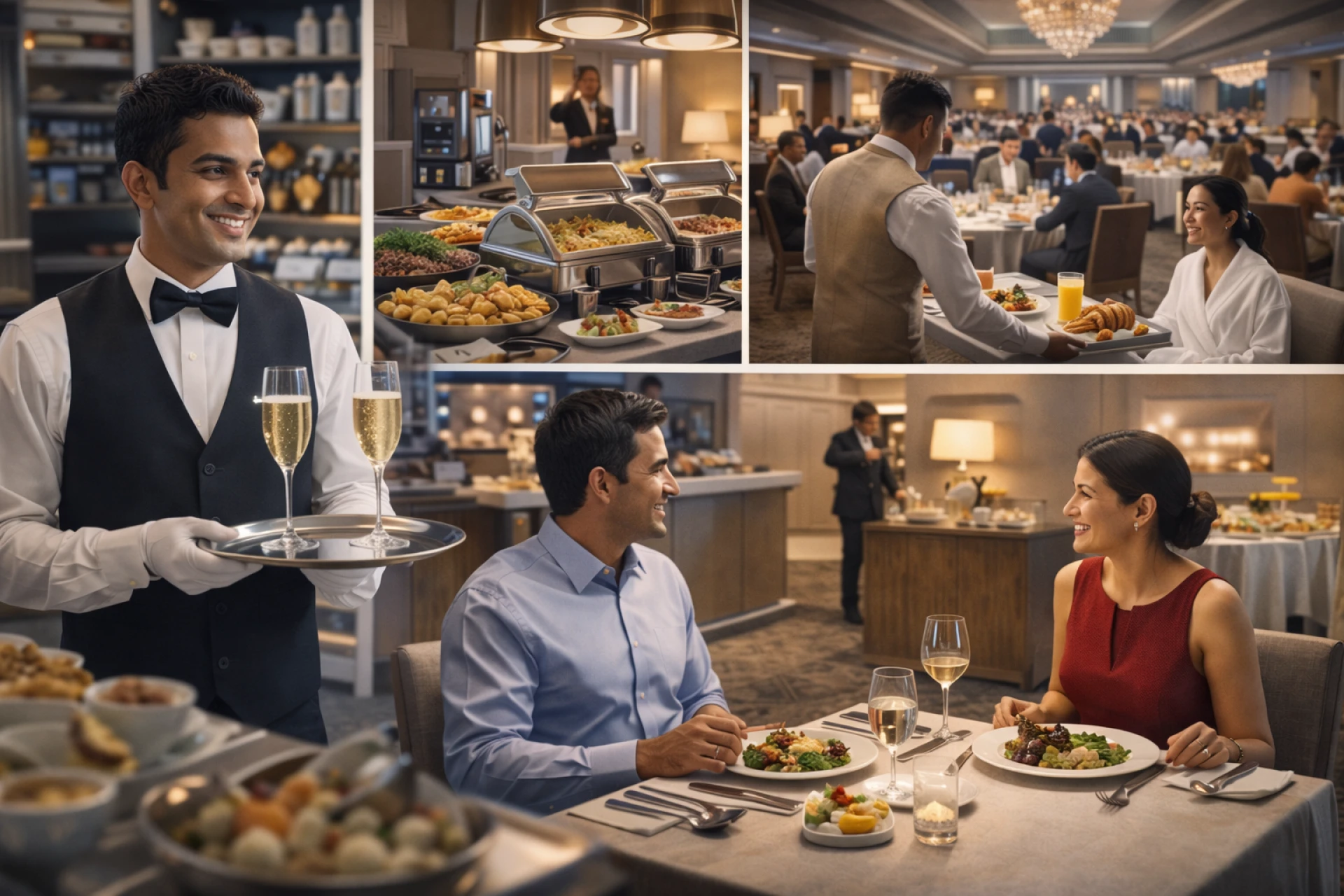

Food and beverage service shapes how people experience meals outside their homes. From a quick coffee to a five-course dinner, this service blends planning, skill, and human connection. As a Food and Beverage Consultant in Delhi once joked, “People remember how you made them feel, not just what you served.” That line explains the heart of the food and beverage industry. It does more than deliver food. It creates comfort, trust, and sometimes a reason to celebrate.
This guide explains food and beverage service in clear terms. It covers restaurant service types, hotel dining services, catering and banquet service, and the hospitality service standards that keep everything running smoothly.
Understanding Food and Beverage Service
Food and beverage service refers to the professional preparation, presentation, and serving of food and drinks to guests. It includes restaurants, hotels, cafés, bars, airlines, hospitals, and event venues. Each setting follows clear systems to ensure safety, quality, and consistency.
The food and beverage industry depends on trained staff, safe kitchens, and structured service flows. Servers, hosts, chefs, and managers work as a team. When they do their jobs well, guests relax and enjoy the moment. When they don’t, even great food feels disappointing.
The Core Objectives of Food and Beverage Service
Every service model shares a few basic goals:
- Serve safe, hygienic food
- Meet guest expectations
- Deliver value for money
- Maintain brand and service consistency
Hospitality service standards guide these goals. They cover hygiene, service etiquette, menu knowledge, and complaint handling. Organizations such as the World Health Organization (WHO) and Food and Agriculture Organization (FAO) provide global food safety principles tat many businesses follow.
Restaurant Service Types Explained
Restaurants use different service styles based on concept, pricing, and customer expectations. These restaurant service types help define the dining experience.
Table Service
Staff take orders and serve food at the table. Fine dining and casual restaurants use this style. It allows personal interaction and upselling.
Quick Service (QSR)
Customers order at a counter and receive food quickly. Speed and consistency matter most here.
Buffet Service
Guests serve themselves from a spread. Hotels often use this format for breakfast and events.
Self-Service and Assisted Service
Cafeterias and food courts use these models. They reduce wait times and staffing needs.
Each type suits different audiences. No single model fits all concepts.
Hotel Dining Services and Their Complexity
Hotel dining services operate on a different scale. Hotels often run multiple outlets under one roof. These include all-day dining, specialty restaurants, bars, lounges, and in-room dining.
Hotels must maintain uniform hospitality service standards across every outlet. A guest who enjoys breakfast expects the same quality at dinner. This consistency builds brand trust and repeat business.
Room service adds another layer. Staff must deliver food on time, at the right temperature, and with proper presentation. It sounds simple, yet it demands tight coordination.
The Role of Kitchens and Equipment (H2)
Why Equipment Choices Matter in Service Design
Behind every smooth service stands a well-planned kitchen. Many hotels and large facilities work closely with an Institutional Kitchen Equipment Manufacturer in Delhi to design layouts that support hygiene and workflow.
Good equipment improves speed and safety. Poor equipment slows teams down and raises risks. Professional kitchens follow guidelines from bodies like ISO and local food safety authorities to ensure compliance.
Commercial Kitchens and Service Efficiency (H3)
Planning for Scale and Safety
Large restaurants, hotels, and caterers rely on a Commercial Kitchen Equipment Manufacturer to support high-volume service. These manufacturers design equipment that handles heat, load, and constant use.
A well-designed commercial kitchen reduces staff fatigue and service delays. It also helps meet hospitality service standards without constant firefighting.
You will also find that a reliable Commercial Kitchen Equipment Manufacturer supports long-term cost control. Durable equipment breaks less and performs better during peak hours.
Catering and Banquet Service: Service Beyond Restaurants
Catering and banquet service focuses on events rather than daily dining. Weddings, conferences, and corporate events depend on precision and timing.
Caterers plan menus, logistics, staffing, and presentation. They often serve hundreds of guests at once. One delay can disrupt the entire event.
Banquet service teams follow strict service sequences. They serve courses together and clear tables quickly. This structure keeps events running on schedule and guests satisfied.
Service Standards That Build Trust
Hospitality service standards define how staff greet guests, present menus, and handle feedback. These standards protect brand reputation.
According to the National Restaurant Association (NRA), consistent service increases customer loyalty and staff confidence. Training plays a key role here. Well-trained teams make fewer mistakes and recover faster when issues arise.
Technology and Modern Dining
Technology now supports many service functions. Digital menus, POS systems, and reservation platforms improve accuracy and speed.
Some businesses showcase their operations online. For example, Restrobar Kitchens appears on its Google My Business profile, helping guests find location details, photos, and reviews easily. This visibility builds trust before a guest even walks in.
Challenges in the Food and Beverage Industry
The food and beverage industry faces real challenges. Rising costs, staff shortages, and changing customer expectations test operators daily.
Yet, strong systems help businesses adapt. Clear restaurant service types, efficient hotel dining services, and reliable catering and banquet service models reduce risk and confusion.
Equipment partners also matter. Working again with a trusted Commercial Kitchen Equipment Manufacturer ensures kitchens stay ready for growth and compliance.
Why Food and Beverage Service Still Matters
Dining remains a social experience. People celebrate milestones, close deals, and relax over meals. Food brings people together, but service shapes the memory.
When businesses respect hospitality service standards and invest in training and infrastructure, guests notice. They return, recommend, and trust the brand.
Final Thoughts
Food and beverage service blends art and structure. It requires planning, empathy, and discipline. From restaurant service types to hotel dining services and large-scale catering and banquet service, each model serves a clear purpose.
The next time you dine out, notice the details. The smile, the timing, the setup. None of it happens by accident. It reflects an industry that runs on real standards, real systems, and real people who care about the experience.


























Sign in to leave a comment.