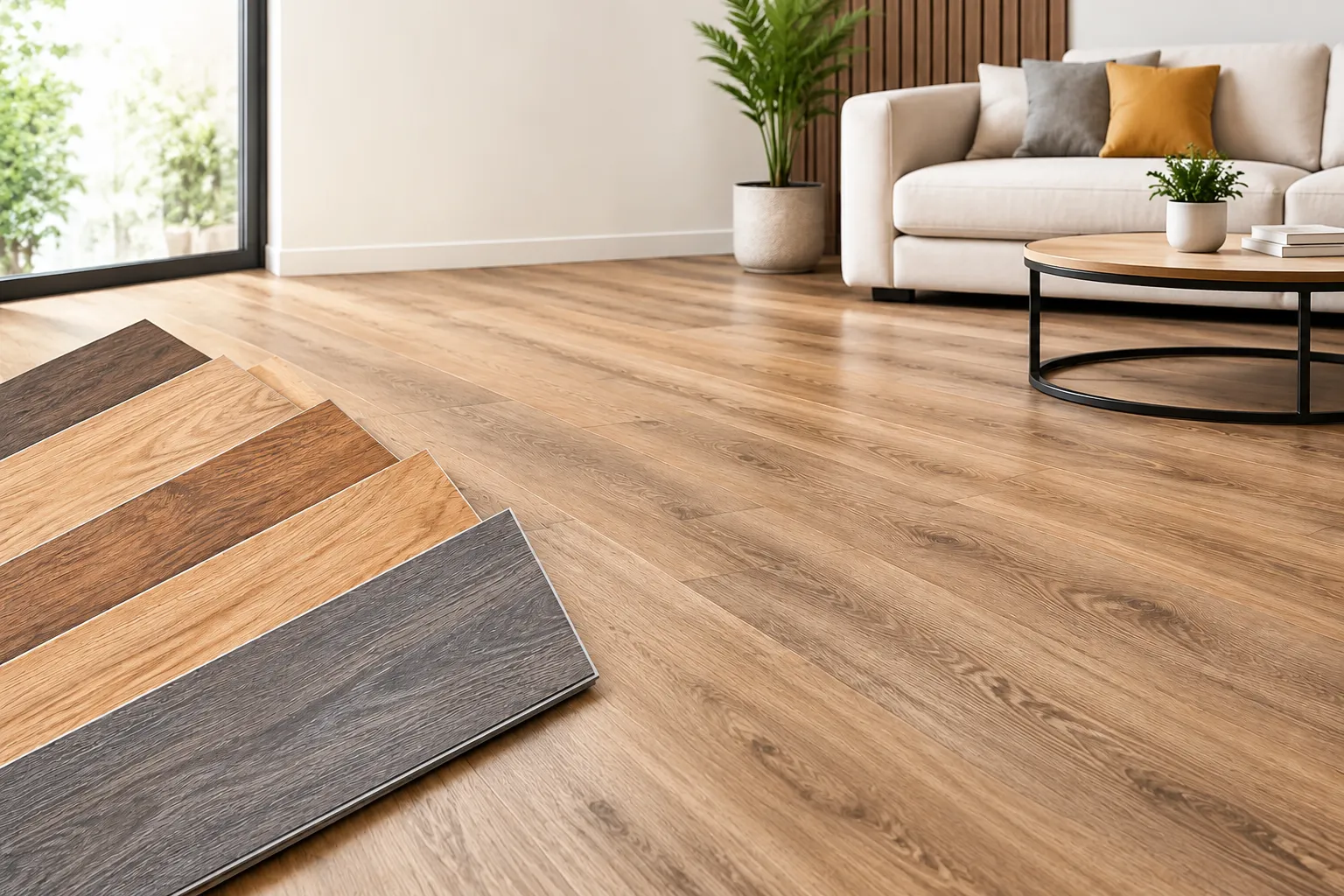

LVT stands for Luxury Vinyl Tile. It is a type of flooring made from several layers of PVC vinyl that are pressed together to form a strong, waterproof tile or plank. LVT is built to copy the look of wood, stone, or ceramic tile, but it costs less and holds up better against water and daily wear. Homeowners choose it for kitchens, bathrooms, living rooms, and even busy commercial spaces because it lasts a long time and needs very little upkeep.
How LVT Flooring Is Made
LVT flooring Dubai is not a single sheet of material. It is built in layers, and each layer has a job to do.
- Wear layer: a clear protective top coat that resists scratches, stains, and everyday scuffs.
- Design layer: a high resolution printed image that gives the tile its wood, stone, or tile look.
- Core layer: the structural base of the tile. This can be a flexible vinyl core or a rigid core made from SPC (stone plastic composite) or WPC (wood plastic composite).
- Backing layer: the bottom layer, which adds stability and, in some products, extra cushioning and sound reduction.
This layered build is the main reason LVT holds up so well. The thicker the wear layer and the more solid the core, the longer the floor will last.
Types of LVT Flooring
Not all LVT is installed the same way. The main types are grouped by how they lock together and what sits underneath the design layer.
- Click lock LVT: planks or tiles snap together edge to edge without glue, which makes this a popular choice for DIY projects.
- Glue down LVT: each piece is glued directly to the subfloor, giving a very stable, low movement finish.
- Loose lay LVT: heavier backing lets the tile grip the floor on its own, with little or no glue needed.
- Rigid core (SPC) LVT: built on a stone plastic composite core, this type resists dents and stays flat even over an uneven subfloor.
- WPC LVT: a wood plastic composite core that feels softer and warmer underfoot, though it is usually slightly less rigid than SPC.
Benefits of LVT Flooring
LVT has become one of the most requested flooring types for a reason. Here is what it brings to a home or business.
- Waterproof or highly water resistant, which makes it safe for kitchens, bathrooms, and laundry rooms.
- Long lasting, with many products holding up for 15 to 25 years under normal use.
- Easy to clean, usually needing just a sweep and a damp mop.
- Wide choice of looks, including wood grain, stone, marble, and tile patterns.
- Comfortable and quieter underfoot than tile or stone, especially with a padded backing.
- Fast, straightforward installation, and some types can go over existing flooring.
- Works well with underfloor heating in many rigid core products.
- Costs less than natural wood, stone, or ceramic tile while still giving a similar look.
Cost of LVT Flooring
LVT pricing depends on the wear layer thickness, the type of core, the brand, and how it is installed. As a general guide, entry level LVT sits at the lower end of the vinyl flooring price range, mid range products offer a good balance of price and durability, and premium rigid core lines with thicker wear layers cost the most. Installation adds to the total, and glue down or professional installation usually costs more than a simple click lock, DIY friendly product. Getting a quote based on room size, subfloor condition, and the exact product line is the best way to know the final price.
What Affects the Price
- Wear layer thickness: thicker layers cost more but last longer.
- Core type: rigid SPC and WPC cores usually cost more than flexible cores.
- Design quality: realistic embossed textures and varied patterns push the price up.
- Installation method: glue down and professional labor typically cost more than click lock DIY installs.
- Room size and subfloor prep: extra leveling or moisture barriers add to the total cost.
LVT vs Vinyl Flooring: What Is the Difference?
LVT is technically a type of vinyl flooring, but it is built very differently from standard sheet vinyl. Sheet vinyl comes in large rolls and is laid down in one continuous piece, while LVT is made of individual tiles or planks with a much thicker, more durable wear layer. That extra layering is what gives LVT better durability, a more realistic look, and an easier repair process, since a single damaged tile can be replaced without touching the rest of the floor.
| Wear layer thickness | 0.2mm (light use) up to 0.7mm (heavy commercial use) |
| Core types | Standard flexible core, rigid SPC (stone plastic composite), or WPC (wood plastic composite) |
| Water resistance | Fully waterproof for most rigid core products |
| Common thickness | 2mm to 8mm total plank or tile thickness |
| Typical lifespan | 15 to 25 years with normal home use |
| Underfloor heating | Many rigid core products are compatible, always confirm with the manufacturer |
| Feature | LVT (Luxury Vinyl Tile) | Standard Vinyl Flooring |
| Construction | Multiple layers: wear layer, print layer, rigid or semi rigid core, backing | Single continuous sheet, or thinner layered rolls |
| Water resistance | Fully waterproof in most products | Water resistant, but seams can let moisture in over time |
| Wear layer | Usually 0.3mm to 0.7mm, thicker on premium lines | Usually thinner, around 0.1mm to 0.3mm |
| Lifespan | About 15 to 25 years with normal care | About 10 to 20 years with normal care |
| Repair | Damaged tiles or planks can be replaced one at a time | A damaged section often means cutting and patching the whole sheet |
| Look and feel | Realistic wood, stone, or tile texture with embossing | Flatter printed pattern, fewer texture options |
| Installation | Click lock, glue down, or loose lay, piece by piece | Rolled out in large sheets, fewer seams |
| Comfort underfoot | Warmer and softer, some products include padded backing | Can feel harder and colder without extra underlay |
| Typical cost | Mid to higher price point for vinyl flooring | Usually the more budget friendly vinyl option |
Where to Use LVT Flooring
LVT works well in almost any room because it resists water and handles heavy foot traffic without wearing down quickly.
- Kitchens and bathrooms, where water resistance matters most.
- Living rooms and bedrooms, for a warm, wood look floor that is easy to maintain.
- Home offices and hallways, which see steady daily foot traffic.
- Retail stores, clinics, and offices, where durability and low maintenance matter.
How to Choose the Right LVT
Start with the room. Kitchens and bathrooms need a fully waterproof, rigid core product, while a bedroom or home office has more flexibility. Next, check the wear layer thickness. A thicker wear layer is worth the extra cost in high traffic areas. Finally, think about installation. Click lock LVT is a good fit for a DIY project, while glue down is better suited to a professional install and heavier commercial use.
Frequently Asked Questions
Is LVT flooring waterproof?
Most LVT products, especially rigid core types, are fully waterproof. This makes them a safe choice for kitchens, bathrooms, and other areas exposed to moisture.
How long does LVT flooring last?
With normal care, LVT flooring typically lasts between 15 and 25 years. Thicker wear layers and rigid cores tend to last longer.
Is LVT the same as vinyl flooring?
LVT is a type of vinyl flooring, but it is not the same as basic sheet vinyl. LVT has a thicker, multi layer construction that makes it more durable and longer lasting than standard sheet vinyl.
Can LVT be installed over existing flooring?
In many cases, yes. Rigid core LVT can often be installed directly over a flat, stable existing floor, as long as the subfloor is clean and level.
Does LVT work with underfloor heating?
Many rigid core LVT products are compatible with underfloor heating, but this varies by manufacturer, so it is best to confirm before installation.
Is LVT flooring expensive?
LVT sits in the middle of the flooring price range. It costs more than basic sheet vinyl but less than natural wood, stone, or ceramic tile, while still offering a similar look.
What is the difference between LVT and LVP?
LVT is shaped like tiles and is designed to look like stone or ceramic. LVP is shaped like planks and is designed to look like hardwood. Both share the same layered, waterproof construction.























Sign in to leave a comment.