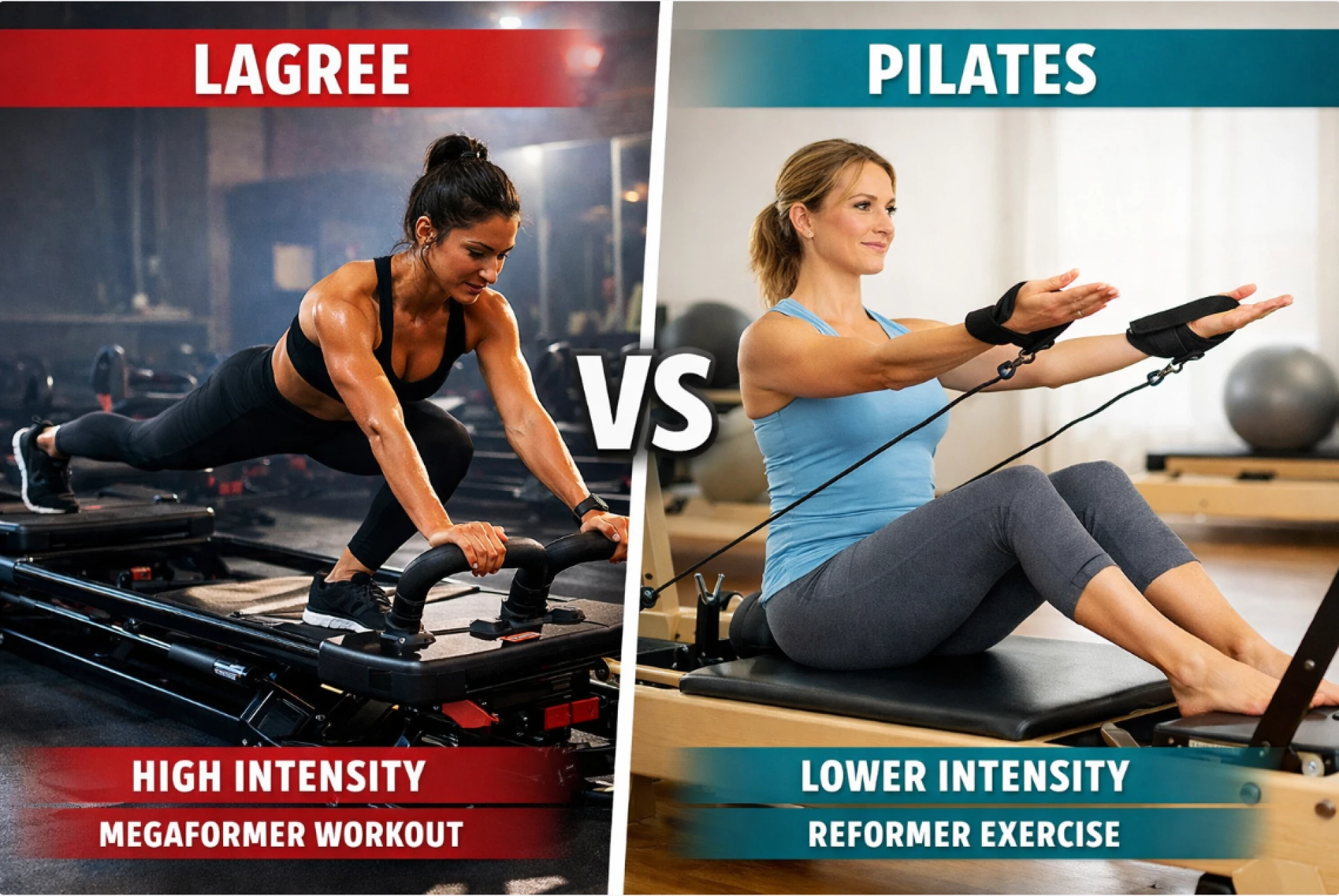

If you’ve ever wondered how Lagree vs Pilates are different, you’re not alone. A lot of people see the machines, hear words like “core” and “control,” and think they’re the same thing. But the way these workouts feel in your body is actually very different.
At Elevate Training, we see this confusion all the time when new members walk in the door. This guide will walk you through what each workout does, how they feel, and which one might be best for you right now.
Quick Overview: How Lagree vs Pilates Compare
Here is a simple way to think about it:
- A Lagree workout is high-intensity, low-impact strength training on a Megaformer. It feels slow, heavy, shaky, and very sweaty.
- A Pilates workout is typically maintained at a gentler pace and is focused more on yoga-like posture, alignment, and controlled movements.
It can still be hard, but it’s not quite as hardcore overall. Both build core strength, balance, and familiarity with your body. The biggest difference is how hard each pushes you and how fast you feel changes.
What Is Lagree Training? How Lagree Works
Lagree is a method of full-body workout created by Sebastien Lagree. It uses a special machine called the Megaformer. The carriage slides on rails with springs for resistance. You push and pull the carriage while keeping your muscles under tension the whole time.
Moves are slow, smooth, and controlled. You rarely get a full rest. This builds muscle endurance, strength, and stability all at once. Every class is designed as low-impact exercise, so it is kind to your joints while still being very challenging.
What a Lagree Class Feels Like
In a Lagree workout, you will:
- Move slowly for long sets (often 60–120 seconds per move)
- Feel deep shaking in your legs, abs, and arms
- Sweat a lot, even though you never jump
- Work your core the entire time
Many people say the first time on the Megaformer is humbling. It looks simple, but after a few minutes your muscles start to burn in a way you might not have felt before.
Why Lagree vs Pilates Feels So Intense
Lagree uses a few key ideas that make it feel extra strong:
- Slow tempo: Moving slowly keeps the muscles under stress.
- No long breaks: You move from one exercise to the next with very short rests.
- Full-body focus: Your legs, core, and upper body all work together.
At Elevate Training, coaches guide you through each move, adjust springs for you, and give options if you are a beginner. The workout is intense, but it is always controlled and safe.
What Is Pilates? Classic Pilates Basics
Pilates was created by Joseph Pilates in the early 1900s. At first, it was used to help dancers and soldiers who had been hurt move better. People know that Pilates workouts help build core strength, flexibility, and good posture.
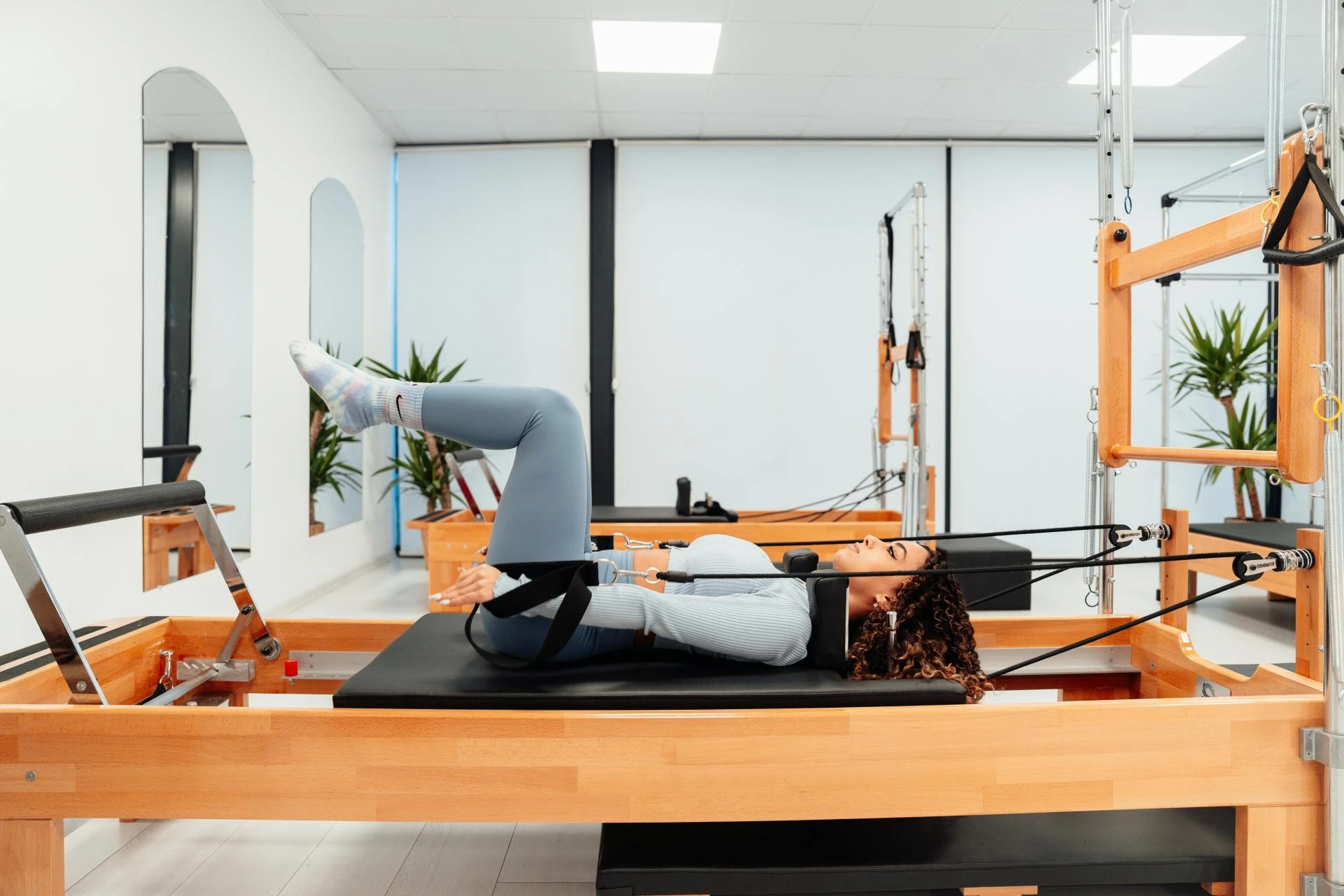
You can do Pilates on a mat or on machines like the Reformer, Chair, or Cadillac. A lot of studios also use light weights, balls, or bands. The movements are focused, smooth, and usually done with certain breathing patterns.
What a Pilates workout feels like
In a normal Pilates class, you will:
- Make smaller, more controlled movements
- Pay close attention to your spine and breathing.
- Strengthen the deep core muscles that support your back.
- Afterward, you should feel longer, looser, and more in line.
Pilates can be easy or hard, depending on the level, but it usually does not feel as intense or “athletic” as a strong Lagree workout. It often feels more like smart, careful training for your whole body.
Key Differences Between Lagree vs Pilates
To see the big picture, here’s a simple side-by-side view.
| Feature | Lagree (like at Elevate Training) | Pilates |
| Main Goal | Strength, muscle endurance, and fat burn | Alignment, mobility, and core strength |
| Equipment | Megaformer with adjustable springs | Mat, Reformer, Chair, and other Pilates gear |
| Intensity | High-intensity, full-body workout | Low to moderate intensity |
| Impact on Joints | Low-impact exercise | Low-impact exercise |
| Pace | Slow, but with almost no rest | Controlled, with more natural breaks |
| Cardio Effect | Feels like strength + cardio together | Light cardio, mainly strength and control |
| After-Class Feeling | “Shaky, spent, but strong” | “Loose, tall, and more aligned” |
Goals and Results
Choose Lagree if you want:
- Faster changes in muscle tone
- A workout that feels like strength training and cardio
- To burn a lot of calories in a short time
Choose Pilates if you want:
- Better posture and movement patterns
- A gentle way to build strength, especially after injury
- A strong base for other sports or daily life
Both can help with back pain, stability, and confidence in how you move. They just take different paths to get there.
Equipment and Moves
Lagree uses the Megaformer almost the whole time. The machine has:
- A sliding carriage
- Springs for resistance
- Handles and platforms at both ends
You’ll do moves like lunges, planks, and pikes with constant tension.
Pilates uses either just a mat or several types of machines. The resistance can be springs, body weight, or small tools. The moves are often more about smooth control and joint position than long muscle burn.
Intensity and Cardio
A strong Lagree workout will:
- Raise your heart rate
- Make your muscles shake
- Leave you feeling like you lifted weights and did cardio
A classic Pilates workout will:
- Gently raise your heart rate
- Make your muscles work, but with more focus on control than burn
- Leave you feeling more “organized” and aware of your body
Both are good for you. It just depends on how hard you want to be pushed.
Who Each Workout Is Best For
Lagree can be great if you:
- Like to feel challenged and a little “wrecked” (in a good way)
- Want a full-body workout in 45 minutes
- Are healthy enough for intense strength training, but still want low-impact exercise
Pilates can be great if you:
- Are new to movement or returning from time off
- Have been told to work on posture, core, or flexibility
- Want a slower style that still builds solid strength
At Elevate Training, many members start with Lagree as their main strength work and still do Pilates elsewhere for extra mobility and body awareness. They work well together.
How to Choose the Right Workout for You
Ask yourself a few simple questions:
- Do I want fast, strong results and don’t mind a tough workout?
- Try a Lagree workout first.
- Do I want a calmer, more mindful way to move and build core strength?
- Start with a Pilates workout.
- Do I have joint issues, back pain, or past injuries?
- Both are low-impact exercise, but talk to your doctor or physical therapist first. Then let your coach know your limits.
You do not have to pick only one forever. Many people switch between Lagree and Pilates depending on their energy, goals, and schedule.
Getting Started with Lagree at Elevate Training
If you are curious about Lagree and ready to try, a studio like Elevate Training is a great place to start. Here’s what you can expect:
- A short intro to the Megaformer so you know how it moves
- A coach who shows you how to set your springs and body position
- Clear, simple cues during class so you never feel lost
- Options to make moves easier or harder, based on your level
If you want to learn more or book a class, visit Elevate Training. Reading about Lagree is helpful, but feeling that first controlled shake on the machine will tell you more than any article ever can.
Conclusion: Listen to Your Body
Both Lagree and Pilates are smart, effective ways to train your whole body. Lagree is like Pilates’ intense, athletic cousin. Pilates is like the careful, precise teacher that builds a strong base for everything else.
You don’t have to pick one “better” workout. Instead, choose the one that fits your body, your goals, and even your mood right now. And if you’re drawn to that slow, shaking, full-body workout feeling, a Lagree workout at Elevate Training might be exactly what you’ve been looking for.
FAQs About Lagree and Pilates
Is Lagree harder than Pilates?
Most people feel Lagree is harder because it uses more resistance, longer holds, and fewer breaks.
Is Lagree good for beginners?
Yes, with a good coach and lighter spring settings, beginners can safely start Lagree at their own pace.
Can I do Lagree if I have bad knees?
Often yes, because it is low-impact exercise, but always check with your doctor first and tell your coach before class.
How many times a week should I do Lagree or Pilates?
2–4 times per week is enough for most people to see results and still recover well.
Can I mix Lagree and Pilates in the same week?
Absolutely; many people use Lagree for strength and Pilates for mobility and control, and they work very well together.
























Sign in to leave a comment.