
Table of Contents
- Introduction
- Understanding Tree Cabling and Bracing
- Signs Your Tree May Need Structural Support
- How Cabling a Tree Improves Safety and Longevity
- Comparing Tree Cable Bracing vs Tree Removal
- What to Expect During a Professional Installation
- Long Term Care and Maintenance
- Conclusion
- Book a Tree Cabling and Bracing Service Today
- Frequently Asked Questions
Key Takeaways
- Tree cabling and bracing provide supplemental structural support for mature trees with weak unions or split trunks.
- Cabling a tree helps reduce the likelihood of limb failure during wind and snow events.
- Tree cable bracing is most effective for healthy trees with correctable structural defects.
- Professional evaluation ensures proper placement and long term performance.
- Ongoing inspections are essential to maintain safety and system integrity.
Introduction
Mature trees add character, shade, and long term value to residential and commercial properties. However, as trees age, structural weaknesses can develop that increase the risk of limb failure. This is where professional tree cabling and bracing systems come into play. When properly designed and installed, these structural supports help stabilize vulnerable branches and trunks while preserving the natural beauty of the tree.
For homeowners, business owners, and property managers, understanding when cabling a tree is appropriate can make the difference between proactive preservation and costly storm damage. Rather than viewing structural support as a temporary fix, it should be considered a strategic investment in safety and tree longevity.
Understanding Tree Cabling and Bracing
Tree cabling and bracing are arboricultural techniques used to reinforce structurally weak sections of a tree.
What Is Cabling a Tree?
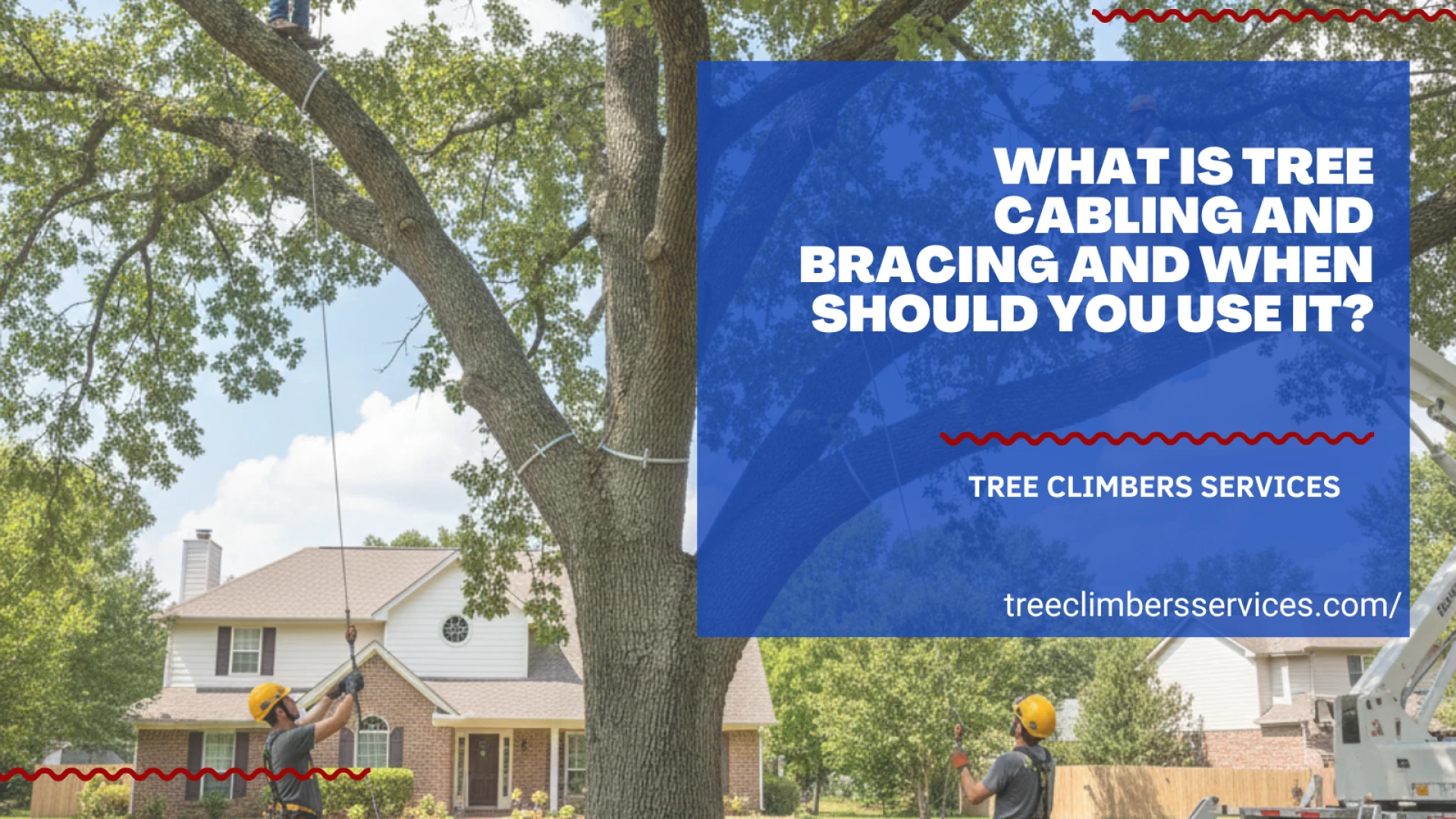
Cabling a tree involves installing flexible, high strength steel cables high in the canopy between major limbs. These cables limit excessive movement during storms while still allowing natural sway. Trees require some motion to maintain strength, so the objective is controlled movement rather than rigidity.
Cables are typically installed above weak branch unions or between co dominant stems to reduce mechanical stress during high winds.
What Is Tree Cable Bracing?
Tree cable bracing often incorporates threaded steel rods inserted through cracked trunks or weak branch attachments. These rods provide rigid reinforcement where wood fibers have already begun to separate.
In many cases, both systems are combined. Cables manage canopy movement, while braces stabilize existing splits. The exact configuration depends on the species, size, structural condition, and surrounding environment.
Signs Your Tree May Need Structural Support
Not every mature tree requires reinforcement. However, certain warning signs indicate that a professional evaluation may be necessary.
1. Co Dominant Stems
Trees with two large trunks emerging from the same point often lack strong connective wood. Over time, the junction can weaken, especially if bark becomes trapped between stems.
2. V Shaped Branch Unions
Narrow branch angles are more prone to splitting than wide, U shaped attachments. These weak unions can fail under heavy wind load.
3. Overextended Limbs
Large horizontal limbs stretching over roofs, parking areas, or walkways may create safety concerns if structural integrity declines.
4. Visible Cracks or Splits
If you notice a crack running down a trunk or through a major limb, tree cable bracing may help stabilize the affected area if decay is not extensive.
5. History of Storm Damage
Trees that have previously lost major limbs may benefit from preventative reinforcement to reduce future risk.
A certified arborist should assess the tree’s overall health, root stability, and decay presence before recommending cabling a tree.
How Cabling a Tree Improves Safety and Longevity
Structural support systems function by redistributing mechanical stress throughout the canopy.
Load Distribution
Cables transfer force from vulnerable branches to stronger sections of the tree. This reduces concentrated stress at weak unions during wind events.
Movement Control
Excessive swaying can cause progressive cracking. By limiting extreme motion, tree cabling and bracing reduce fatigue stress over time.
Property Protection
Mature trees are often located close to homes, garages, vehicles, and pedestrian areas. Reinforcement lowers the probability of large limb failure over high traffic zones.
Tree Preservation
In many cases, structural support extends the useful life of a healthy tree. Instead of removing a mature specimen that contributes shade and landscape value, support systems provide a balanced solution.
It is important to understand that no system eliminates risk entirely. Severe weather events may exceed the capacity of cables or braces. The goal is risk reduction, not absolute prevention.
Comparing Tree Cable Bracing vs Tree Removal
Property owners often ask whether reinforcement or removal is the better option. The answer depends on condition and context.
When Support Makes Sense
- The tree is healthy with localized structural weakness
- Decay is limited and not affecting the root system
- The tree has significant aesthetic or environmental value
- Risk can be reduced to an acceptable level
When Removal May Be Necessary
- Extensive trunk decay
- Root instability
- Severe structural failure
- High risk location with limited mitigation options
A professional risk assessment helps determine which path aligns with safety and long term property goals.
What to Expect During a Professional Installation
Tree cabling and bracing require technical expertise and proper equipment.
Step 1: Detailed Inspection
An arborist evaluates canopy structure, trunk condition, previous pruning history, and proximity to structures.
Step 2: Strategic System Design
Cable height and anchor placement are calculated to optimize load sharing. Incorrect placement can increase stress rather than relieve it.
Step 3: Hardware Installation
Specialized hardware, including eye bolts, lag hooks, and threaded rods, is installed according to arboricultural standards. Care is taken to minimize unnecessary wounding.
Step 4: Documentation and Monitoring Plan
Reputable providers outline inspection intervals and maintenance recommendations. Systems should be reviewed every few years to adjust for growth and hardware wear.
DIY installation is strongly discouraged. Working at canopy height presents fall hazards, and improper drilling can compromise structural integrity.
Long Term Care and Maintenance
Installing a support system is not a one time solution. Trees continue to grow and respond to environmental stressors.
Routine follow up inspections allow professionals to:
- Check hardware tension
- Identify new cracks or decay
- Adjust or replace aging components
- Evaluate whether continued support is appropriate
Combining structural reinforcement with proper pruning and general tree care often produces the best results.
Conclusion
Tree cabling and bracing serve as proactive solutions for managing structural weaknesses in mature trees. By stabilizing vulnerable limbs and reinforcing compromised trunks, these systems help reduce storm related risks while preserving valuable landscape assets.
For homeowners, business owners, and property managers, cabling a tree can be a practical alternative to removal when performed under professional guidance. With proper design, installation, and periodic inspection, tree cable bracing supports both safety and long term tree health.
Book a Tree Cabling and Bracing Service Today!
Protect your property and preserve your mature trees with professional structural support. Our experienced team evaluates each tree carefully and designs customized reinforcement systems based on safety, biology, and long term performance.
Contact us today to schedule a professional assessment and learn whether tree cabling and bracing is the right solution for your landscape.
Frequently Asked Questions
1. How long does tree cabling and bracing last?
Most tree cabling and bracing systems are designed for long term use. However, they require periodic inspection every few years to ensure hardware integrity and proper tension.
2. Is cabling a tree harmful to its health?
When performed by a trained professional, cabling a tree is designed to minimize injury. Proper placement and hardware selection reduce stress and support natural healing processes.
3. Can tree cable bracing fix a split trunk?
Tree cable bracing can stabilize certain splits if the tree remains structurally viable and decay is limited. Severe splits may still require removal depending on risk.
4. Does tree cabling and bracing eliminate storm damage risk?
No system can guarantee complete protection. Tree cabling and bracing reduce the likelihood of certain failures but cannot prevent all damage during extreme weather.
5. How do I know if my tree is a candidate for cabling?
A certified arborist can assess structural weaknesses, overall health, and risk factors to determine whether cabling a tree is appropriate for your specific situation.





















Sign in to leave a comment.