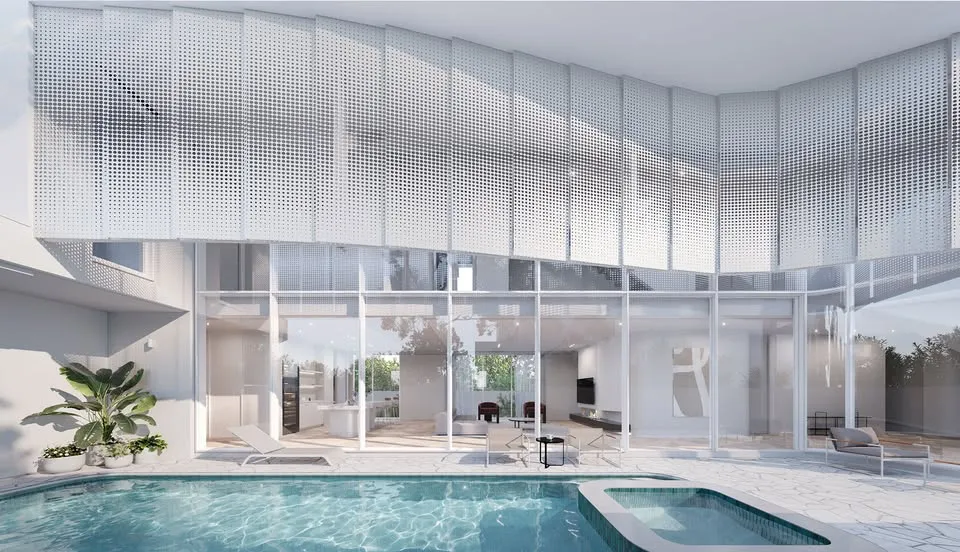

Most people thinking about a custom home start with a vague idea — more space, better light, a kitchen that works — and not much else. Then they start researching and quickly realise how much is involved before a single thing gets built.
Melbourne is a city where custom home building is genuinely common. The inner ring suburbs — Toorak, South Yarra, Hawthorn, Brighton, Kew — have a high concentration of knockdown rebuilds and architecturally designed new builds, partly because land values make it financially rational to build well rather than buy something mediocre. But the process is more involved than most first-time custom home clients expect.
Here's a clear-eyed look at what it actually involves.
The difference between custom and project homes
A project home is chosen from a fixed catalogue of floor plans. You pick a design, make some limited variations, and the builder delivers what they've built hundreds of times before. It's faster and generally cheaper per square metre.
A custom home starts from nothing. The floor plan, the orientation, the ceiling heights, the material choices — all of it is designed specifically for your block, your household, and the way you actually use a home. That design process takes time and costs money before construction even begins, but it produces a result that can't be replicated.
The trade-off is real: custom builds cost more and take longer. For many Melbourne homeowners, particularly those building on established inner-city or bayside blocks with irregular dimensions, heritage overlays, or challenging site access, a project home simply isn't a viable option anyway. The site constraints alone rule out standard floor plans.
What the timeline looks like
From the first conversation with a builder to moving in, most custom home projects in Melbourne take 18 to 24 months. That sounds long until you break it down.
Design and documentation typically takes three to six months, depending on the complexity of the brief and whether you're working with your own architect or through the builder's design partners. Planning permits can add another three to six months on top — longer for heritage-affected properties or sites with overlays.
Construction itself usually runs nine to fifteen months for a well-specified custom home. The range is wide because a compact two-storey on a straightforward inner-city block is a very different project from a large-footprint home with a basement, complex facade, and bespoke joinery throughout.
The mistake most people make is underestimating the pre-construction phase. Getting that part right — aligned brief, accurate cost plan, complete documentation — is what protects the construction timeline. Projects that cut corners in design and approvals tend to pay for it with variations, delays, and budget blowouts later.
What drives the cost
Custom home costs in Melbourne typically start around $2,500 per square metre for a well-finished but straightforward build, and can reach $5,000 to $8,000+ per square metre for high-specification homes with complex structural elements, imported materials, or premium joinery throughout.
The main cost drivers are design complexity, site conditions, and specification level. A sloping block, tight access, reactive soil, or heritage permit requirements all add cost. So does the choice to use stone benchtops, custom timber joinery, high-performance glazing, or bespoke facade materials — each individually manageable, but compounding quickly.
A detailed guide to the custom home building process in Melbourne — covering what to expect at each stage, how costs are structured, and what questions to ask a builder — is worth reading before committing to a direction.
What to look for in a builder
The most important thing to verify is whether a builder has actually completed custom homes comparable to what you're planning — not renders, not display homes, but real finished projects you can inspect or at least view in detail.
Ask about their process for managing council approvals, how they handle design changes during the build, and what's included in their warranty. A fixed-price contract based on fully documented plans is the cleanest way to protect your budget. Cost-plus arrangements can work but require a higher level of trust and carry more financial risk for the client.
Melbourne's inner suburbs have no shortage of capable custom builders. The ones worth working with are transparent about costs from the start, have a clear project management structure, and don't pressure you to commit before you understand what you're signing.





















Sign in to leave a comment.