
Key Takeaways
- Hidden learning is everywhere — sharing, following routines, and exploring spaces all build development, even when it doesn't look like learning.
- Physical milestones matter too — puzzle solving, climbing, and grip control are just as important as new words.
- Social skills need real experience — waiting, handling "no," and managing conflict only develop through repeated everyday interactions with other kids.
- Curiosity drives learning at this age — good programs weave counting, language, and problem-solving into play naturally rather than forcing it.
- Routine builds independence — predictable structure reduces anxiety and quietly turns into self-started habits over time.
- Progress is gradual but adds up — more words, easier drop-offs, and growing confidence around peers all stack up slowly over weeks and months.
Introduction
If you're looking up toddler care near Naperville, you're checking distances, looking at hours, and maybe reading a few parent reviews to get a feel for a place.
Then the other questions show up.
How long before my kid stops crying at drop-off? Will they make friends? What's actually happening during those hours I'm not there?
These aren't small questions, and they shouldn't be. The toddler years carry a lot more developmental weight than most people realize — even the ordinary stuff, sitting in a circle, figuring out whose turn it is, exploring a new sensory bin — all of it is doing something.
Physical Development Deserves Equal Attention
Language gets noticed first. It's hard to miss — one week your child has a handful of words, and then suddenly they're narrating the entire grocery trip.
Physical progress sneaks up on you differently.
It's the afternoon when your child fits a puzzle piece in without any help, after days of frustration. The first time they made it across that climbing structure, they'd been watching from a distance. The way a marker grip that looked completely chaotic a month ago now looks... intentional.
Those things count.
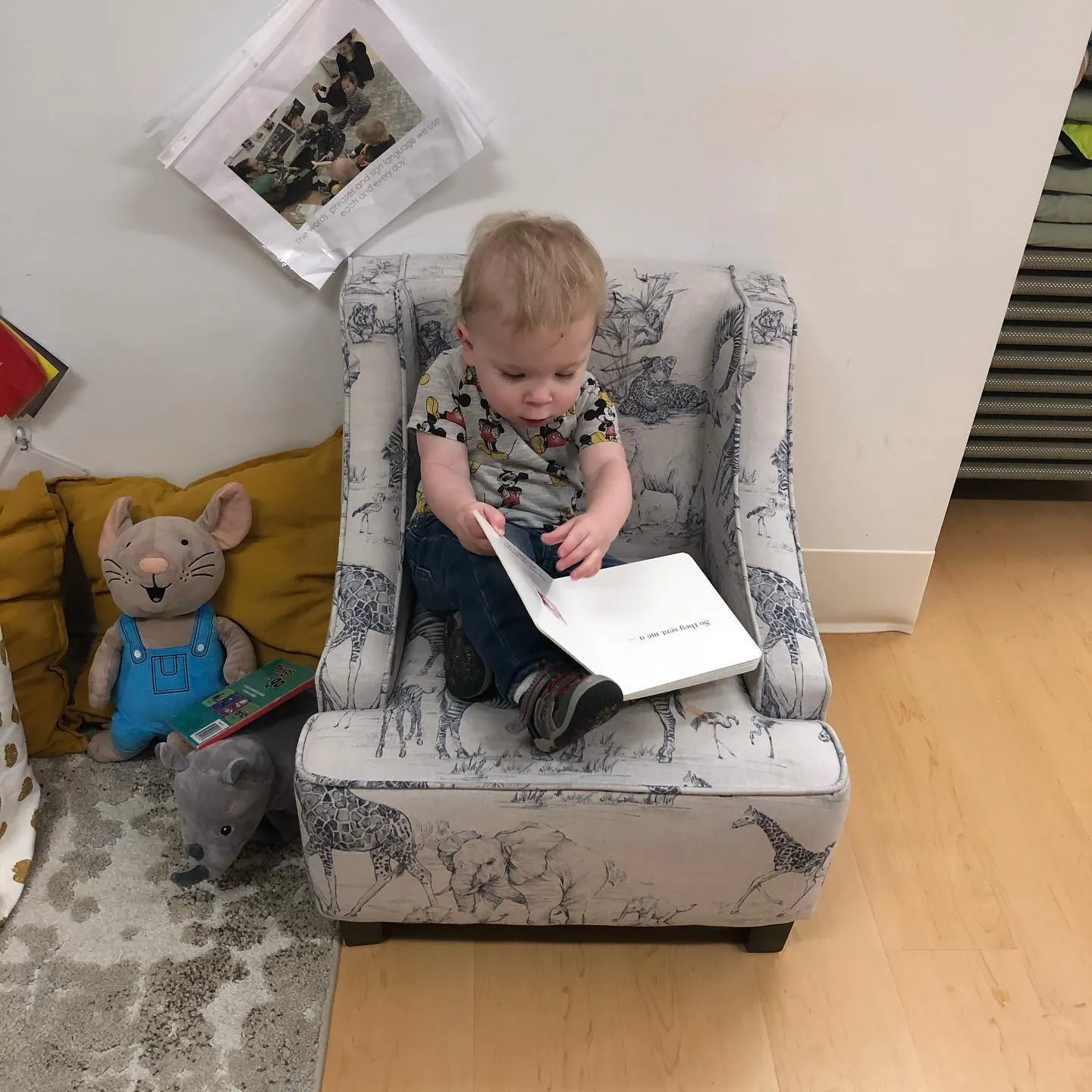
When comparing childcare near Naperville options, the physical space matters more than it might seem. Toddlers genuinely need room to climb things, carry things, build and knock down, and build again. A huge chunk of learning at this age moves through the body, not just through listening.
Social and Emotional Development
Something shifts a few weeks into group care. Parents notice their child suddenly has strong feelings about other people's behavior.
Someone grabbed the blue marker. That's her chair. He took the last cracker and now everything is terrible.
These moments feel minor from the outside. They're actually pretty important. Kids get real, repeated chances to work through things no worksheet can teach — what it feels like to wait when you don't want to, how to handle being told no, how to get an adult's attention without completely losing it.
None of that gets figured out in a day. It happens slowly, through a hundred small moments.
Language and Early Cognitive Skills
The questions around this age are relentless, and honestly, kind of wonderful.
You answer one, and three more are already lined up. Why is the sky that color? Where did the puddle go? What's inside that? It starts to feel less like a conversation and more like your child is running their own little research operation.
Good programs lean into that rather than constantly redirecting it. A color conversation that starts at the art table might still be going on during outdoor time. Counting happens when snack cups get handed out. Problem-solving shows up when the block tower falls over for the fifth time and your child decides to try a completely different approach.
It looks like playing. It is playing. It's also a lot more than that.
Routine Helps Children Feel Secure
If you've ever watched a toddler react to a slightly late lunch, you already understand this section.
Small changes — a skipped activity, a different pickup person, running behind on the usual schedule — can genuinely throw a young child off. What registers as a minor inconvenience to an adult can feel like a real disruption to a two or three-year-old.
Predictable structure takes some of that uncertainty away. When kids know what to expect, they spend less energy bracing for what's next and more energy actually engaging.
Over time, things start happening automatically — hands get washed before being asked, belongings go back in the right spot, transitions get easier. Independence tends to grow quietly inside these small daily habits.
Summing Up
The impact of a good toddler program doesn't usually hit all at once. It accumulates. More words. Easier mornings. A child who walks into a room of other kids and actually seems comfortable there.
That gradual shift is exactly why so many families take the search seriously — and why finding the right environment in these early years feels like it matters, because it does.
Searching for reliable childcare near Naperville? KLA Schools offers toddler programs designed around the everyday experiences that help young children learn, participate, and gain confidence.
Submit an admission enquiry today.
FAQ
How Important Is Daycare For Toddlers?
For toddlers in Naperville, daycare offers more than supervision. It builds early social habits, language exposure, and routine — things that genuinely shape how a child learns and interacts well before formal school begins.
What Are The 3 R's Of Early Childhood Education?
In most Naperville early learning programs, the 3 R's are Relationships, Routines, and Responsiveness. These three shape how toddlers feel safe, build trust with caregivers, and develop the confidence to explore and learn independently.
What Is The Most Important Thing In Early Childhood Education?
Most child development research points to secure attachment. In Naperville childcare settings, when toddlers feel emotionally safe with their caregivers, everything else, including language, curiosity, and social skills, tends to develop more naturally from there.

























Sign in to leave a comment.