
A concrete floor can look plain, dusty, or unfinished for years, especially in basements, garages, workshops, and renovated spaces across the Lower Mainland. But with the right polishing work, that same slab can become a smooth, durable, low-maintenance surface that feels clean, modern, and practical for everyday use.
For homeowners in Surrey, Vancouver, Burnaby, Richmond, Coquitlam, Langley, Delta, New Westminster, White Rock, Tsawwassen, and nearby Greater Vancouver communities, polished concrete is often considered when they want a floor that can handle moisture, daily traffic, tools, storage, vehicles, and regular family life without feeling delicate.
The big question is usually simple: what is actually included in concrete floor polishing services, and what happens from the first visit to the final finish?
Here is a clear start-to-finish breakdown.
First, the Floor Needs to Be Assessed Properly
A proper polishing project does not start with a machine. It starts with looking at the concrete itself.
An experienced concrete polishing contractor will inspect the slab to understand its condition, age, surface texture, cracks, stains, coatings, moisture concerns, and previous repairs. This step is especially useful in Greater Vancouver homes because concrete surfaces can be affected by damp conditions, heavy use, and years of wear.
For example, a basement floor in Vancouver may have a different condition than a garage floor in Surrey or a workshop floor in Langley. Some slabs are smooth but dull. Others have minor cracks, uneven areas, old adhesive, paint, surface stains, or patches from earlier work.
The contractor needs to answer a few key questions before the work begins:
Can the existing concrete be polished successfully?
Are there cracks or damaged areas that need attention first?
Is there an old coating or residue that must be removed?
What finish level is realistic for this floor?
Will the final look be cream, salt-and-pepper, or more exposed aggregate?
This is where homeowners should expect honesty. Polishing improves and refines concrete, but it does not hide every deep flaw like carpet or vinyl might. If the slab has character, some of that character may still show through in the finished floor. For many people, that natural variation is part of the appeal.
Surface Preparation Comes Before the Shine
The first physical stage is surface preparation. This is one of the most important parts of professional concrete polishing, as the final result depends heavily on what happens before polishing begins.
Surface preparation may include removing dirt, surface contaminants, minor coatings, old sealers, adhesive residue, or uneven areas. If the concrete has small blemishes, surface marks, or rough spots, the initial grinding helps open up the floor and create a more consistent base.
This is also where the contractor checks for cracks and joints. If repairs are needed, they should be addressed before polishing progresses too far. For homeowners, this step answers one of the biggest concerns: “Will my old concrete still look old after polishing?”
The answer depends on the floor. If the slab is in reasonable condition, preparation can make a major difference. If the floor has deep staining, severe cracking, or major surface damage, the contractor should explain what can and cannot be achieved.
Grinding Opens and Levels the Surface
After preparation, the real concrete grinding and polishing process begins.
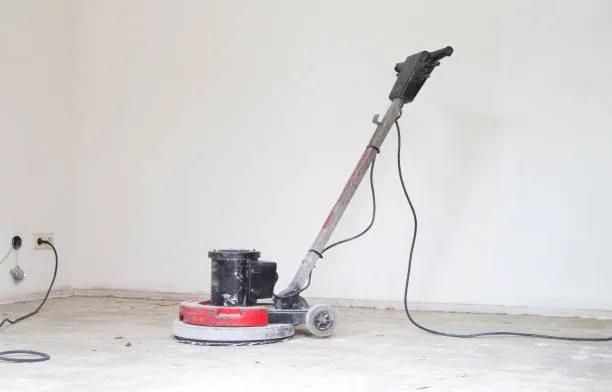
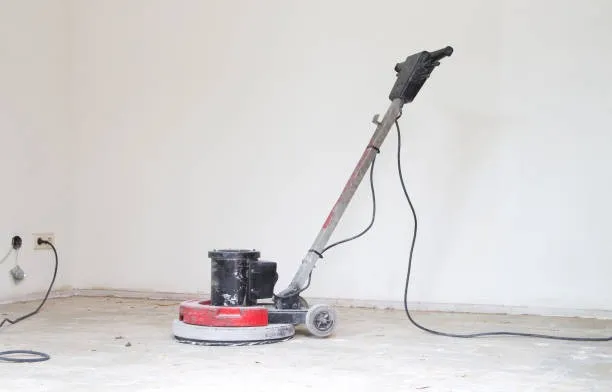
Grinding uses heavy-duty equipment with diamond abrasives to cut, smooth, and refine the surface. Think of it as controlled sanding, but for concrete. The first passes are more aggressive because they remove imperfections, roughness, and surface material. Later passes become finer and more refined.
This is where the contractor begins shaping the floor's final look.
A light grind may keep more of the original cream surface intact. A deeper grind may reveal more sand and stone within the concrete. Some homeowners like a clean, soft look, while others prefer more texture and visible aggregate.
In garages, basements, and indoor work areas, this stage can make the floor feel completely different. What once looked dusty and unfinished can begin to look intentional and clean. In larger areas, such as home shops, strata spaces, or commercial-style garages, grinding also helps create a more even and practical surface.
Densifying Helps Strengthen the Concrete Surface
Polishing is not just about making the floor shiny. A proper concrete floor polishing process from start to finish includes strengthening the surface as it is refined.
A densifier is often applied during the process to help harden the concrete. This treatment reacts with the concrete surface, making it denser, stronger, and more resistant to dusting. That is especially useful for spaces that see daily use, such as garages, utility rooms, workshops, storage areas, and commercial floors.
Homeowners often ask whether polished concrete is the same as simply sealing concrete. It is not.
Sealing usually sits closer to the surface, depending on the system used. Polishing is a mechanical process that grinds, refines, densifies, and finishes concrete. That is why polished concrete floors can feel more permanent and less dependent on a coating that may peel or wear away.
For Lower Mainland homes, this can be a practical advantage. A dense, polished surface is easier to clean and less likely to hold dust compared with raw, unfinished concrete.
The Floor Is Refined Through Multiple Polishing Passes
Once the concrete has been ground and densified, the polishing moves into finer stages.
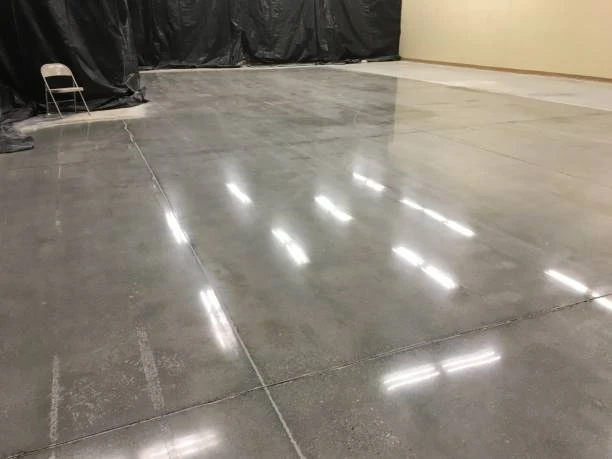
The contractor uses progressively finer diamond abrasives to smooth the surface and build the chosen level of sheen. This may move from a low-sheen matte finish to a satin finish or a more reflective high-gloss finish, depending on the homeowner's preferences and the floor's capacity.
Polished concrete pages mention customizable finish options, including cream, salt-and-pepper, full aggregate, matte, satin, and high-gloss finishes. This gives homeowners room to choose a look that fits the space.
For example:
A basement suite may look better with a satin finish because it feels clean without being too reflective.
A garage may suit a more practical, low-to-medium sheen.
A home studio or showroom-style space may benefit from a higher-gloss finish.
A modern renovation may use exposed aggregate for a more decorative look.
Final Protection Helps With Maintenance
After the floor reaches the desired sheen, the final stage may include a protective treatment or guard to help the surface resist stains and make cleaning easier.
This does not mean the floor becomes impossible to damage. Concrete is strong, but it still needs reasonable care. Spills should be cleaned, abrasive debris should be swept, and harsh chemicals should be avoided unless recommended by the contractor.
The advantage is that polished concrete is generally simple to maintain. It does not require carpet cleaning, grout scrubbing, waxing, or frequent coating replacement. Routine sweeping and damp mopping are usually enough for normal household use.
For Greater Vancouver homeowners, this is one of the reasons polished concrete is appealing. Wet shoes, garage use, storage areas, pets, hobbies, and busy family routines can be hard on softer flooring materials. A polished concrete surface is built for real use.
What Homeowners Should Expect During the Project
Most homeowners want to know what the job will feel like inside their home.
There will be equipment. There will be noise. The space will need to be cleared. Access will need to be planned. If the project is in a garage, basement, or renovation area, the contractor will likely discuss the amount of space needed, what should be moved, and how to prepare the work area.
Dust control is another major question. Professional equipment and proper site practices help manage dust during grinding and polishing.
The timeline depends on the floor size, condition, finish level, and repair needs. A simple open garage floor is different from a basement with old adhesive, cracks, rooms, corners, and access limitations. The best approach is to have the contractor assess the space and explain the expected process before work begins.
What Can Affect the Final Cost?
The cost of concrete floor polishing services is not based only on square footage. Several details can affect the price.
The condition of the concrete is a major factor. A clean, open slab is usually easier to work with than a floor with coatings, glue, cracks, or uneven patches. The chosen finish also affects the work. A deeper aggregate exposure or higher gloss level usually requires more grinding and polishing steps.
Access can also play a role. A wide-open garage in Surrey may be easier to work in than a tight basement in Vancouver with stairs, corners, and limited ventilation. Repair needs, stain removal, edge work, and final protection can also influence the scope.
A good contractor should explain these factors clearly so the homeowner understands what they are paying for.
Is Polished Concrete Right for Every Home?
Polished concrete is a strong option, but it is not perfect for every situation.
It works well for basements, garages, workshops, storage rooms, modern interiors, utility spaces, and some main-floor renovation projects. It can also be a smart choice where homeowners want a clean, low-maintenance surface without covering the existing slab.
However, if someone wants a soft, warm, cushioned floor, concrete may not give that feeling on its own. Area rugs can help in living spaces, but the surface itself will remain hard. If the concrete is severely damaged or structurally compromised, repair work may be required first, or another solution may be recommended.
The value of professional concrete polishing is that it gives you a realistic answer before you commit. The goal is not just to create a shiny floor. The goal is to create a surface that suits the home, the slab, and the way the space is actually used.
FAQs
Q1. Can my existing basement or garage floor be polished?
In many cases, yes, but the concrete needs to be assessed first. The contractor will look at cracks, coatings, stains, uneven areas, and moisture concerns before confirming whether polishing is a good option.
Q2. Will polishing remove all stains and cracks?
Not always. Grinding can reduce some surface marks, but deep stains, cracks, and older repairs may still be visible. Polishing improves the surface, but it does not erase every part of the concrete’s history.
Q3. Are polished concrete floors slippery?
Polished concrete can look glossy, but that does not automatically mean it is slippery. The final texture, finish level, and maintenance all play a role. Your contractor can recommend a finish that suits how the space will be used.
Q4. How do I maintain polished concrete at home?
Most homeowners only need regular sweeping and occasional damp mopping. Avoid letting grit build up, and clean up spills promptly. The simpler maintenance is one of the main reasons homeowners choose polished concrete.
Q5. Can polished concrete work in damp conditions in Greater Vancouver?
Yes, polished concrete can be a practical choice in the Lower Mainland because it creates a dense, easy-to-clean surface. The contractor should still assess the slab and any moisture concerns before starting.
Q6. Is polishing better than adding a coating?
It depends on the space. Polishing refines the concrete itself, while coatings sit on its surface. Polished concrete is often chosen by homeowners who want a durable, low-maintenance finish without relying on a coating that may need reapplication later.
Ready to Talk About Your Concrete Floor?
A polished floor starts with a proper look at the concrete you already have. If your basement, garage, workshop, or commercial-style space in the Lower Mainland is ready for a cleaner, stronger, more finished surface, speak with a local team that understands concrete from repair to finishing.
Anything Concrete Inc. provides concrete polishing, repair, sealing, and warehouse concrete services across Surrey, Vancouver, and the Greater Vancouver area.
Call Anything Concrete Inc. at (604) 690-7023 to discuss your floor, request a free estimate, and find out whether polished concrete is the right fit for your space.





























Sign in to leave a comment.