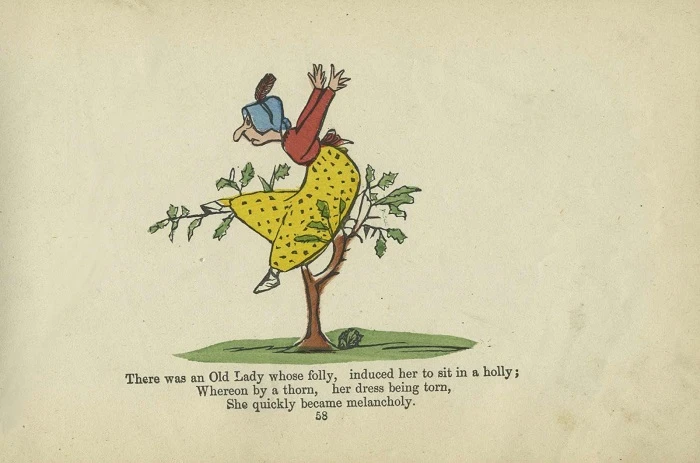

Edward Lear is widely celebrated as a master of literary nonsense, a poet whose limericks and songs seem, at first glance, to revel in absurdity for its own sake. Yet beneath the playful language, improbable characters, and surreal situations lies a subtle but persistent form of social commentary. Lear’s nonsense verse is not an escape from reality but a refracted mirror of Victorian society, revealing its anxieties, hierarchies, and contradictions through humor and exaggeration. By examining the deeper layers of his work, it becomes clear that nonsense operates as a powerful tool for critique rather than mere entertainment.
The Victorian Context of Lear’s Nonsense
Order, Convention, and the Absurd
The Victorian era was characterized by rigid social structures, strict moral codes, and an emphasis on propriety. In such a context, nonsense poetry offered a space where conventional logic could be suspended and social norms inverted. Edward Lear’s work thrives in this space of disruption. His poems present worlds governed by strange rules, yet these worlds echo the structures of Victorian society in distorted form.
By exaggerating social conventions until they become ridiculous, Lear exposes their fragility. The apparent chaos of his verse invites readers to question the supposed naturalness of social order. Nonsense becomes a means of revealing how arbitrary many social expectations truly are.
Authority Figures and Their Ridiculousness
Eccentric Adults and Mocked Authority
Lear’s poems frequently center on adult characters who occupy positions of authority or social respectability. These figures, however, are often portrayed as foolish, stubborn, or tragically misunderstood. Through these portrayals, Lear subtly undermines the assumption that authority is inherently wise or deserving of reverence.
In many limericks, authority figures react with disproportionate outrage to harmless behavior. Their responses suggest a society more concerned with appearances than compassion. By presenting authority as comically flawed, Lear questions the legitimacy of rigid hierarchies and highlights the human weaknesses that lie beneath formal roles.
The Outsider as a Central Figure
Social Exclusion and Eccentricity
A recurring motif in Lear’s work is the figure of the outsider. His characters are often physically unusual, socially awkward, or emotionally isolated. Rather than condemning these figures, the poems frequently invite sympathy for them. Society, in contrast, is depicted as intolerant and quick to judge.
This dynamic reflects Victorian anxieties about conformity. Edward Lear’s nonsense verse critiques a culture that marginalizes those who do not fit prescribed norms. By framing exclusion as absurd and cruel, the poems challenge readers to reconsider the morality of social conformity.
Compassion Hidden in Humor
Although Lear’s poetry is humorous, it often carries an undercurrent of sadness. Many characters suffer not because of inherent flaws but because of society’s inability to accept difference. The humor softens the critique but does not erase it, allowing social commentary to emerge without overt moralizing.
Language as a Tool of Resistance
Invented Words and Disrupted Meaning
Lear’s playful manipulation of language is one of his most distinctive traits. Invented words, unconventional grammar, and unexpected rhymes disrupt conventional communication. This linguistic freedom can be read as a challenge to the authoritative use of language in Victorian society.
Language during Lear’s time was closely tied to class and education. By deliberately breaking linguistic rules, Lear democratizes expression. His nonsense suggests that meaning does not belong exclusively to those who master formal language, subtly undermining linguistic elitism.
Critique of Social Rituals and Customs
Marriage, Manners, and Absurd Expectations
Some of Lear’s poems satirize social rituals such as courtship and marriage. These institutions, treated with seriousness in Victorian culture, are often rendered absurd in his verse. Characters may pursue relationships in illogical or exaggerated ways, exposing the performative nature of social expectations.
Through exaggeration, Lear reveals the pressure placed on individuals to conform to social roles. The nonsense framework allows him to question whether such rituals truly serve human happiness or merely uphold tradition.
The Childlike Perspective as Social Insight
Innocence Versus Social Conditioning
Lear’s poetry is often associated with children, yet its appeal to younger audiences should not obscure its critical depth. The childlike tone allows the poems to question social norms with disarming simplicity. What appears obvious to a child may reveal the illogic of adult conventions.
This perspective aligns with the idea that nonsense can uncover truths obscured by habitual thinking. By adopting a playful voice, Edward Lear creates space for questioning that might otherwise be dismissed or censored.
Nonsense as Emotional Expression
Melancholy Beneath the Humor
Lear’s own life was marked by loneliness and insecurity, and this emotional context informs his work. Many poems balance humor with melancholy, suggesting an awareness of emotional realities often suppressed in polite society.
The emotional honesty embedded in nonsense verse serves as a critique of Victorian emotional restraint. By giving voice to sadness and longing in an indirect way, Lear challenges norms that discouraged open emotional expression.
Social Commentary Without Moral Preaching
Subtlety as Strength
One of the most striking aspects of Lear’s social commentary is its subtlety. Rather than presenting explicit arguments, his poems invite interpretation. This openness allows readers to engage with the critique on their own terms.
The lack of moral preaching ensures that the poems remain playful and accessible. Yet the underlying questions about authority, conformity, and compassion persist, giving the work lasting relevance.
Legacy of Lear’s Nonsense
Enduring Relevance Across Generations
The social commentary embedded in Edward Lear’s nonsense has contributed to its enduring appeal. Modern readers continue to find meaning in his playful subversion of norms. The poems resonate in societies that still grapple with issues of exclusion, authority, and individuality.
By cloaking critique in absurdity, Lear created a form of social commentary that transcends its historical context. His work demonstrates that nonsense can be a serious artistic strategy.
Conclusion
The nonsense of Edward Lear is far more than whimsical entertainment. Beneath its playful surface lies a nuanced social commentary that interrogates authority, conformity, and emotional expression in Victorian society. Through eccentric characters, linguistic experimentation, and exaggerated scenarios, Lear exposes the absurdities of rigid social norms.
His poetry invites readers to laugh, but also to reflect. By using nonsense as a lens, Lear reveals truths that might otherwise remain hidden. The enduring power of his work lies in this duality, where humor and critique coexist, ensuring that his poetry continues to engage and challenge readers across generations.

































Sign in to leave a comment.