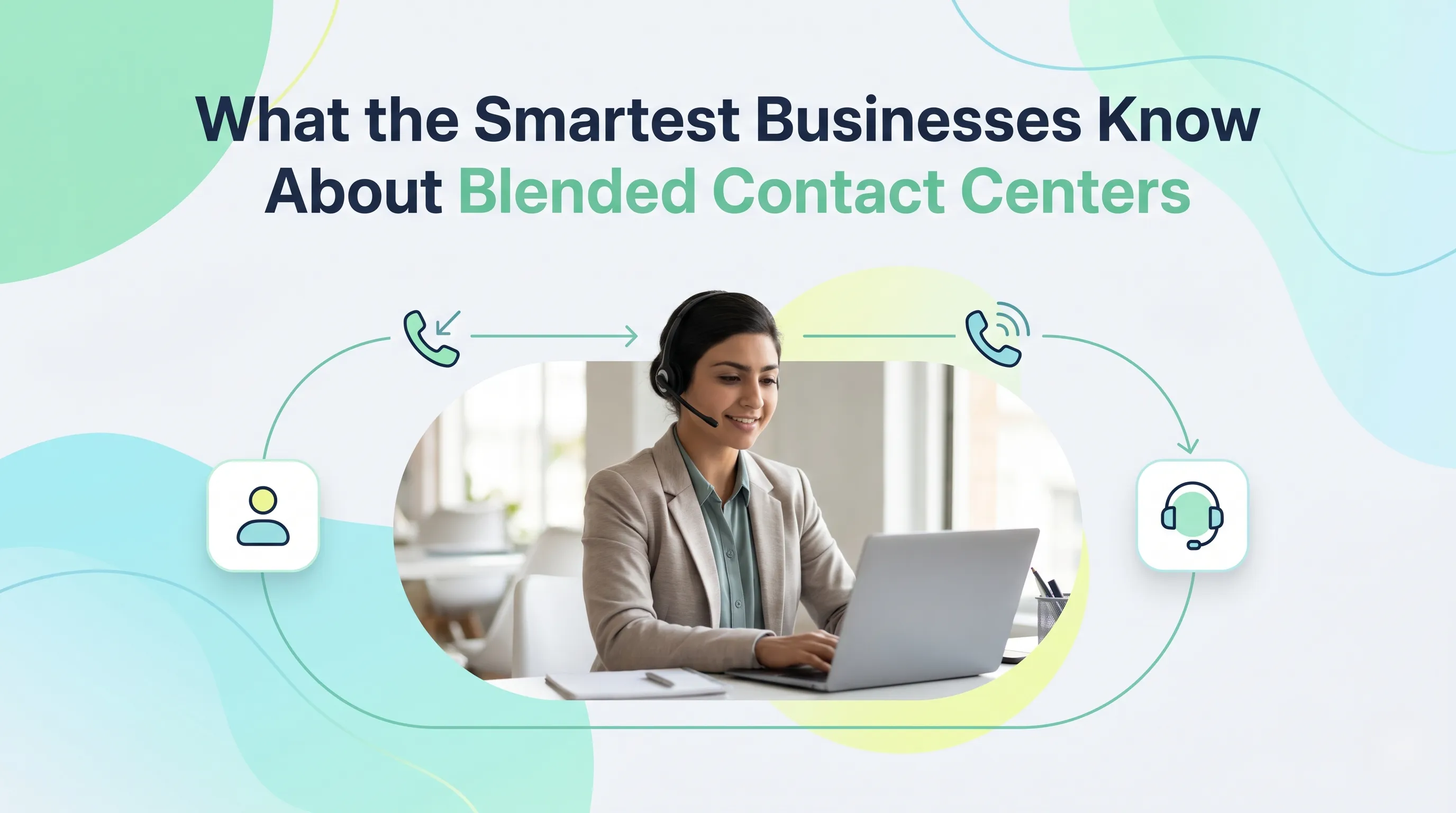

Customer communication rarely follows a straight line anymore. A single customer may call for support then expect a follow up call later about an offer or update. When businesses separate inbound and outbound communication it creates delays and missed chances. Teams often work in silos and this slows down response time.
A blended contact center solves this challenge by combining inbound and outbound communication in one system. Smart businesses use this model to manage both customer support and outreach together. Agents can answer incoming calls and also make outbound calls when needed. This balanced approach helps companies use their teams better and keep communication flowing without breaks.
How a Blended Contact Center Brings Everything Together
A blended contact center is designed to handle both inbound call center tasks and outbound call center activities within the same setup. Inbound calls come from customers who need help or information. Outbound calls are made by agents for follow ups, sales campaigns or reminders.
Instead of keeping separate teams the system allows agents to switch between inbound and outbound tasks based on call flow. When inbound call traffic is high agents focus on customer support. When call volume drops the system assigns outbound calls such as follow ups or lead calls.
This process often works with auto dialer tools called routing systems and customer data platforms. These tools help manage call distribution and ensure that agents always have work to do. Because everything runs in one place businesses avoid confusion and improve communication flow across departments.
Smarter Use of Agents and Time
One thing smart businesses understand is the value of agent time. In traditional setups some agents stay busy while others wait for calls. This uneven workload reduces productivity and affects service quality.
A blended contact center helps solve this issue by balancing work across the team. Agents do not sit idle when inbound calls are low. Instead they shift to outbound tasks such as customer follow ups or service reminders. This keeps the team active throughout the day.
At the same time when inbound traffic rises the system moves agents back to support calls. This flexibility ensures that customer calls are handled quickly without long waiting times. Businesses get more output from the same team which improves overall efficiency without increasing staff size.
Better Customer Experience Through Faster Response
Customers expect quick answers when they contact a business. Long wait times or repeated call transfers often lead to frustration. A blended contact center helps improve response time by using available agents more effectively.
Because agents are shared between inbound and outbound tasks more people are available to answer calls during peak hours. This reduces call queues and helps customers connect with support faster. Customers do not need to wait while agents switch systems or search for information.
The system also allows better follow up communication. If a customer calls for support the same team can later make an outbound call to check if the issue is resolved. This creates a complete communication cycle that improves customer satisfaction.
Smart businesses know that faster response and consistent follow up build trust and long term relationships.
Stronger Sales and Customer Engagement
A blended contact center is not only about handling support calls. It also helps improve sales and customer engagement. Businesses can use outbound calling to reach customers with offers updates and reminders while still managing incoming support calls.
Agents can use customer data to make more relevant outbound calls. For example after resolving a support issue an agent can later contact the customer with a related offer. This creates a more personal communication experience.
Because inbound and outbound communication work together businesses can manage the full customer journey. Customers receive support when they need help and also hear from the business at the right time. This improves engagement and increases the chances of repeat business.
Smart businesses use blended contact centers to turn every interaction into an opportunity to strengthen customer relationships.
Better Control Through Data and Monitoring
Another key advantage of a blended contact center is better visibility into communication performance. Businesses can track both inbound and outbound activities from a single platform. This makes it easier to understand how the team is performing.
Managers can review call volume response time and agent activity through detailed reports. They can see when call traffic is highest and adjust team schedules to match demand. This helps maintain service quality during busy periods.
Call monitoring tools also allow managers to listen to conversations and guide agents when needed. This improves training and helps maintain consistent communication standards. Because all data is available in one place businesses can make informed decisions to improve operations.
Smart companies rely on these insights to refine their communication strategy and improve overall performance.
Flexibility That Supports Business Growth
Growing businesses need systems that can adapt to changing needs. A blended contact center provides this flexibility by allowing companies to scale communication without major changes. As call volume increases businesses can add more agents or expand outbound campaigns without setting up a separate system.
The system can also support remote teams. Agents can handle both inbound and outbound calls from different locations using cloud based tools. This helps businesses maintain communication even when teams are distributed.
Because the blended contact center combines multiple functions into one platform it reduces the need for separate tools and systems. This simplifies operations and makes it easier to manage growth. Smart businesses choose this model because it supports expansion without adding complexity.
The Bottom Line
Businesses that manage customer communication effectively often gain a strong advantage. Handling inbound and outbound calls separately can slow down operations and create gaps in communication. Teams may miss opportunities to connect with customers at the right time.
A blended contact center brings both types of communication into one system. It helps businesses use their teams better, improve response time and strengthen customer engagement. Agents stay productive while customers receive faster and more consistent service.
Smart businesses understand that communication should be flexible and connected. By using a blended contact center they create a system that supports both customer needs and business goals. This approach leads to better performance, stronger relationships and long term growth.
Frequently Asked Questions
What is a blended contact center?
A blended contact center is a system that integrates both inbound and outbound communication within the same setup. This allows agents to handle customer support calls while also making outbound calls for follow-ups, sales, and updates, ensuring a seamless communication process.
How does a blended contact center improve response times?
By utilizing available agents for both inbound and outbound tasks, a blended contact center reduces wait times during peak hours. This flexibility allows more agents to be on hand to answer calls promptly, enhancing overall customer satisfaction and reducing call queues.
What are the benefits of using a blended contact center for sales?
A blended contact center enhances sales by allowing agents to engage with customers through outbound calls after resolving issues. This approach ensures that communication is relevant and timely, fostering stronger relationships and increasing the likelihood of repeat business.
Can a blended contact center handle remote teams?
Yes, a blended contact center can support remote teams by using cloud-based tools that allow agents to manage both inbound and outbound calls from various locations. This ensures consistent communication and allows businesses to maintain flexibility as their teams grow.
How does a blended contact center help reduce agent idle time?
In a blended contact center, agents can switch between inbound and outbound tasks based on call flow. This means that when inbound calls are low, agents can engage in outbound activities like follow-ups, keeping them productive and maximizing their time.
What tools are typically used in a blended contact center?
Blended contact centers often utilize auto dialer tools, routing systems, and customer data platforms. These tools help manage call distribution, track performance, and ensure that agents are always engaged in meaningful tasks.
How can a blended contact center improve overall business performance?
By unifying inbound and outbound communication, a blended contact center streamlines operations and enhances efficiency. Managers gain better visibility into team performance and can make data-driven decisions to improve service quality and customer engagement.



























Sign in to leave a comment.