
Introduction
It is 9:00 a.m., and the waiting area is already filling up. A patient arrives for a follow-up visit, but the receptionist cannot quickly find the previous appointment details. The doctor is waiting for the latest laboratory result, while the billing team is checking whether the test was added to the patient’s account. At the same time, the pharmacy is confirming medicine availability through a separate system.
What should have been a simple patient journey now depends on spreadsheets, repeated data entry, and manual coordination between departments.
This is what happens when healthcare management software lacks the essential features needed to connect daily operations. Information moves slowly, staff spend more time following up, and patients experience unnecessary delays.
The right healthcare management software brings appointments, patient records, laboratory results, billing, pharmacy, inventory, and reporting into one connected platform, helping teams work more efficiently and deliver a smoother patient experience.
In this blog, we’ll explore the essential factors to consider when choosing healthcare management software for your organisation.
Why Choosing the Right Healthcare Management Software Matters
A healthcare management system becomes part of the organisation’s daily operating environment. Doctors, nurses, receptionists, pharmacists, laboratory staff, billing teams, administrators, and management may all depend on it.
When the software aligns with real workflows, it can support:
- Faster administrative processes
- Better coordination between departments
- More consistent documentation
- Reduced duplicate data entry
- Improved billing visibility
- Easier access to authorized patient information
- Better operational reporting
- More structured data governance
- Smoother expansion into new services or locations
When the software does not align with the organization’s workflows, it can create additional operational challenges. Staff may create manual workarounds, continue using spreadsheets, delay documentation, or avoid parts of the system entirely. A feature-rich platform is therefore the best option. The software must be usable, configurable, secure, scalable, and appropriate for the organization’s actual workflows.
Key Features to Look for in Healthcare Management Software
Comprehensive Patient Management
Patient management should extend beyond basic registration.
Look for software that creates a structured patient profile containing relevant information such as:
- Contact information
- Appointment history
- Consultation records
- Diagnoses
- Prescriptions
- Test orders and results
- Admissions and discharge information
- Uploaded documents
- Billing history
- Insurance information
- Care plans, where applicable
Authorised users should be able to view the information relevant to their role without searching through multiple systems.
The platform should also reduce duplicate patient records and provide reliable ways to identify returning patients. For multi-location organisations, ask whether patient information can be accessed securely across branches based on defined permissions.
Appointment and Scheduling Capabilities
Appointment management is often one of the first points of interaction between a patient and a healthcare organisation.
Useful scheduling capabilities may include:
- Online appointment booking
- Doctor availability management
- Department-based scheduling
- Appointment rescheduling
- Automated reminders
- Recurring appointments
- Waiting-list management
- Walk-in registration
- Queue management
- Calendar views
- Appointment status tracking
The scheduling system should reflect how the organisation actually operates. A single-doctor clinic may need a simple calendar, while a hospital may require department schedules, multiple consultation locations, room allocation, resource availability, and referral-based appointments.
Evaluate whether reception teams can perform common actions quickly. A scheduling platform should reduce administrative effort rather than add more steps.
Electronic Medical Records and Clinical Documentation
Electronic medical records should help clinicians document care without creating unnecessary disruption.
Important capabilities may include:
- Consultation notes
- Medical history
- Diagnoses
- Vital signs
- Prescriptions
- Treatment plans
- SOAP notes
- Procedure notes
- Document uploads
- Test results
- Follow-up instructions
- Role-based access
The software should allow healthcare organizations to configure documentation templates based on specialty or workflow requirements.
During a demonstration, ask clinicians to test the documentation process themselves. Check how many steps are required to open a patient record, enter notes, create a prescription, review previous visits, and place an order.
Clinical documentation should be structured enough to support continuity of care while remaining practical for everyday use.
Billing, Payments, and Insurance Management
Billing should connect directly with clinical and operational activity.
The system should be able to capture charges from relevant areas such as:
- Consultations
- Procedures
- Pharmacy
- Laboratory
- Radiology
- Inpatient services
- Packages
- Bed or room charges
- Medical supplies
- Other billable services
Look for capabilities including:
- Invoice generation
- Payment tracking
- Multiple payment methods
- Discounts and approvals
- Outstanding balance tracking
- Refund workflows
- Insurance processing
- Package billing
- Tax configuration
- Revenue reporting
- Department-level financial visibility
Disconnected billing creates opportunities for missed charges, delayed invoices, and reconciliation difficulties. An integrated billing workflow helps ensure that services delivered across departments are reflected in the patient account.
Pharmacy, Laboratory, and Radiology Integration
Departments should not operate as isolated systems.
When pharmacy, laboratory, and radiology workflows are integrated with the patient record and billing process, information can move more efficiently across the organisation.
For example:
- Prescriptions can be sent to the pharmacy.
- Laboratory orders can be routed to the appropriate team.
- Test results can be connected to the patient record.
- Imaging requests can be tracked.
- Charges can flow into billing.
- Clinicians can review available results from the same environment.
OneCare describes its platform as supporting connected hospital, clinic, laboratory, and pharmacy management, while its integration capabilities include capturing patient vitals and results from connected systems and remote patient monitoring devices.
Inventory and Asset Management
Inventory affects both patient service and cost control.
Healthcare management software should provide visibility into medicines, consumables, supplies, and equipment where relevant.
Useful capabilities may include:
- Current stock levels
- Batch tracking
- Expiry-date monitoring
- Purchase orders
- Goods receipt
- Vendor records
- Low-stock alerts
- Damaged or expired stock
- Equipment maintenance history
The system should help administrators understand what is available, where it is located, and how it is being used.
For organizations with multiple pharmacies, laboratories, stores, or branches, ask whether stock can be tracked separately and transferred between locations with an audit trail.
Reporting and Analytics
Reports should help decision-makers understand what is happening across the organization.
Look for dashboards and reports covering areas such as:
- Daily patient volume
- Appointment trends
- Revenue
- Department activity
- Bed occupancy
- Pharmacy sales
- Laboratory activity
- Inventory consumption
- Insurance status
Basic downloadable reports may not be sufficient for organisations that need timely operational visibility.
Ask whether dashboards can be filtered by date, location, department, doctor, service, or patient type. Also determine whether authorised users can create customised reports or export structured data for further analysis.
A good reporting system should not simply store information. It should make the information usable for operational and financial decisions.
Integration Capabilities
Healthcare organisations rarely operate with only one software platform.
The healthcare management system may need to connect with:
- Laboratory information systems
- Pharmacy systems
- Medical devices
- Accounting platforms
- Payment gateways
- Insurance systems
- Remote patient monitoring platforms
- Patient applications
- Existing electronic medical record systems
Data Security and Privacy
Healthcare software may process sensitive personal, financial, and clinical information. Security should therefore be evaluated in detail.
Look for controls such as:
- Encryption in transit and at rest
- Role-based access
- Multi-factor authentication
- User permission management
- Audit logs
- Automatic session controls
- Data backups
- Secure hosting
Organisations operating under HIPAA should remember that the Security Rule requires appropriate administrative, physical, and technical safeguards for electronic protected health information. Software functionality can support those requirements, but purchasing software does not automatically make an organisation compliant.
Before selecting a vendor, ask for clear information about hosting, encryption, access control, backup frequency, breach procedures, data ownership, subcontractors, certifications, and regulatory readiness.
Avoid relying only on broad statements such as “fully secure” or “compliant.” Request evidence relevant to your jurisdiction and organisational responsibilities.
Ease of Use
A system may offer many capabilities but still fail if common tasks are difficult to complete. Doctors, nurses, receptionists, billing teams, pharmacists, laboratory staff, and administrators may all have different levels of technical experience.
Evaluate:
- Navigation
- Screen clarity
- Number of steps per task
- Search functionality
- Mobile responsiveness
- Training requirements
- Speed during busy periods
Ask the vendor to demonstrate realistic workflows rather than only showing individual features.
For example, request a complete journey from appointment booking to consultation, prescription, laboratory order, billing, payment, and follow-up.
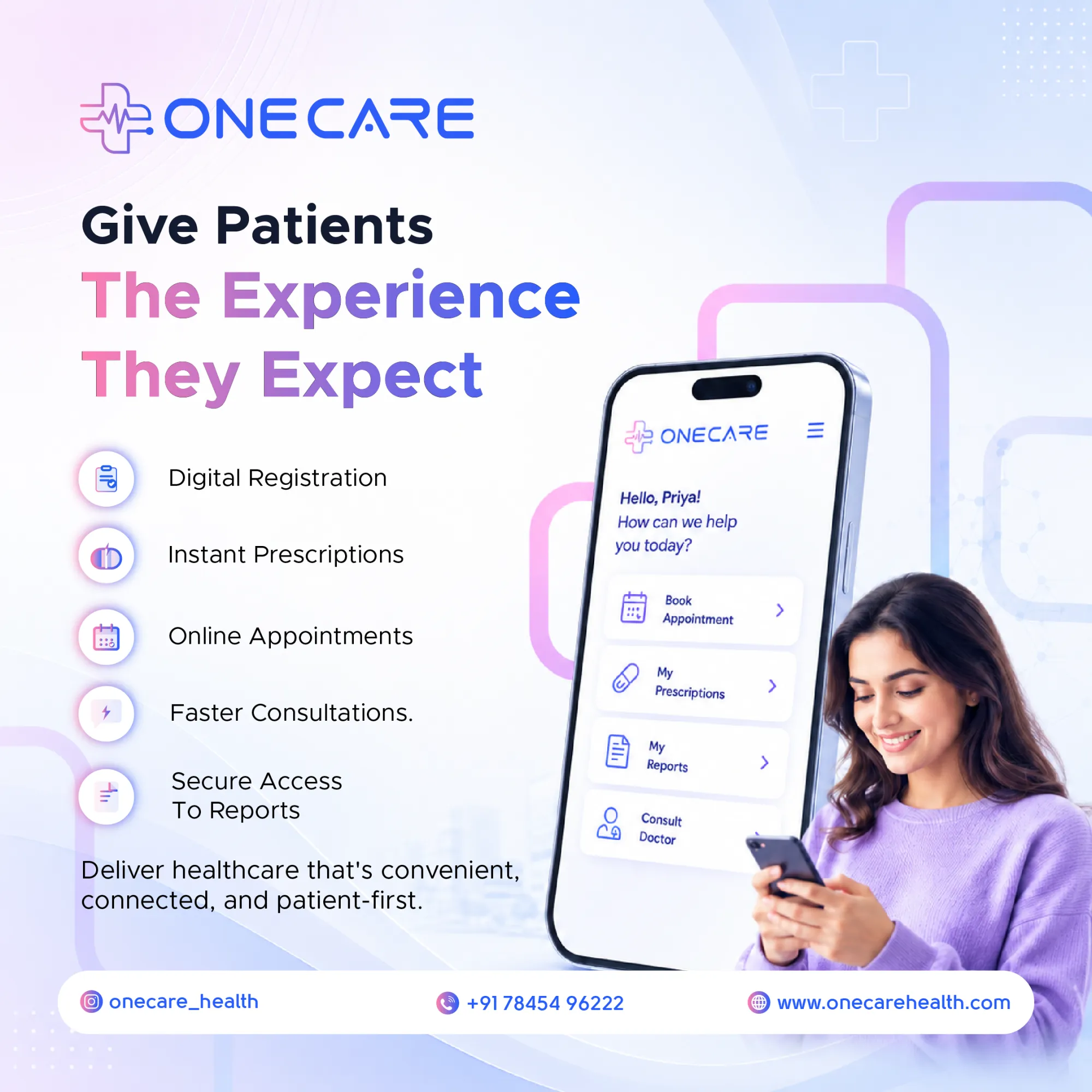
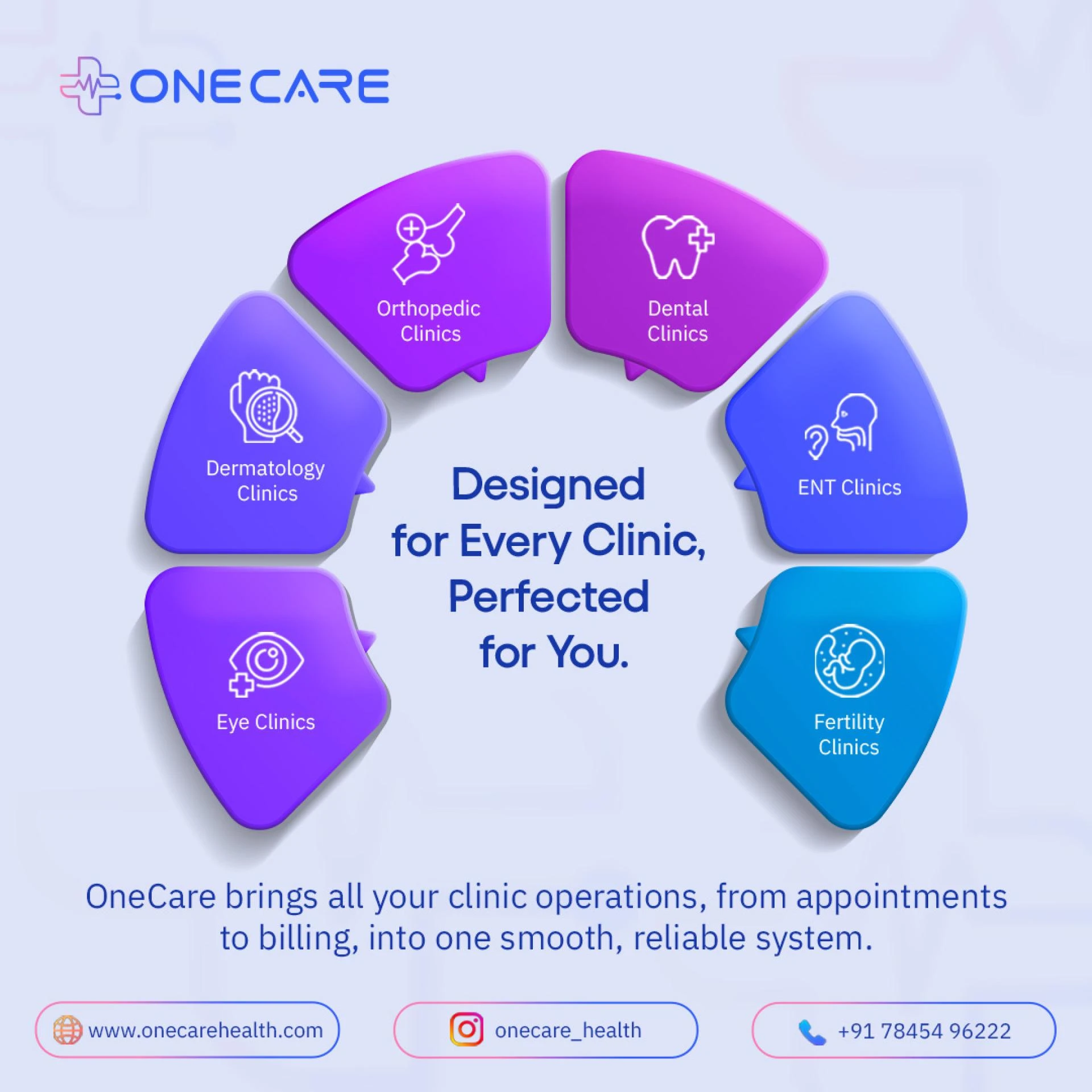
OneCare’s clinic management offering emphasizes clinic-specific workflows, ease of use, scalability, and connected functionality rather than adapting a hospital-only system to smaller practices.
Scalability
Healthcare management software should support the organization as it changes.
Scalability may involve:
- Adding users
- Creating new departments
- Opening new branches
- Supporting new specialties
- Adding modules
- Connecting additional devices
- Expanding storage
- Increasing reporting requirements
- Managing multiple legal or billing entities
A small clinic may initially require appointments, patient records, prescriptions, and billing. Later, it may add a pharmacy, laboratory, second location, remote consultations, or additional doctors. Ask whether the platform can scale without forcing a complete system replacement.
Customization and Workflow Flexibility
No two healthcare organizations work in exactly the same way.
The software should support reasonable configuration of:
- Registration forms
- Clinical templates
- Prescriptions
- Invoices
- Approval processes
- User roles
- Reports
- Location-specific workflows
However, customization should be evaluated carefully.
Extensive custom development can increase cost, delay implementation, and complicate future upgrades. The strongest platforms usually provide configurable workflows without requiring every change to be coded from the beginning.
Ask the vendor to distinguish between standard configuration, paid customization, and unsupported requests.
Cloud-Based and Mobile Access
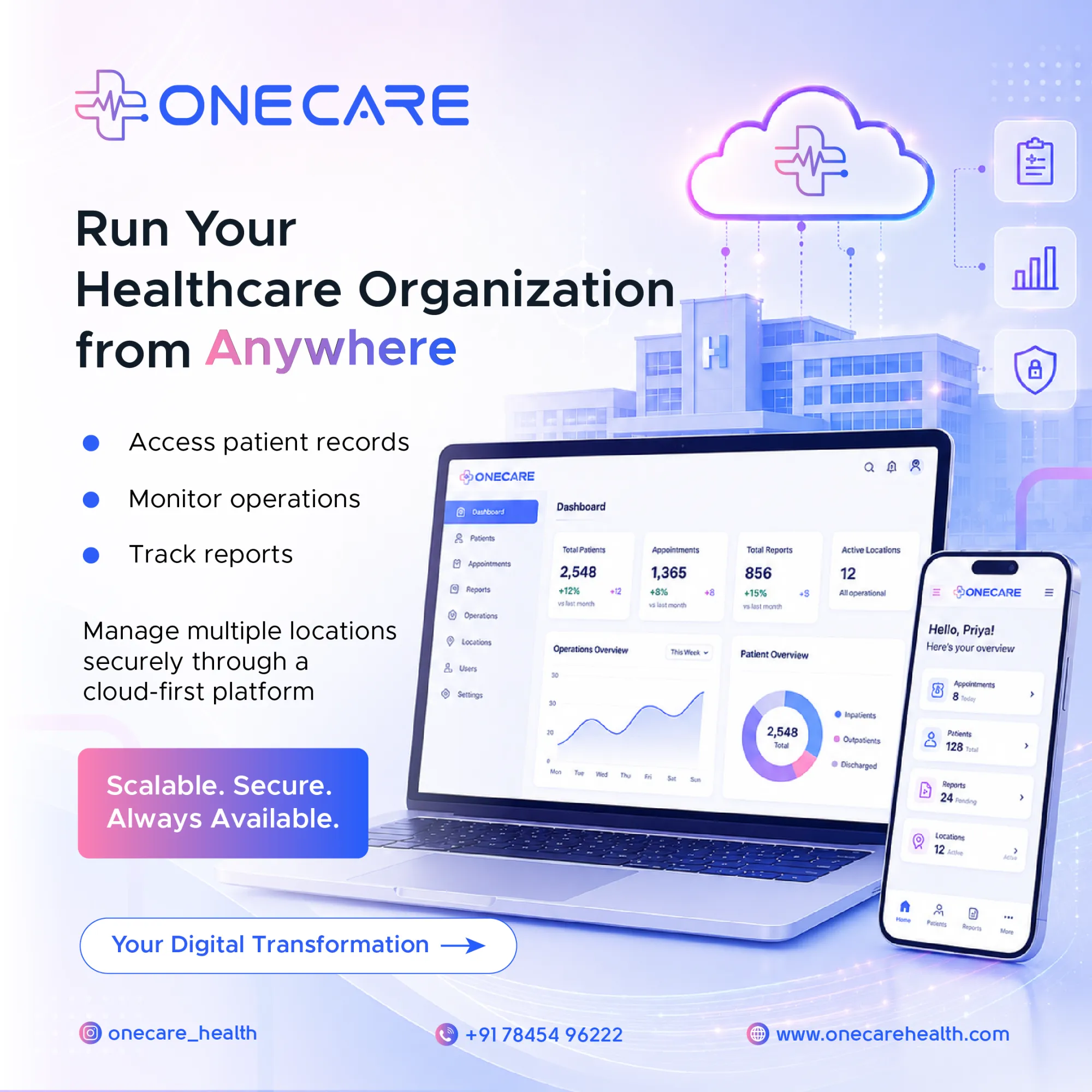
Cloud-based healthcare management software can make it easier for authorized users to access the platform across locations, receive centralized updates, and reduce dependence on on-site infrastructure.
OneCare currently positions its platform as a cloud-based solution for hospitals, clinics, laboratories, and pharmacies.
Potential advantages of cloud-based systems include:
- Access across approved locations
- Centralized data
- Easier software updates
- Reduced local server maintenance
- Support for multi-location operations
- Remote administrative visibility
- Scalable infrastructure
Cloud hosting does not remove the need for security planning, user access management, or operational continuity procedures.
How OneCare Supports Connected Healthcare Operations
OneCare is a cloud-based healthcare management platform designed for hospitals, clinics, laboratories, pharmacies, and related healthcare operations. OneCare connected across patient registration, appointments, medical records, billing, pharmacy, laboratory management, inventory, reports, integrations, remote patient monitoring, and AI-assisted healthcare workflows.
For organizations evaluating OneCare or another healthcare software solution, the most effective next step is a workflow-based demonstration.
Rather than reviewing isolated features, decision-makers should test how the platform supports an actual patient journey, connects departments, manages access, produces reports, and adapts to the organization’s operational requirements.
Final Words
The best healthcare management software is not necessarily the platform with the longest feature list. It is the platform that fits the organization’s workflows, connects essential departments, supports staff adoption, protects sensitive information, provides meaningful operational visibility, and scales with future requirements. A structured evaluation process helps healthcare organizations move beyond sales claims and choose a platform that can support both current operations and long-term growth.


























Sign in to leave a comment.