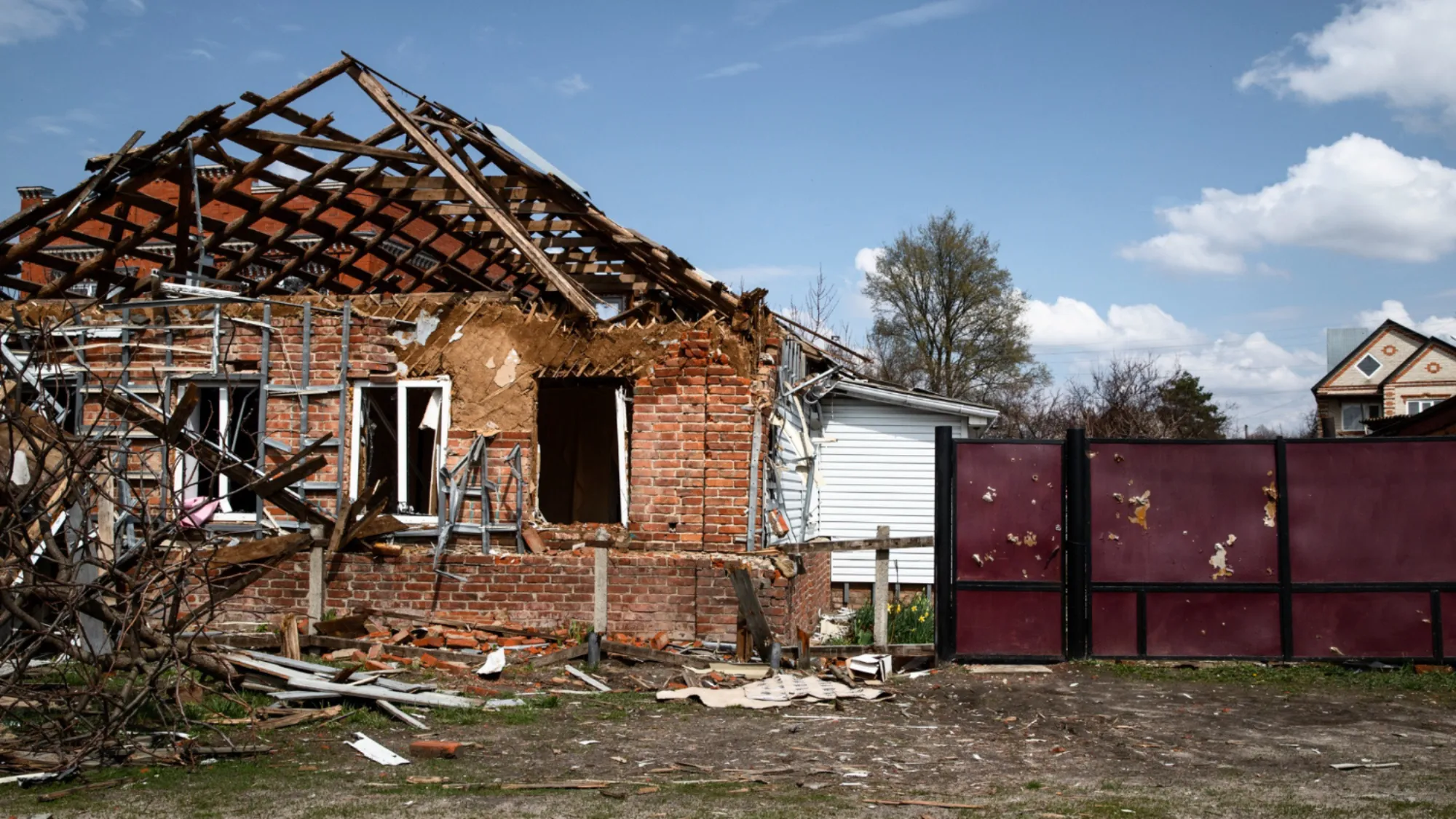

Quick answer: Reconstruction after storm damage is usually the call when the structure itself took the hit, not just the surface.
You may see broken trusses, a roofline that's started sagging, framing that sat wet for too long, or foundation cracks that appeared or widened right after the storm.
Keep reading to know the signs that reconstruction after a storm becomes necessary!
Repair or Reconstruction After Storm Damage? Here's a Way to Tell
Most storm-damaged homes don't need to be rebuilt. Not even close. Targeted repairs handle the majority of cases just fine: patch the roof, replace some siding, fix a gutter, done. But there's a real line between patching something and needing actual reconstruction, and which side you're on affects your budget, your safety, and honestly your insurance claim too.
Some signs that usually mean you're looking at reconstruction, not just repair:
- A roofline or ceiling that's visibly sagging, which almost always points to failed structural members underneath
- New foundation cracks, or old ones that suddenly got wider, especially if doors and windows started sticking around the same time
- Framing that stayed wet for 48 hours or more, since wood loses a meaningful chunk of its strength once it's been saturated that long
- Walls that feel spongy or give a little when you press on them, or floors that seem to bounce underfoot
- More than one system hit at once: roof, electrical, and framing all in the same corner of the house
One of these on its own? Repair's probably still fine. Two or three showing up together is usually a sign the problem runs deeper than what you can see.
The Part That Costs People the Most: Guessing Instead of Checking
Something a lot of homeowners find out the hard way. Insurance companies base your payout on whatever damage gets documented at the time of the claim, not on what turns up months later. So if a structural problem gets missed during that first inspection and only shows up down the road, proving it was actually storm-related gets a lot harder, sometimes impossible.
This is really why a proper inspection matters so much before you decide between simple repairs and full reconstruction after storm damage.
Someone who's inspected hundreds of these knows to check things beyond the obvious, moisture inside the wall cavities, whether the roof members can still hold load, foundation shifts you'd never notice just walking the yard. Skip that step to save a little time now, and it tends to come back later, bigger and pricier than it would've been.
There's a safety angle too, and it's not one to brush off. A roof with real structural damage can fail with almost no warning, especially once the next storm or a heavy snow load adds weight to something already weakened.
What Reconstruction Actually Looks Like in Practice
When reconstruction really is the right call, the process usually starts with securing the property so nothing else gets damaged. It is then followed by a thorough structural assessment, then the rebuild itself once your insurer signs off on the scope.
A contractor worth hiring will walk you through why one section needs full reconstruction, and another just needs patching, instead of leaving you guessing. That kind of straight talk matters more than people expect, especially when you're already exhausted from dealing with everything else the storm caused.
Bottom Line
Not every storm-damaged home needs reconstruction. Some genuinely do, though, and the only way to know is a proper structural inspection, not a look from the driveway. Whether your place needs full reconstruction after storm damage or just solid storm repairs, getting that answer early protects your wallet, your safety, and your insurance claim all at once.
If you’re new to all this and don’t know how to start, Complete Contractor Services has been walking homeowners through storm damage assessments and repairs since 1988, everything from the first emergency call to full structural reconstruction.
If you're not sure whether your home needs a quick fix or something bigger, call us right away for comprehensive assistance. Get in touch with us today!
Disclaimer: The information in this blog is for informational purposes only and is written by a content writer. It is not a substitute for professional advice or on-site inspection. For expert guidance specific to your property, please contact Complete Contractor Services.























Sign in to leave a comment.