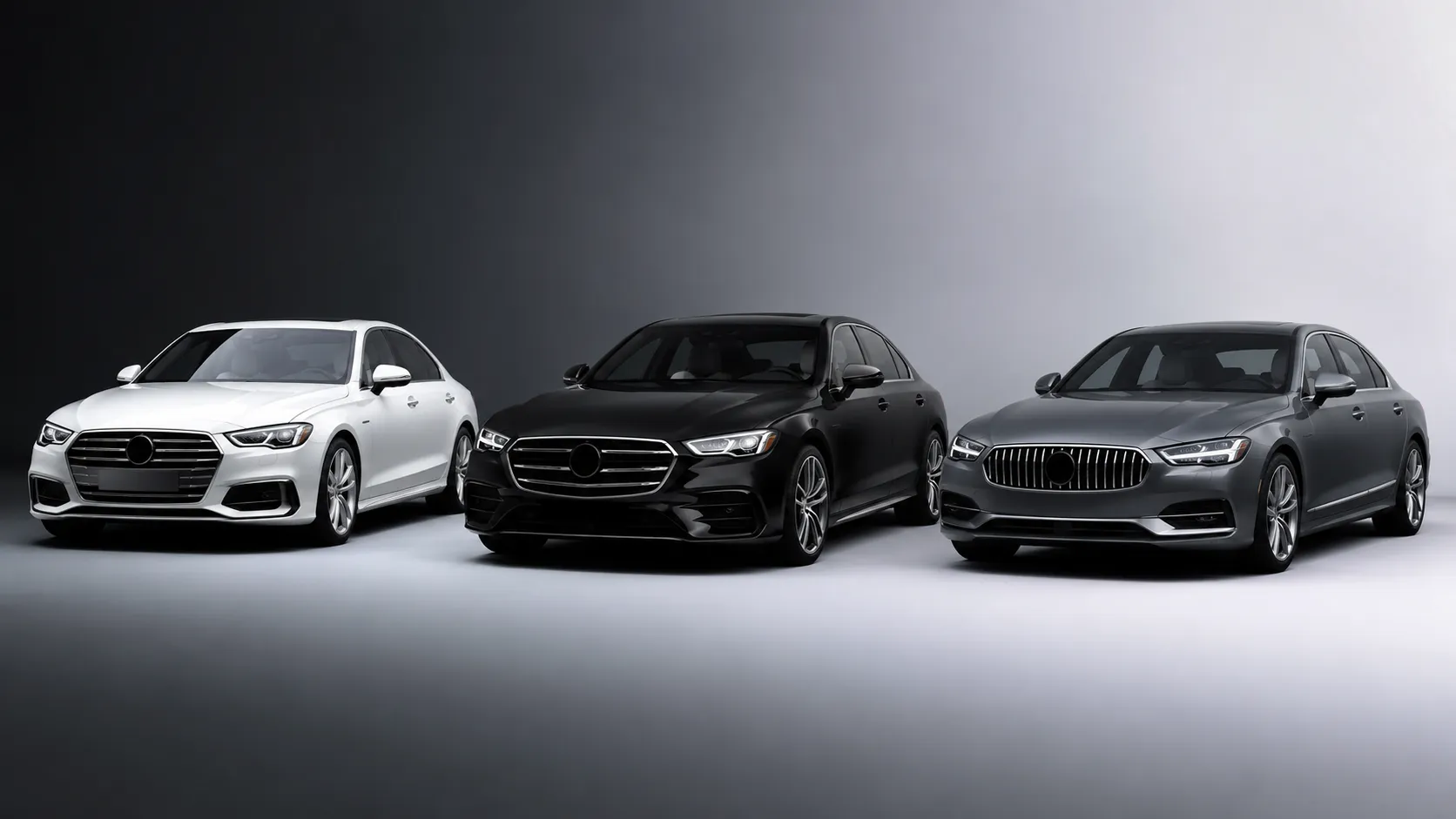

Most people pick a car color the way they'd pick a shirt. They go with what they like. That's fine, but it's not the whole picture. Car color actually affects resale value, interior heat, how often you'll need to wash it, and even how visible you are on the road. None of these are deal-breakers, but they're worth knowing before you sign anything.
Here's a clear breakdown of everything that actually matters.
What the Global Numbers Tell You
Color trends shift, but not that dramatically. According to Axalta's most recent Global Automotive Color Popularity Report, white holds the top position at 31% globally, followed by gray at 22% and black at 18%, with silver at 10%. Together, neutral shades dominate roughly 80% of all vehicles on the road.
BASF's 2025 Global Color Report shows a gradual rise in chromatic colors, with green seeing the greatest increase year over year. In the Americas, natural tones like green and brown are growing in popularity, while gray dropped by 4% and white slipped slightly.
The takeaway: most people still go neutral, but there's a slow, steady appetite for something more expressive.
Resale Value: The Numbers Might Surprise You
This is where things get genuinely interesting, and where most buyers get it wrong.
The common assumption is that safe, neutral colors hold their value best. White, black, silver, gray. That's what people tell each other. But the data from 2025 tells a different story.
iSeeCars analyzed over 1.2 million model year 2022 used cars and found that yellow cars hold their value best, depreciating just 24% over three years, compared to a market average of 31%. Orange and green followed closely behind. The logic is straightforward: these colors have more buyers chasing fewer cars, which pushes used prices up.
Meanwhile, the colors everyone assumes are safe perform below average. White vehicles depreciated by 32.1%, losing about $15,557 over three years. Black wasn't far behind at 31.9%, or roughly $15,381. Gray came in at 30.5%.
That said, context matters. If you're driving a sedan or a family SUV in a regular market, a yellow car might limit your buyer pool even if it holds percentage value better. The niche demand that protects yellow cars works because supply is low. The moment more people start buying yellow cars, that advantage disappears. As iSeeCars analyst Karl Brauer put it, yellow and orange have consistently led on retained value because their demand outpaces supply. That imbalance is the key driver, not the color itself.
So if you're planning to resell and want a safe bet on liquidity, white, silver, and gray still move faster. If you want the best percentage retention and you're comfortable with a smaller buyer pool, yellow or orange is the data-backed choice.
Heat and Fuel Efficiency
If you live somewhere hot, this one matters more than people think.
Dark-colored vehicles absorb significantly more solar radiation, creating cabin temperature differences of 20 to 30 degrees Fahrenheit compared to lighter colors on hot days. This forces more air conditioning use, increasing fuel consumption by 1 to 3% during summer months in hot climates. Interior surfaces in dark cars can reach 180 to 200 degrees Fahrenheit in direct sunlight, while white or silver vehicles max out around 150 to 160 degrees.
Research from Lawrence Berkeley National Laboratory found that a lighter colored vehicle improved fuel economy by 2% and reduced CO2 emissions by 1.9% compared to a darker version of the same model, primarily through reduced air conditioning demand.
None of this makes black or dark gray a bad choice. If you park in a garage, live in a cooler climate, or your car already has ceramic window tint, the impact is much smaller. But if you park outdoors in the sun through an Indian or Gulf summer, a white or silver car is genuinely more comfortable and slightly cheaper to run.
Maintenance and Daily Reality
Every color has a trade-off. There's no color that's completely low-maintenance.
White vehicles show dirt, road salt, and grime prominently, meaning you'll need to wash more frequently to keep it looking clean. Black and dark colors reveal every water spot, light scratch, and swirl mark, demanding meticulous care and regular detailing to stay presentable. Gray and silver tend to hide imperfections most effectively, requiring less frequent washing to maintain a decent appearance.
Silver and medium gray are genuinely the lowest-maintenance option if you're someone who washes a car once a month and wants it to look acceptable between washes. Black looks incredible when clean and painful when it's not. White sits in the middle because while it shows dust and mud, it doesn't show scratches or swirl marks as aggressively as black does.
For metallic and pearlescent finishes, the paint looks richer and deeper, but these finishes typically require specialized care to preserve color depth and uniformity, and professional detailing at regular intervals helps maintain their value and appearance.
Visibility and Road Safety
This one rarely comes up in buying conversations, but it's worth mentioning.
Multiple studies indicate that dull colors are the least safe on the road. Silvers, grays, and certain whites are less visible in adverse conditions than bright colors, particularly during nighttime or harsh weather. Bright colors like yellow, red, and orange tend to stand out more in mixed traffic and variable light.
That said, bright and reflective colors can improve visibility to other drivers, but the practical safety difference is more relevant as a road hazard consideration than as an insurance pricing factor. Modern vehicles with good lighting and high safety ratings matter far more to your actual risk than paint color.
Does Car Color Affect Your Insurance?
Short answer: no. The color of a vehicle does not affect the cost of your auto insurance premium. Insurers don't even collect this data because it has no statistical correlation with claims. Your rate is driven by your driving history, the make and model of the vehicle, where you live, and your coverage choices. Color plays no role.
The red car myth is exactly that. A myth.
How to Actually Make the Decision
Once you know the data, the decision becomes clearer. Here's a useful way to think about it.
If you plan to sell within three to five years and want maximum resale flexibility, go with white, silver, or gray. They sell faster because more buyers are comfortable with them, even if the percentage depreciation isn't the best in class.
If you drive a performance car, a sports SUV, or something with a personality that actually suits an expressive color, and you're comfortable with a smaller secondary market pool, yellow or orange will serve your resale value surprisingly well. The data backs this up consistently.
If you live in a hot climate and park outdoors most of the time, lighter colors are genuinely smarter. The fuel savings are modest, but the interior preservation and comfort advantage over five years of ownership adds up.
If maintenance is a low priority for you and you want something that stays presentable with minimal effort, silver or medium gray is your answer. It's not the most exciting choice, but it's the most forgiving one.
And if you just love a color and you're keeping the car for ten years, buy what you want. Most of the resale advantages and disadvantages compress significantly over a longer ownership period. At that point, you'd rather spend a decade enjoying how your car looks than optimizing for a buyer you haven't met yet.
The Bottom Line
Car color is not a trivial decision, but it's also not the most important one you'll make. The data is clear: yellow and orange hold value best by percentage, white and black are the most popular but depreciate faster than average, silver and gray are the easiest to maintain, and dark colors cost you more in hot climates. Insurance doesn't care about color at all.
Know what you're optimizing for, cross it against what you actually like, and make a call. That's how smart buyers do it.
Stay connected with AutoVoB for more informative updates.




























Sign in to leave a comment.