

Water treatment is one of the most critical processes in industrial, commercial, and municipal operations. Whether you are managing a manufacturing plant, a hotel complex, a residential township, or a municipal water supply system, the quality of filtered water directly affects operational efficiency, equipment longevity, product quality, and regulatory compliance. Two of the most widely used filtration technologies in this space are the pressure sand filter and the multi-media water filter — and the question of which is better comes up consistently among engineers, facility managers, and water treatment professionals.
The honest answer is that neither technology is universally superior. Each has a distinct design philosophy, operational profile, and range of applications where it excels. The better choice depends entirely on the specific characteristics of your raw water source, your treated water quality targets, your flow rate requirements, and your operational constraints.
This blog breaks down both technologies in depth — how they work, where they perform best, their limitations, and how to make the right selection for your application.
Understanding Pressure Sand Filters
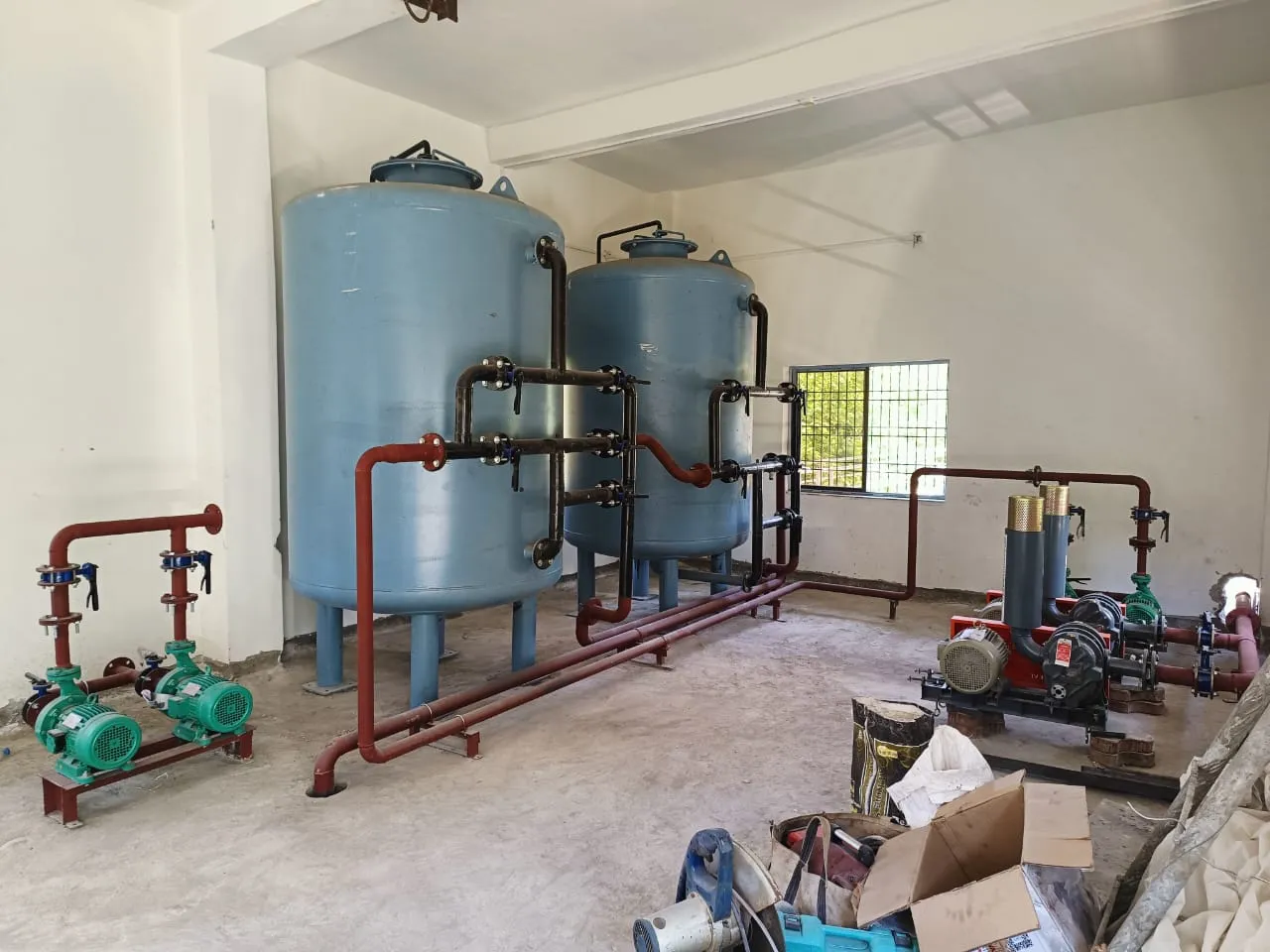
A pressure sand filter is one of the oldest and most proven filtration technologies in the water treatment industry. Its operating principle is straightforward. Raw water is fed under pressure through a vessel packed with a bed of graded silica sand. As water passes downward through the sand bed, suspended particles, turbidity, silt, and certain organic matter are physically trapped within the void spaces between sand granules. Filtered water exits from the bottom of the vessel and proceeds to the next stage of treatment.
The sand bed is typically supported on a layer of graded gravel that acts as an underdrain support medium, preventing fine sand particles from escaping into the treated water stream. When the sand bed becomes loaded with trapped solids and the pressure differential across the vessel rises to a predetermined level, the filter is taken offline for backwashing — a process in which water and air are driven upward through the bed to dislodge and flush out accumulated solids.
Pressure sand filters are robust, reliable, and mechanically simple. They are available in a wide range of vessel diameters and flow capacities, can be fabricated in mild steel, FRP, or stainless steel depending on the application, and are relatively straightforward to operate and maintain. For raw water with moderate turbidity levels and a treatment objective of removing suspended solids to achieve water suitable for general industrial use, cooling towers, irrigation, or as a pretreatment step before softening or reverse osmosis, pressure sand filters deliver dependable performance at a competitive capital cost.
Understanding Multi-Media Water Filters
A multi-media water filter operates on the same fundamental principle of depth filtration but takes the concept significantly further. Instead of a single filtration medium, it uses multiple layers of different filter media — typically three or more — each selected for specific particle size retention and density characteristics. The most common configuration uses anthracite coal at the top, sand in the middle, and garnet at the bottom.
This layered arrangement is not arbitrary. It exploits the differing densities of the three media to create a natural stratification after backwashing. The lightest and coarsest medium — anthracite — settles at the top, where it captures larger particles and protects the finer media below from rapid clogging. The medium-density sand layer handles intermediate particle sizes, and the heaviest and finest garnet at the bottom achieves the final polishing of the water before it exits the vessel.
This graded depth filtration approach means that solids are captured progressively throughout the entire depth of the filter bed rather than being concentrated at the surface as occurs in single-medium filters. The practical result is a significantly higher solids-holding capacity, longer filter runs between backwashes, finer filtration efficiency, and the ability to handle higher flow rates per unit of filter area.
Multi-media water filters are particularly valued in applications where treated water quality requirements are more demanding — where lower turbidity targets must be consistently achieved, where the raw water characteristics are more challenging, or where the filter is a pretreatment step before sensitive downstream processes such as ultrafiltration, nanofiltration, or reverse osmosis membranes that are intolerant of elevated turbidity or suspended solids.
Head-to-Head Comparison: Key Performance Parameters
Filtration Efficiency
This is where the most meaningful difference between the two technologies becomes apparent. Pressure sand filters typically achieve treated water turbidity in the range of 1 to 5 NTU depending on inlet conditions and filter design. Multi-media water filters, with their stratified depth filtration mechanism, routinely achieve treated water turbidity below 1 NTU and in well-designed systems can consistently deliver sub-0.5 NTU effluent. For applications where downstream membrane systems or precision industrial processes require consistently low turbidity, the multi-media filter holds a clear advantage.
Solids Holding Capacity and Filter Run Length
Because multi-media filters distribute solid capture across the full depth of the bed rather than concentrating it at the surface, they hold significantly more solids before a backwash cycle is required. Longer filter runs mean fewer backwash cycles, lower backwash water consumption, and reduced interruptions to the treated water supply. For high-flow systems or applications where raw water turbidity is variable and periodically elevated, this extended run capacity is operationally valuable.
Flow Rate Capacity
Multi-media water filters support higher hydraulic loading rates than single-medium sand filters. Where a pressure sand filter typically operates at surface loading rates of around 10 to 15 cubic metres per hour per square metre of filter area, multi-media filters can operate effectively at 15 to 25 cubic metres per hour per square metre or more. For a given treatment flow requirement, this means a smaller filter vessel can be used with a multi-media design, which has implications for capital cost, footprint, and installation logistics.
Capital and Operating Costs
Pressure sand filters have a lower initial capital cost. The single filtration medium is inexpensive, widely available, and straightforward to replace. For applications where filtration requirements are modest and budget is a primary constraint, this is a meaningful consideration. Multi-media filters carry a higher upfront cost due to the multiple media types and the more precise vessel and underdrain design required to maintain media stratification. However, their lower backwash frequency, higher throughput per unit area, and longer media life often result in lower operating costs over the system's lifetime.
Maintenance Requirements
Both technologies require periodic backwashing and occasional media inspection and replacement. Pressure sand filters are simpler to backwash and maintain, and their single-medium bed is straightforward to inspect and top up. Multi-media filters require more careful backwash management to preserve media stratification — excessive backwash intensity can mix the layers and degrade performance. However, with properly designed backwash controls, multi-media filters are entirely manageable in routine plant operations.
Application Suitability
Pressure sand filters are the right choice for raw water with low to moderate turbidity, where treated water quality targets are achievable with a single medium, and where simplicity and capital cost efficiency are priorities. Multi-media water filters are the right choice where inlet turbidity is higher or more variable, where treated water quality requirements are more demanding, where high flow rates must be handled in a compact footprint, or where the filter is feeding sensitive downstream equipment.
When to Choose a Pressure Sand Filter
A pressure sand filter is the appropriate selection when your raw water source is a relatively clean municipal supply or borewell water with low to moderate turbidity. It is well suited as a pretreatment stage before water softeners in applications where the primary concern is hardness reduction rather than fine particulate removal. It is also the preferred choice in budget-constrained projects, small-scale installations, or applications where treated water feeds non-critical uses such as general washdown, cooling tower makeup at low cycles of concentration, or landscape irrigation.
When to Choose a Multi-Media Water Filter
A multi-media water filter is the stronger choice when your raw water is drawn from surface sources — rivers, lakes, or open reservoirs — where turbidity varies seasonally and can reach elevated levels during monsoon or storm events. It is the appropriate pretreatment technology before reverse osmosis systems, where protecting the membrane from suspended solids is critical to membrane life and system performance. It is also the right selection for food and beverage processing, pharmaceutical water systems, swimming pool and recreational water treatment, and any application where consistently low turbidity is a quality or regulatory requirement.
Making the Right Decision for Your Facility
The choice between a pressure sand filter and a multi-media water filter is not a question of which technology is better in the abstract. It is a question of which technology is better matched to your specific water quality, flow requirements, downstream process demands, and operational context.
A thorough raw water analysis — covering turbidity, suspended solids concentration, pH, iron and manganese content, and seasonal variability — is the essential foundation of any sound filtration system design. Pairing that analysis with a clear understanding of your treated water quality targets and your downstream process sensitivities will point directly to the right technology choice.
Cleantech Water brings precisely this application-driven engineering approach to every water treatment project — combining technical rigour with practical operational experience to ensure that the filtration solution specified is the one that delivers the best long-term performance for your facility.
Frequently Asked Questions (FAQs)
Q1. Can a pressure sand filter and a multi-media water filter be used together in the same treatment system?
Yes, and in some applications this combination is both practical and effective. A pressure sand filter can be used as a first-stage bulk solids removal step ahead of a multi-media filter, particularly where raw water turbidity is very high or where the water contains significant quantities of coarse suspended matter. The sand filter removes the bulk of the gross contamination, protecting the multi-media filter from rapid loading and extending its run length. This staged approach can make economic sense in surface water treatment plants or industrial inlet water systems where raw water quality is challenging and consistent downstream water quality is essential. The design and sizing of each stage must account for the inlet and outlet quality requirements of both vessels to ensure the combined system performs as intended.
Q2. How often do pressure sand filters and multi-media filters need to be backwashed, and how much water does backwashing consume?
Backwash frequency depends primarily on the turbidity and suspended solids loading of the inlet water. In systems treating relatively clean water, pressure sand filters may require backwashing once every 24 to 48 hours under normal operating conditions. Multi-media filters, with their higher solids holding capacity, often achieve longer runs between backwashes under similar inlet conditions. A typical backwash cycle consumes between 3 and 8 percent of the total filtered water volume, depending on the vessel size, backwash flow rate, and duration. In water-scarce environments or where water cost is significant, the lower backwash frequency of multi-media filters translates into a meaningful operational saving over the life of the system. Proper backwash controller settings and flow measurement are essential to optimise backwash efficiency and minimise water waste without compromising media cleaning effectiveness.
Q3. What is the typical service life of the filter media in a pressure sand filter versus a multi-media water filter?
The service life of filter media depends on the quality of the inlet water, the frequency and effectiveness of backwashing, and whether any media attrition occurs due to excessive backwash velocities or chemical exposure. In well-operated systems, silica sand in a pressure sand filter can last anywhere from five to ten years or more before replacement is required, provided that backwashing is carried out correctly and the media is not subjected to aggressive chemical cleaning. The media in multi-media water filters — anthracite, sand, and garnet — similarly lasts five to ten years under normal operating conditions, though anthracite, being lighter and subject to more movement during backwashing, may require topping up more frequently than the sand and garnet layers. Regular media inspection — checking for turbidity breakthrough, bed depth loss, and media fouling — is the most reliable way to determine when media replacement or supplementation is needed, regardless of which filter type is in service.
























Sign in to leave a comment.