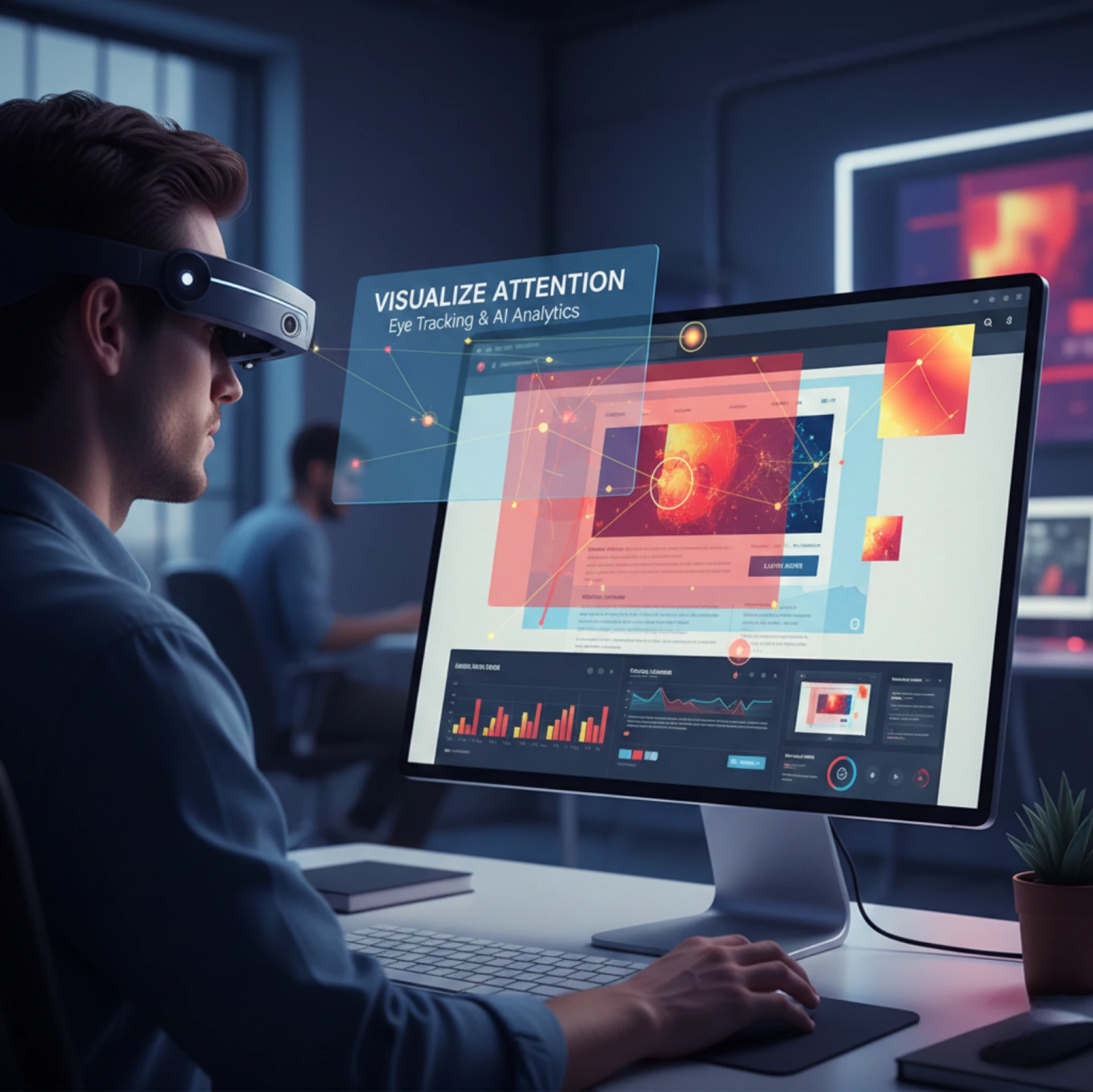

Understanding what users notice on a screen is becoming increasingly valuable in digital design. While analytics tools can show where a user clicks or how long they stay on a page, those metrics do not explain the visual journey. People skim content quickly and their eyes focus on certain areas before deciding what action to take. Knowing what they see first, where their attention lingers, and what elements are ignored helps teams make better design decisions. This level of insight requires technology built to monitor visual focus with accuracy.
The goal of attention understanding is not only to gather information but to interpret real user behavior. What users look at can matter more than what they click. If a design appears appealing but fails to direct attention to key elements, engagement may drop. For this reason, visual tracking software is now used widely in experience testing, design research, marketing analysis, and digital product development.
Why Tracking Visual Attention Matters
Attention shapes interactions. If users do not notice a navigation link, a call to action, or a product image, those elements fail to influence decisions. Visual tracking offers clarity on
- First visual contact
- Time spent focusing on specific areas
- Repeated viewing loops
- Sections ignored completely
Weak visual hierarchy can lead to confusion or hesitation. Missed content often results in low engagement or abandonment. Software that tracks what users see helps identify these issues early.
How Software Tracks Visual Focus
Different tools use various techniques depending on the level of detail required. Some involve live monitoring while others use predictive modeling.
Common methods include
- Attention heatmaps
- Eye movement paths
- Behavioral scan pattern recording
- Real time session playback
- Machine learning based prediction
These approaches offer deeper understanding beyond standard analytics. The insights help refine spacing, readability, layout, and information flow.
Tools Designed for Attention Research
There are several solutions designed to track visual focus with precision. These platforms record the sequence of attention, gaze time, and hesitation patterns. Some include automated reporting for easier interpretation.
When paired with an eye tracking tool, accuracy improves because the software can detect direct gaze direction. Results often include layered visuals such as heatmaps and scan paths, helping teams understand how users process design elements.
Some platforms also support comparative testing. Two versions of a page can be evaluated to determine which layout receives better attention distribution. This supports more confident design decisions and reduces rework later.
The Role of AI in Attention Tracking
Artificial intelligence has strengthened the capabilities of visual tracking solutions. Instead of manually reviewing all recordings, AI can automatically group behaviors, detect interaction anomalies, and predict possible attention behavior.
AI models can identify
- Highly influential visual elements
- Overlooked areas
- Attention breaking components
- Layout patterns creating cognitive strain
Software supported by an eye tracking tool becomes even more effective when combined with AI since it blends live attention signals with prediction. This helps teams improve designs even before real user testing begins.
Where These Insights Are Applied
Attention tracking supports improvements across multiple fields including marketing, education, product testing, retail, and content strategy. Examples include
- Testing product placements in e commerce
- Measuring reading behavior on learning platforms
- Evaluating onboarding screens in mobile apps
- Refining advertisement creatives
Understanding what users see allows teams to build more intentional and user friendly experiences.
A Short Reflection
Software that tracks what users truly see provides a clearer view of interaction patterns. These insights help reveal the difference between what appears visible and what actually receives meaningful attention. When applied thoughtfully, visual tracking encourages smarter design choices and better user satisfaction.
FAQs
1. What does visual tracking software measure
It measures scan patterns, focus duration, and visual navigation behavior.
2. Is this technology only for researchers
No. Designers, marketers, educators, and product teams also use it.
3. Do all tools require external hardware
No. Some modern platforms operate entirely through software and AI.
4. Can this improve engagement
Yes. Understanding attention helps teams build more effective content and layout.
5. Is this useful for both apps and websites
Yes. It applies to many digital experiences.





























Sign in to leave a comment.