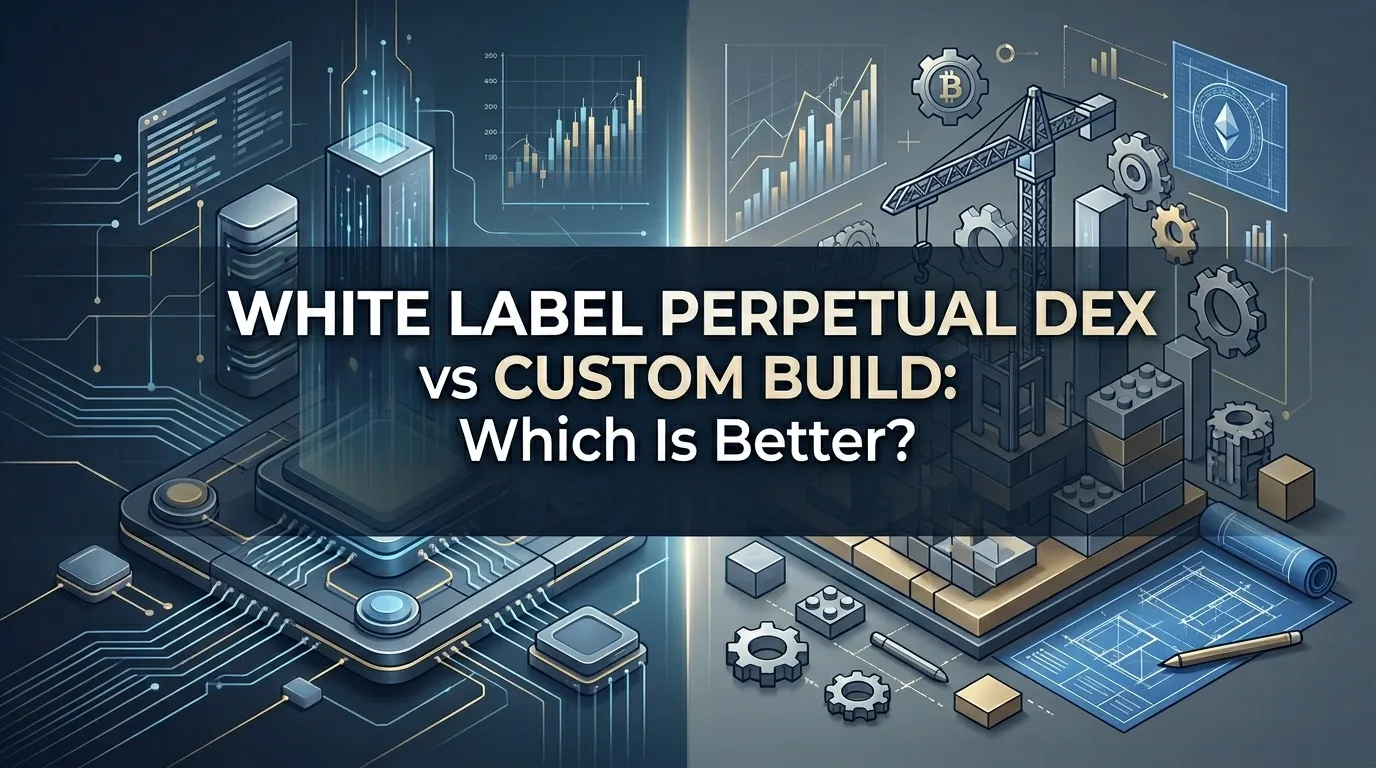

The perpetual decentralized exchange market has evolved into one of the most dynamic segments of the blockchain ecosystem, attracting traders who seek continuous futures trading without expiration dates while maintaining control over their assets. As competition intensifies, entrepreneurs, startups, and established crypto businesses are looking for efficient ways to launch perpetual trading platforms that can meet user expectations for performance, security, liquidity, and scalability. One of the most important decisions during this process is choosing between a white-label solution and a custom-built platform. Both approaches offer distinct advantages and challenges, influencing development timelines, investment requirements, customization possibilities, operational flexibility, and long-term growth potential. Understanding the differences between these two models is essential for businesses aiming to establish a strong position in the decentralized derivatives market. A careful evaluation of business objectives, technical requirements, budget constraints, and future expansion plans can help determine the most suitable path toward building a successful perpetual decentralized exchange.
Understanding White Label Perpetual DEX Solutions
A white-label perpetual DEX solution is a ready-made platform developed by a specialized provider and offered to businesses for branding and deployment. Instead of building the infrastructure from the ground up, companies can customize the platform's appearance, features, and branding while leveraging a pre-built architecture.
Accelerated Market Entry
White-label platforms significantly reduce development cycles because the core trading engine, smart contracts, liquidity mechanisms, and administrative systems are already developed and tested. Businesses can focus on branding, marketing, and user acquisition rather than spending months or years on technical development.
Reduced Technical Complexity
The development provider typically handles the underlying architecture, security implementation, protocol integration, and platform maintenance. This allows companies with limited blockchain expertise to enter the perpetual trading market without assembling a large internal development team.
Pre-Tested Infrastructure
Many white-label solutions undergo extensive testing before deployment. Trading functionalities, wallet integrations, order execution systems, and risk management features are generally validated, reducing the likelihood of operational issues during launch.
Cost-Efficient Deployment
Since development costs are distributed across multiple clients, businesses benefit from lower initial investment requirements. This makes White Label Perpetual DEX Platform Development particularly attractive for startups and emerging blockchain ventures with budget limitations.
What Is a Custom-Built Perpetual DEX?
A custom-built perpetual DEX is developed entirely from scratch according to the organization's specific requirements. Every component, from smart contracts and trading mechanisms to user interfaces and backend infrastructure, is designed to align with unique business objectives.
Complete Ownership of Technology
Organizations maintain full control over the source code, platform architecture, intellectual property, and development roadmap. This level of ownership provides greater flexibility for future modifications and strategic expansion.
Tailored User Experience
Custom development allows businesses to create distinctive interfaces, workflows, and trading experiences that reflect their brand identity. Every feature can be optimized based on target audience preferences and operational goals.
Specialized Trading Functionality
Companies can integrate unique order types, proprietary risk management systems, advanced charting tools, innovative liquidity models, and customized governance structures that differentiate the platform from competitors.
Long-Term Strategic Flexibility
Since there are no dependency constraints imposed by third-party providers, businesses can continuously evolve the platform according to market trends, regulatory changes, and emerging technological opportunities.
Comparing Development Costs
Budget considerations often play a decisive role when selecting between a white-label solution and a custom-built platform.
Initial Investment Requirements
White-label platforms generally require a significantly lower upfront investment because most of the development work has already been completed. Licensing and customization expenses are often more predictable than full-scale software development costs.
Development Team Expenses
Custom development demands blockchain developers, smart contract engineers, UI/UX designers, quality assurance specialists, DevOps engineers, and project managers. These resources substantially increase project expenditure throughout the development lifecycle.
Maintenance and Upgrade Costs
White-label providers frequently offer maintenance packages that include technical support, software updates, and security improvements. Custom platforms require dedicated internal resources or outsourced teams to manage ongoing enhancements and system maintenance.
Return on Investment Considerations
Although custom development requires greater capital, businesses may achieve stronger long-term returns through platform differentiation, proprietary features, and unrestricted monetization opportunities.
Time-to-Market: Which Option Launches Faster?
Speed can be a critical competitive advantage in the rapidly evolving decentralized finance sector.
Rapid Deployment Through White Label Solutions
Most white-label platforms can be customized and launched within a relatively short timeframe. Existing infrastructure eliminates the need for lengthy architecture planning and extensive feature development.
Extended Development Timelines for Custom Platforms
Custom projects require detailed planning, coding, testing, auditing, optimization, and deployment phases. Development timelines may extend over several months depending on platform complexity and feature requirements.
Earlier Revenue Generation
Faster deployment enables businesses to begin attracting traders, generating transaction fees, and establishing market presence sooner. This can be particularly beneficial during favorable market conditions.
Reduced Operational Delays
White-label providers often deliver implementation frameworks and deployment assistance that help businesses avoid technical bottlenecks and launch delays associated with large-scale software projects.
Customization and Brand Differentiation
Brand identity and platform uniqueness have become increasingly important in the competitive perpetual trading landscape.
Branding Flexibility in White Label Platforms
Businesses can customize logos, color schemes, interface elements, and selected platform settings. However, deeper modifications may be restricted by the provider's architecture limitations.
Unlimited Design Freedom with Custom Development
Every visual and functional element can be tailored to create a unique user experience. This flexibility supports stronger brand positioning and market differentiation.
Feature Innovation Opportunities
Custom platforms allow organizations to implement exclusive capabilities unavailable on competing exchanges. These innovations can become significant competitive advantages within crowded markets.
Adaptability to Specific Business Models
Different target audiences require different trading experiences. Custom development enables businesses to align platform functionality with niche markets, institutional clients, or specialized trading communities.
Security Considerations
Security remains one of the most critical factors in decentralized exchange development.
Established Security Frameworks
Reputable white-label providers often implement audited smart contracts, tested security protocols, and industry-standard protective measures. This can reduce common vulnerabilities associated with newly developed software.
Enhanced Control Over Security Architecture
Custom-built platforms allow organizations to define their own security standards, auditing procedures, encryption methods, and infrastructure configurations according to specific requirements.
Risk Management Capabilities
Businesses can introduce customized liquidation systems, margin controls, monitoring mechanisms, and fraud detection tools that align with their operational strategies.
Continuous Security Improvements
Whether utilizing a white-label solution or a custom platform, ongoing audits, vulnerability assessments, and infrastructure monitoring remain essential for protecting user assets and maintaining platform credibility.
Scalability and Future Growth
A perpetual DEX must be capable of supporting increasing trading volumes and expanding user bases.
Scalable Infrastructure in White Label Solutions
Many providers design their systems to handle growing transaction loads and user activity. Businesses can benefit from proven scalability without developing infrastructure independently.
Customized Growth Strategies
Custom platforms enable organizations to design architecture specifically optimized for projected growth patterns, performance requirements, and operational objectives.
Multi-Chain Expansion Possibilities
As blockchain ecosystems continue to diversify, supporting multiple networks becomes increasingly valuable. Custom development offers greater flexibility when implementing complex cross-chain functionality.
Integration of Emerging Technologies
Businesses pursuing long-term innovation may benefit from custom architecture capable of incorporating future DeFi protocols, AI-driven analytics, advanced liquidity solutions, and evolving governance models.
Advantages of White Label Perpetual DEX Platform Development
For many organizations, White Label Perpetual DEX Platform Development offers a practical balance between functionality, affordability, and deployment speed.
Lower Financial Barriers
Reduced development costs make market entry accessible for startups and smaller organizations seeking to establish a decentralized trading presence without extensive capital commitments.
Technical Support and Expertise
Providers often supply deployment assistance, maintenance services, software updates, and operational guidance that simplify platform management and reduce internal technical burdens.
Proven Business Framework
Established solutions have typically undergone real-world usage and performance testing, providing businesses with greater confidence during deployment and early growth stages.
Focus on Business Expansion
With technical development largely managed by the provider, organizations can dedicate resources toward marketing, partnerships, liquidity acquisition, and community building initiatives.
When a Custom Build Is the Better Choice
Although White Label Perpetual DEX Platform Development offers significant advantages, certain business scenarios justify a custom-built approach.
Unique Product Vision
Companies aiming to introduce innovative trading mechanisms or proprietary technologies often require complete development freedom unavailable through standardized solutions.
Complex Functional Requirements
Organizations with advanced operational needs may benefit from architecture specifically designed around specialized workflows and performance objectives.
Long-Term Technology Ownership
Businesses seeking full intellectual property rights and unrestricted platform control frequently prefer custom development despite higher initial costs.
Enterprise-Level Expansion Plans
Large-scale projects anticipating substantial growth may prioritize custom infrastructure capable of supporting extensive customization and evolving business strategies.
White Label vs Custom Build: Final Comparison
Selecting between a white-label solution and a custom-built perpetual DEX ultimately depends on organizational priorities, available resources, and long-term objectives.
Budget-Oriented Businesses
Companies with limited development budgets often find White Label Perpetual DEX Platform Development to be the most practical solution due to lower costs and reduced technical complexity.
Speed-Focused Market Entrants
Businesses seeking rapid deployment and quicker revenue generation generally benefit from ready-made platforms that can be launched efficiently.
Innovation-Driven Organizations
Enterprises pursuing differentiation through proprietary features and unique trading experiences typically gain greater value from custom development.
Growth-Centric Decision Making
Evaluating future scalability, ownership requirements, customization needs, and operational independence helps determine the most sustainable development strategy.
Conclusion
Choosing between a white-label perpetual DEX and a custom-built platform requires a balanced assessment of cost, deployment speed, customization requirements, security priorities, and long-term business goals. White Label Perpetual DEX Platform Development provides a streamlined and cost-effective route to market, making it an attractive option for startups and organizations seeking rapid deployment with proven infrastructure. Custom development, on the other hand, offers complete ownership, unrestricted flexibility, and greater opportunities for innovation, making it suitable for businesses with specialized requirements and ambitious growth plans. By aligning the development approach with strategic objectives, organizations can build a competitive perpetual decentralized exchange capable of delivering value to traders while supporting sustainable expansion within the evolving decentralized finance ecosystem.






















Sign in to leave a comment.