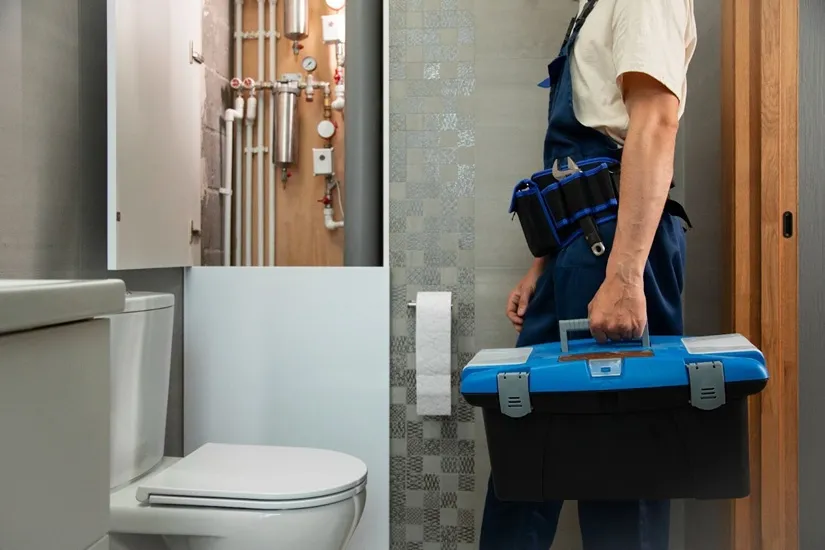

Most people never really think about the toilet cistern until the day it suddenly stops doing its job properly. You flush like you normally would, you walk away and then a couple minutes later you notice the tank is still empty. Sometimes the water comes back in a kind of slow drizzle. Sometimes the cistern starts making these odd noises, almost like clicking or humming. And sometimes nothing happens at all, like it just forgets about you.
It might not sound like some massive household problem at first, but a toilet that won’t refill as it should very quickly turns into an annoyance. Nobody wants to stand there waiting around for the cistern to refill every single time you flush, honestly. The good thing is that this is actually one of the most common toilet problems homeowners deal with. In many cases, the cause is something fairly simple rather than a serious plumbing issue.
A lot of online articles explain toilet problems in a very technical way, but the reality is usually much more straightforward. Most cistern filling problems happen because certain parts inside the tank slowly wear out over time or become blocked by dirt and limescale.
The Problem Usually Starts Slowly
One thing that many individuals observe is that the issue frequently starts off slowly. The toilet may initially take a bit longer than normal to refill after flushing. Since the toilet is still functional, you might not give it any thought.
Then over time, you begin noticing other small signs. Maybe the flush feels weaker. Maybe you hear unusual hissing sounds coming from the cistern. Some people notice the toilet continuously making water noises long after flushing.
Eventually, the problem becomes impossible to ignore because the cistern either fills extremely slowly or stops filling altogether. Since the issue develops slowly, many homeowners keep putting it off until the toilet finally becomes too annoying to deal with.
The Fill Valve Is Often the Main Problem
Inside every toilet cistern is something called a fill valve. Its job is simple. The water level in the tank decreases after flushing the toilet. Fresh water can then return to the cistern when the fill valve opens. The valve automatically closes when the tank reaches the proper water level once more.
Over time, this valve can start failing. Small bits of dirt, mineral deposits, or general wear and tear slowly affect how the valve works. Sometimes the valve becomes partially blocked. Sometimes internal rubber seals begin wearing out. In older toilets, the mechanism may simply stop working properly after years of constant use.
When this happens, the cistern may refill very slowly or stop filling completely. This is probably the most common reason behind toilet cistern filling problems.
Hard Water Causes More Damage Than People Realise
Another significant factor contributing to toilet issues over time is hard water. Minerals gradually accumulate in taps, pipelines & toilet parts in places with hard water. These deposits gradually accumulate around valves and moving elements inside the cistern, but you normally don't notice this happening on a daily basis.
The accumulation eventually begins to interfere with water movement. The toilet may take much longer to refill than it used to. Sometimes the valve struggles to close properly. In other situations, the water flow becomes weak & inconsistent. A lot of homeowners assume the entire toilet needs replacing when the real issue is simply years of limescale build-up affecting the internal components.
A Stuck Float Can Stop the Water Flow
Another very common problem involves the float inside the cistern. The float is designed to rise with the water level. Once the cistern is full, the float signals the valve to stop letting water into the tank. But if the float becomes stuck or moves out of position, it can create problems.
Sometimes the float gets caught against the side of the cistern. In older systems, the arm attached to the float may become bent slightly over time. Even a small alignment issue can stop the valve from opening or closing correctly. This can make the toilet behave unpredictably. One flush may seem normal, while the next leaves the cistern barely filling at all.
Water Pressure Problems Can Also Affect the Toilet
Not every cistern issue is caused by something inside the tank itself. Sometimes the real problem is poor water pressure. If the water supply entering the toilet is weak, the cistern may refill very slowly no matter how good the internal components are.
This can happen for several reasons. A shut-off valve may not be fully open. There could be a blockage somewhere in the pipework. In some homes, low mains pressure becomes more noticeable during busy times of the day.
You may even notice other signs around the house, such as weaker taps or slower shower pressure. That is why plumbers often check the incoming water supply before assuming the toilet itself is faulty.
Strange Noises Are Usually Warning Signs
This may occur for a number of reasons. It's possible that a shut-off valve is partially closed. There might be an obstruction in one of the pipes. In certain properties, low mains pressure becomes more apparent during peak hours.
Other indicators, like slower shower pressure or weaker taps, might even be seen across the house. Because of this, plumbers frequently examine the incoming water supply before concluding that the toilet is broken.
Running Water Can Waste More Money Than Expected
A constantly running toilet may not seem like a serious issue, but it can waste a surprising amount of water.
Sometimes the leak is so quiet that homeowners barely notice it. But even a slow continuous flow can increase water bills over time.
A faulty valve or damaged seal may allow water to keep entering the cistern long after it should have stopped.
Besides wasting water, this also places more strain on the toilet’s internal parts and can shorten the lifespan of the entire mechanism.
Some Problems Are Easy to Fix
Fortunately, not all toilet cistern issues call for extensive repairs. Sometimes the problem is shockingly easy to solve.
A stuck float may only need adjusting slightly. Minor limescale build-up can sometimes be cleaned away. Certain valves can be replaced fairly quickly without needing to replace the whole toilet.
However, once parts become heavily worn or damaged, replacement is often the best option. Many people spend weeks trying temporary fixes when the actual solution is replacing a relatively inexpensive internal component.
Newer Toilets Can Still Develop Issues
People often assume only older toilets develop cistern problems, but modern systems can fail too. Newer toilets contain more compact mechanisms, push-button flush systems & lightweight plastic parts that still wear out over time.
Poor water quality or improperly placed parts can cause filling problems in even newly constructed toilets. Therefore, although more recent types of toilets are not entirely impervious to issues, older models are more likely to have them.
Final Thoughts
A toilet cistern that does not fill properly can quickly become really annoying in everyday life. But most times, the culprit is something fairly typical like a worn fill valve, hard water scale building up, float problems, or even lower water pressure.
The key point is, don’t just leave it there and hope it sorts itself out, ignoring the little warning signs for too long almost always makes it worse.
If the cistern is taking ages to refill, if you hear odd noises, if the flush feels weak, or if it keeps running all the time, those are usually strong signals that something inside needs attention.
And good news, a lot of these troubles are actually easier to sort out than people first assume.




























Sign in to leave a comment.