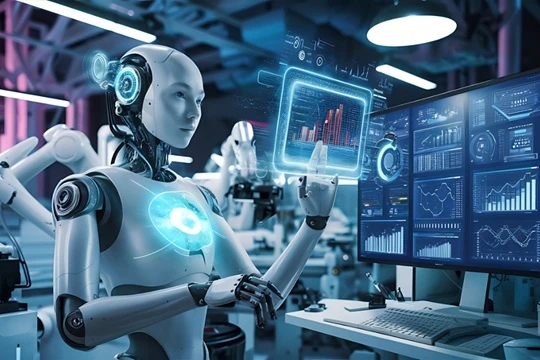

Reframing Quality Engineering for Continuous Digital Delivery
Enterprise software delivery no longer operates in controlled release windows. Product enhancements ship weekly. Integrations expand continuously. Regulatory updates require immediate compliance validation. Customer expectations leave little room for defects.
In this environment, traditional testing approaches struggle to keep pace. Manual validation cycles expand. Regression suites grow heavier. Teams work harder, yet release confidence does not always improve proportionally.
The problem is not a lack of effort. It is a structural limitation in how quality assurance has traditionally been executed.
Forward-looking enterprises are therefore shifting from reactive validation models toward intelligence-led quality engineering. This shift is anchored in AI.
The Limits of Traditional Test Automation
Automation was once seen as the ultimate solution to scaling validation. Frameworks reduced manual effort. Scripted tests increased repeatability. Regression cycles became faster.
But as applications became more complex, automation suites grew dense and brittle. Minor UI adjustments broke scripts. Integration changes triggered unexpected failures. Maintenance overhead increased.
Traditional automation optimizes execution speed. It does not always optimize test intelligence.
Enterprises are recognizing that accelerating scripts is not enough. They need systems that understand context, learn from patterns, and adapt alongside evolving codebases.
This is where intelligent testing models become essential.
Moving Beyond Automation to AI Driven Testing
Modern enterprises are increasingly adopting AI Driven Testing to introduce intelligence into validation cycles.
Rather than executing predefined scripts alone, AI models analyze application behavior, identify high-risk areas, and prioritize coverage dynamically. Patterns of defects, historical regression failures, and code complexity metrics inform testing focus.
This approach transforms validation from static repetition to adaptive assurance.
AI Driven Testing enables:
- Smarter prioritization of regression suites
- Reduced false positives
- Faster root cause identification
- Improved release predictability
Testing becomes contextual rather than mechanical.
The Expanding Role of AI in Software Testing
The conversation around AI in Software Testing is evolving. It is no longer limited to test case automation.
AI now supports:
- Requirement-to-test traceability
- Impact analysis during code changes
- Risk-based test prioritization
- Self-healing automation scripts
- Continuous defect trend monitoring
In enterprise environments where systems span microservices, APIs, and hybrid infrastructures, this intelligence layer provides stability.
Instead of simply accelerating validation, AI in Software Testing improves its precision.
Strengthening Quality Foundations with AI in Test Automation
Traditional automation frameworks rely heavily on rule-based scripting. When application logic evolves, scripts require maintenance. Over time, maintenance consumes more effort than initial creation.
With AI in Test Automation, intelligent models monitor changes and adapt test logic accordingly. Self-adjusting test flows reduce brittle failures caused by minor interface or logic updates.
This leads to:
- Lower maintenance overhead
- Improved automation resilience
- Reduced rework across regression cycles
- More stable CI/CD pipelines
Automation shifts from static scripting toward intelligent orchestration.
Advancing Toward Next-Gen AI Software Testing
As enterprise systems grow more interconnected, quality assurance must extend beyond UI validation. APIs, data transformations, workflow orchestration, and security checks must all be validated continuously.
Next-Gen AI Software Testing addresses this complexity holistically. It integrates test intelligence across layers of the application stack, ensuring that functional, integration, and performance validations operate cohesively.
This broader approach supports:
- End-to-end visibility across services
- Improved cross-layer defect detection
- Continuous validation in DevOps pipelines
- Stronger compliance alignment
Quality becomes embedded into the delivery lifecycle rather than positioned at its conclusion.
Reducing Regression Fatigue in High-Velocity Environments
High-frequency releases often introduce regression fatigue. Teams run extensive suites to maintain confidence, but validation windows become constrained.
AI-enabled prioritization reduces unnecessary execution while maintaining coverage of high-risk areas. By analyzing historical defect density and code volatility, AI systems adjust regression focus dynamically.
This reduces:
- Testing bottlenecks
- Over-execution of low-risk scenarios
- Developer wait times
- Deployment delays
Efficiency improves without compromising assurance.
Aligning Testing with Business Risk
Not all defects carry equal impact. Some influence core revenue workflows. Others affect peripheral functionality.
AI Driven Testing aligns validation intensity with business criticality. By mapping test cases to high-value processes and monitoring real-time usage patterns, enterprises ensure that mission-critical features receive proportionate coverage.
This risk-aligned validation approach supports executive confidence during release approvals.
Quality engineering becomes strategically aligned rather than uniformly distributed.
Strengthening Compliance and Audit Readiness
Regulated industries require demonstrable traceability between requirements, test cases, and executed validations.
AI-enabled test intelligence supports:
- Automated traceability mapping
- Real-time test coverage dashboards
- Audit-ready reporting
- Continuous compliance validation
Testing becomes both an assurance mechanism and a governance enabler.
Enterprises no longer scramble to assemble documentation during audit cycles. Validation intelligence is continuously available.
Measurable Enterprise Impact
Organizations implementing AI-enabled testing frameworks report measurable improvements:
- Up to 85–95% automation coverage across validation layers
- Reduction in defect leakage to production
- Shortened release cycles
- Lower maintenance effort for test suites
- Improved cross-team collaboration
Efficiency gains are not solely technical. They influence organizational velocity and competitive positioning.
Quality assurance becomes a growth enabler rather than a release constraint.
The Strategic Shift in Enterprise Quality Engineering
AI adoption in testing is no longer experimental. It is strategic.
As enterprises accelerate digital transformation, validation must operate with equal agility. Manual processes cannot scale indefinitely. Static automation frameworks introduce maintenance overhead. Risk profiles evolve dynamically.
AI Driven Testing provides the intelligence layer required for modern SDLC environments.
Quality is no longer just about defect detection. It is about predictive assurance, contextual prioritization, and operational confidence.
Conclusion
Enterprise software delivery demands both speed and reliability. Achieving both simultaneously requires more than incremental process optimization.
By integrating AI into validation cycles, organizations elevate quality engineering from script execution to intelligent assurance. AI Driven Testing, AI in Software Testing, and AI in Test Automation collectively strengthen regression stability, risk alignment, and governance traceability.
In high-velocity digital ecosystems, intelligent testing is not optional. It is foundational to sustainable growth.
Have Questions? Ask Us Directly!
Want to explore more and transform your business?
Send your queries to: [email protected]



















Sign in to leave a comment.