

Dental implant treatment has become the preferred solution for replacing missing teeth because of its durability, functionality, and natural appearance. However, the success of an implant procedure depends on much more than the implant itself. Accurate diagnosis, careful treatment planning, proper surgical technique, and the use of precision-engineered instruments all play a significant role in achieving predictable results. Among these specialized instruments, bullet shaped drills have become an important component of modern implant surgery.
Designed to create an accurate initial osteotomy, bullet shaped drills help clinicians establish the correct entry point while maintaining excellent control during drilling.
Their unique design supports precise implant positioning, reduces unnecessary trauma to the surrounding bone, and contributes to improved primary implant stability. As implant dentistry continues to advance, these drills have become an essential tool for clinicians seeking consistent and successful treatment outcomes.
Understanding Bullet Shaped Drills
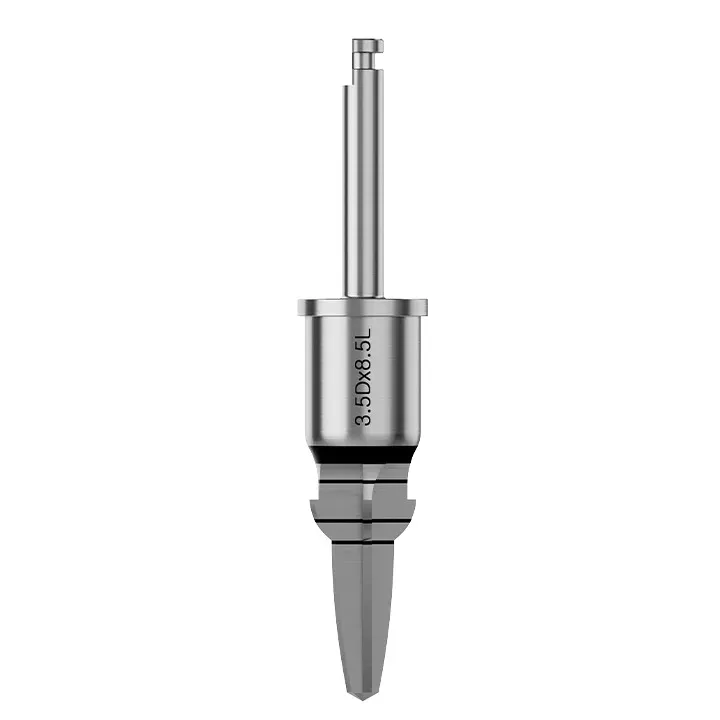
Bullet shaped drills are specialized surgical instruments used during the early stages of implant osteotomy preparation. They are easily recognized by their rounded, bullet-like tip, which is specifically designed to guide the drill into the bone with greater stability and accuracy.
Unlike conventional implant drills, which may require greater attention to prevent slipping during initial penetration, bullet shaped drills help create a precise starting point for the osteotomy. This design allows clinicians to prepare the implant site more confidently while maintaining the planned angulation and depth.
Their ability to improve the initial stage of drilling makes them an important part of many dental implant surgical systems.
The Importance of Accurate Bone Preparation
Every successful dental implant begins with proper bone preparation. The osteotomy must be prepared according to the planned implant diameter, depth, and angulation to ensure optimal implant positioning. Even small deviations during drilling can affect the final restoration, implant stability, and long-term clinical success.
The dense outer cortical bone requires careful preparation because it provides much of the implant's initial mechanical support. At the same time, preserving healthy surrounding bone is equally important for successful healing and osseointegration. Bullet shaped drills help clinicians achieve this balance by providing greater precision during the earliest stage of osteotomy preparation.
How Bullet Shaped Drills Improve Surgical Precision
One of the greatest advantages of bullet shaped drills is their ability to improve surgical accuracy. The rounded tip creates a stable point of entry into the cortical bone, reducing the likelihood of drill movement or slipping during initial penetration.
This enhanced stability allows clinicians to maintain the desired drilling angle while preparing the osteotomy. As a result, implant placement becomes more predictable, particularly in cases where precise angulation is essential for both function and aesthetics.
Greater accuracy during the first stage of drilling also contributes to improved alignment throughout the remainder of the implant procedure.
Supporting Primary Implant Stability
Primary stability is one of the most important factors influencing successful dental implant treatment. It refers to the mechanical stability achieved immediately after implant placement and provides the foundation for successful osseointegration.
Bullet shaped drills contribute to primary stability by creating a precisely located osteotomy that closely matches the planned implant position. Because the implant is inserted into an accurately prepared site, it achieves a more secure fit within the surrounding bone.
Strong primary stability helps minimize implant movement during healing and increases the likelihood of successful long-term integration between the implant and bone.
Preserving Healthy Bone Tissue
Bone preservation is a fundamental goal of implant surgery. Excessive bone removal or unnecessary trauma may compromise healing and reduce long-term implant success.
Bullet shaped drills are designed to create an accurate entry point while removing only the amount of bone required for the procedure.
Their efficient cutting action reduces unnecessary stress on surrounding tissues and helps maintain healthy bone architecture.
Preserving bone quality supports faster healing and provides a stronger foundation for the implant restoration.
Improving Surgical Efficiency
Modern implant dentistry emphasizes both precision and efficiency. Surgical procedures should be performed accurately while minimizing unnecessary treatment time.
Bullet shaped drills improve workflow by allowing clinicians to establish the initial osteotomy quickly and confidently.
Their stable entry into the cortical bone reduces the need for repeated repositioning, helping maintain procedural consistency throughout surgery.
Improved efficiency benefits both clinicians and patients by reducing surgical complexity while maintaining excellent clinical standards.
Applications of Bullet Shaped Drills
Bullet shaped drills are used in a wide range of implant procedures and are suitable for various clinical situations.
They are frequently used during single-tooth implant placement, where accurate implant positioning is essential for achieving natural-looking restorative results. In multiple implant cases, they help maintain consistent angulation across several implant sites. They are also valuable in immediate implant placement following tooth extraction, where accurate entry into the remaining bone is critical.
In digitally guided implant surgery, bullet shaped drills complement computer-assisted planning by helping clinicians reproduce the planned implant position with greater accuracy. Their precision also makes them useful in complex restorative cases that demand careful surgical execution.
Choosing High-Quality Bullet Shaped Drills
The performance of any surgical instrument depends on its design and manufacturing quality. High-quality bullet shaped drills are manufactured using premium surgical-grade stainless steel and precision engineering techniques that ensure consistent cutting performance and long-term durability.
Reliable drills maintain their sharpness through repeated sterilization cycles and provide dependable performance throughout numerous surgical procedures. Compatibility with modern implant systems also ensures efficient integration into established clinical protocols.
Investing in well-manufactured instruments helps clinicians improve surgical confidence while supporting predictable patient outcomes.
Why Choose Universal Shapers?
Universal Shapers specializes in manufacturing precision dental implant instruments designed to meet the demands of modern implant dentistry. Its bullet shaped drills are developed to provide exceptional cutting performance, excellent durability, and consistent surgical accuracy.
Every instrument is manufactured with careful attention to quality, allowing dental professionals to perform osteotomy preparation with confidence and precision. By combining advanced engineering with high manufacturing standards, Universal Shapers supports clinicians in achieving reliable implant placement and successful long-term treatment outcomes.
Maintaining Bullet Shaped Drills for Consistent Performance
Proper maintenance is essential for ensuring the continued effectiveness of bullet shaped drills. Instruments should be cleaned immediately after each procedure to remove biological debris before undergoing thorough sterilization according to accepted clinical protocols.
Regular inspection helps identify signs of wear or reduced cutting efficiency, allowing clinicians to replace drills when necessary. Proper storage in protective instrument trays also prevents accidental damage and extends instrument life. Well-maintained surgical instruments contribute to consistent clinical performance and enhance patient safety.
Conclusion
Successful dental implant procedures depend on precision at every stage of treatment, and bullet shaped drills play a vital role in achieving that precision. Their rounded design provides a stable and accurate starting point for osteotomy preparation, improving surgical control, preserving healthy bone, and supporting strong primary implant stability.
As implant dentistry continues to evolve, the use of precision-engineered instruments has become increasingly important for delivering predictable clinical outcomes. By incorporating high-quality bullet shaped drills into their surgical protocols, dental professionals can enhance treatment accuracy, improve procedural efficiency, and provide patients with long-lasting and successful dental implant restorations.

























Sign in to leave a comment.