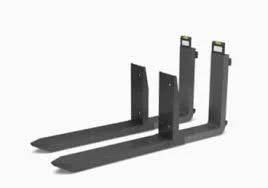
The majority of forklifts appear to be the same when you first enter a warehouse. The products move when the forks pass beneath a pallet and the pallet is raised. Simple. But anyone managing space in a crowded warehouse knows it’s rarely that easy. Pallets get stacked too deep, aisles feel narrow, and retrieving a load buried in the back turns into a headache.
That’s where hydraulic reach forks step in. They’re not just forks that lift—they extend, retract, and make handling smoother. Think of them as an extra arm on your forklift, one that stretches when needed and saves serious effort.
Reaching Where Standard Forks Can’t
Here’s a common warehouse problem: double-deep racking. Standard forks reach only so far, which means pallets stored behind the front row stay out of reach without moving the front ones first. That costs time.
Hydraulic reach forks solve this neatly. They extend forward, grab the pallet in the second row, and pull it out in one smooth motion. No reshuffling, no wasted moves. For a warehouse that handles thousands of pallets, this difference isn’t small—it’s a daily time saver.
Tighter Spaces Become Manageable
Not every facility has wide aisles. In fact, with real estate prices climbing, companies often reduce aisle width to fit more racks inside the same space. However, narrow aisles make it challenging for regular forklifts to manoeuvre.
With hydraulic reach forks, operators can work in tighter lanes. The forks extend instead of the entire truck having to move deeper. That means less turning, less wasted space, and more storage capacity without building a bigger facility.
Faster Loading and Unloading
Picture this: A truck arrives with pallets stacked double. With standard forks, operators unload the front row, park those aside, then reach for the second row. Extra handling, extra time.
Hydraulic reach forks skip the middle step. They grab the back pallets directly, cutting unloading time significantly. And in logistics, speed equals money.
Reducing Operator Fatigue
We sometimes forget the human side of warehouse operations. Operators spend long shifts making precise moves, lifting, and adjusting. The more complicated the process, the higher the fatigue.
Hydraulic reach forks simplify work. No need to back out, reposition, and line up multiple times. Operators extend, lift, and go. Less effort per move translates into less strain over the day.
Cost Savings Add Up
Let’s be honest: hydraulic reach forks are an investment. But stack the numbers.
· More pallets stored in the same footprint
· Faster truck unloading and loading
· Less damage to goods
· Lower labour hours for the same output
Add those savings together, and the payback period often surprises managers. Instead of years, many see returns in months.
Flexible Across Industries
Whether it’s food distribution, retail warehouses, manufacturing units, or e-commerce hubs, hydraulic reach forks fit right in. Any business storing pallets in deep racks or tight spaces can benefit. They’re not tied to one industry—they’re a versatile tool across the supply chain.
Thinking Ahead
There’s another angle. With companies moving toward automation and higher warehouse efficiency, hydraulic reach forks prepare facilities for that future. They allow tighter designs, denser storage, and smoother workflows—all key factors in modern logistics planning.
Final Word
Hydraulic reach forks may look like just another attachment, but they reshape how forklifts work. For companies chasing speed, efficiency, and cost control, these forks aren’t a luxury. They’re a smart step forward.
The real question is this: how much longer can your warehouse afford the wasted time and space of standard forks?























Sign in to leave a comment.