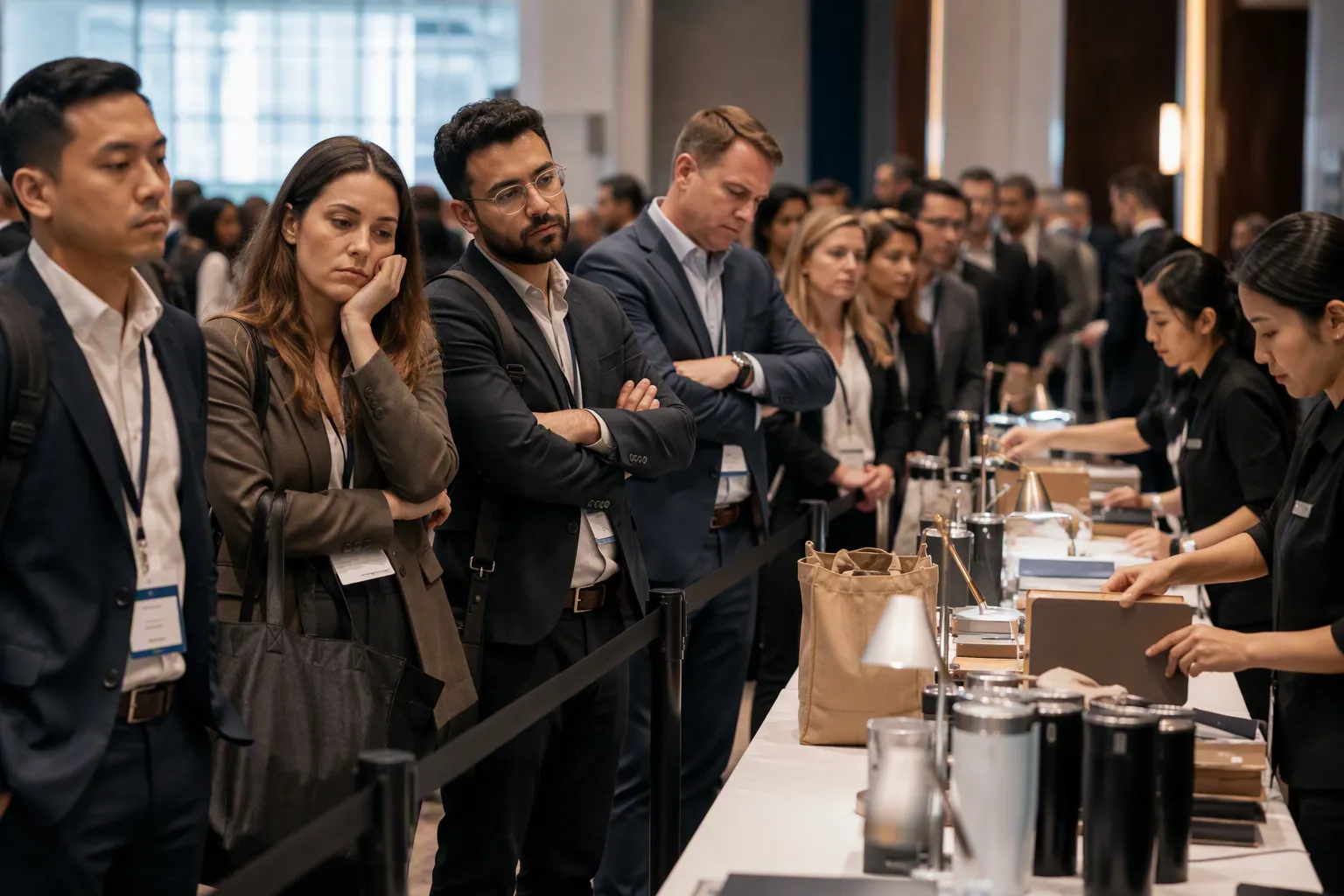

Picture this. A guest walks up to your on-site gifting station, excited to personalize their item. Ten minutes later, they are still standing in line, checking their phone, and starting to wonder if it was worth the wait. By the time they finally reach the front, the excitement is gone. What should have been a memorable moment turns into just another line at an event.
This is one of the most overlooked risks in event planning. Everyone focuses on the product, the design, and the personalization options, but almost nobody talks about the thing that can quietly ruin all of it: attendee flow.
Why Do Wait Times Matter More Than Planners Realize?
The entire point of onsite gifting is to create a positive emotional connection through participation. That connection depends heavily on how the experience feels while it is happening, not just on the finished product. A guest who waits too long does not walk away thinking about the personalized item they got. They walk away thinking about how long they stood there.
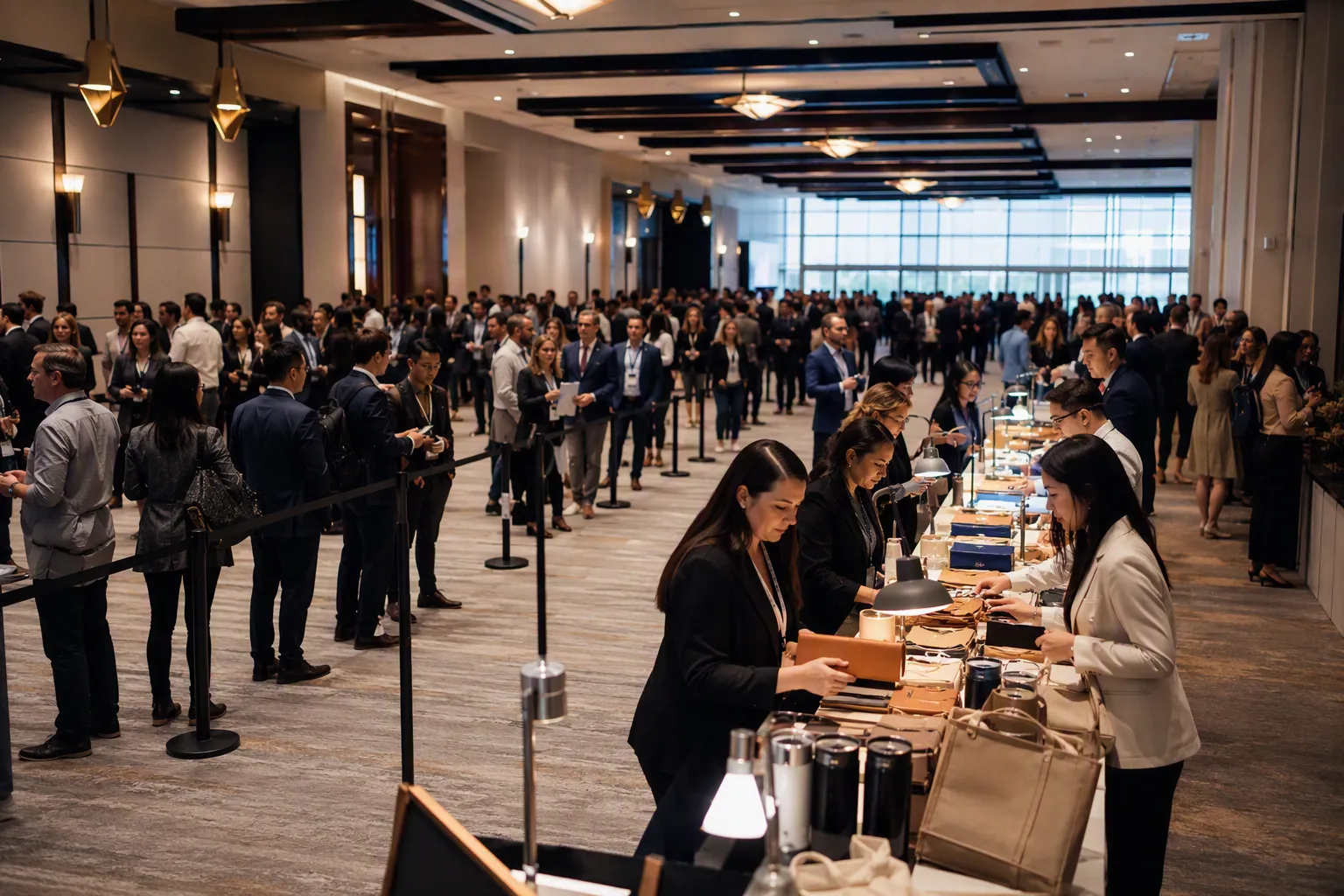
Long waits also create a ripple effect. Guests who see a slow-moving line often decide it is not worth joining at all, which means the station loses potential participants before they ever get close. The activation ends up serving fewer people and leaving a worse impression on the ones who do stick around.
Queue Management Starts With Realistic Time Estimates
Before the event, walk through the actual personalization process and time it honestly. How long does it take to customize one item, from start to finish, including any decision-making the guest has to do? Planners consistently underestimate this step, assuming a process will take two minutes when it actually takes five once guests start asking questions or changing their minds.
Once you have a realistic per-guest time, multiply it against your expected attendance to get a rough sense of total demand. This number should drive every other decision about how the station is staffed and structured.
Multiple Stations Solve More Than Just Speed
One of the simplest ways to prevent long lines is to avoid relying on a single station in the first place. Splitting an onsite gifting activation into two or three smaller stations, each handling a portion of the process, spreads demand out naturally. This works especially well at larger onsite gifting events where a single line would otherwise stretch far longer than guests are willing to tolerate.
Multiple stations also give planners flexibility. If one station is handling monogramming and another is handling color selection, guests move through in stages rather than waiting through the entire process in one long line.
Digital Ordering Can Cut Wait Times Significantly
More onsite gifting activations are starting to build in a digital step ahead of the physical one. A quick sign-up or design selection done on a phone or tablet, either before guests arrive at the station or while they are still in line, moves part of the decision-making process out of the bottleneck.
This does not replace the hands-on nature of onsite gifting. It just shifts the slower part, decision-making, to a point where it does not hold up the line. By the time a guest reaches the front, their choices are already made, and the staff can move straight into personalization.
Pickup Methods Matter Just as Much as the Line Itself
Not every guest needs to wait for their item to be finished on the spot. For activations involving longer processes, like engraving or debossing, offering a pickup option later in the event, or even a shipped option for larger events, keeps the line moving without forcing guests to stand around for the entire production time.
This approach works particularly well for higher-tier, premium onsite gifting activation formats where quality and craftsmanship take priority over speed. Guests still get the full personalized experience, just without the wait attached to it.
Staffing Recommendations That Actually Prevent Bottlenecks
Staffing is where most flow problems either get solved or get made worse. A good rule of thumb is to staff for your busiest expected window, not your average expected traffic, since guest arrival at events is rarely evenly spread out. A rush right after a keynote session or during a scheduled break can overwhelm a station that was staffed for a calmer, average pace.
Grossman Marketing Group has found through its work across onsite gifting programs that adding even one extra staff member during predictable rush periods makes a noticeable difference in guest satisfaction, often more than any change to the product or personalization options themselves.
Real Planning Examples Worth Learning From
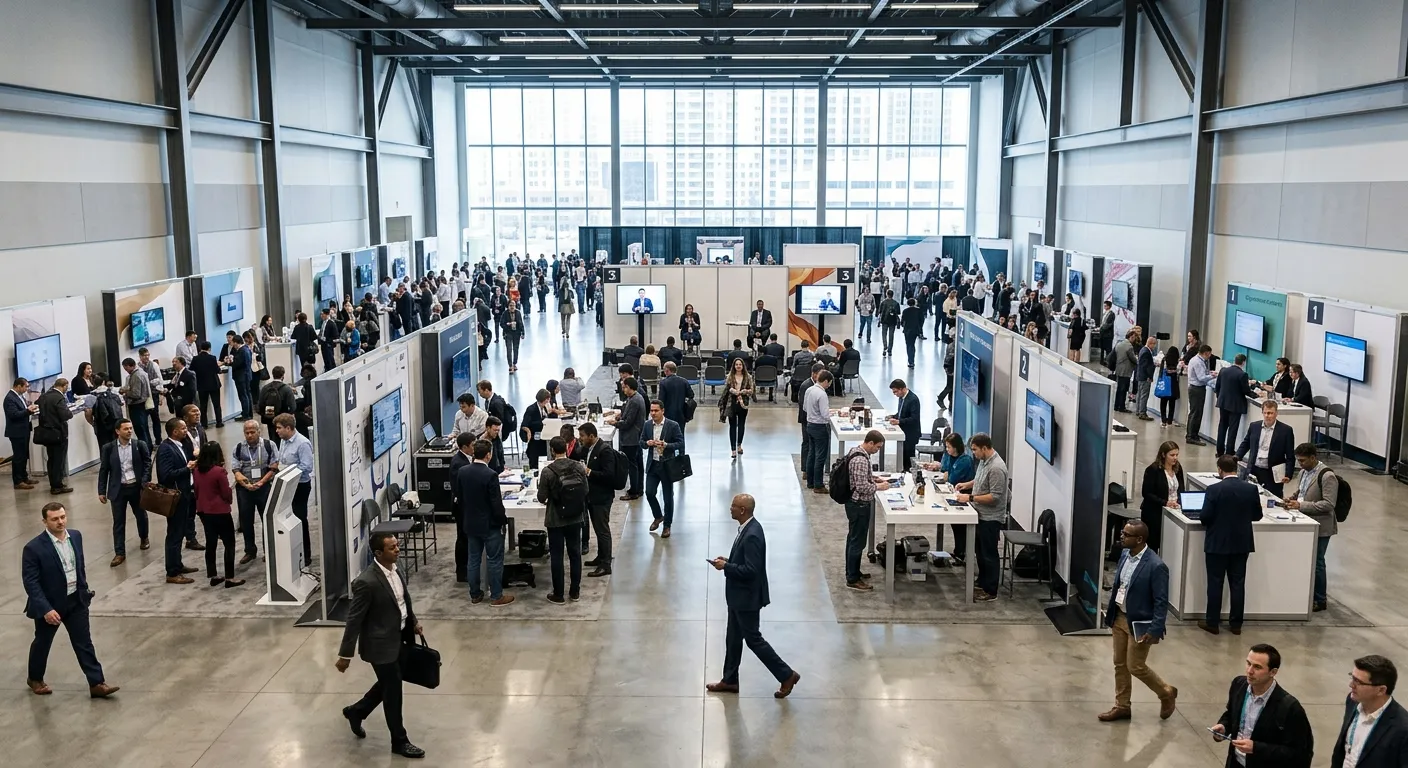
A campus welcome event with a single accessory customization table can usually run smoothly with one or two staff members if attendance stays under a few hundred students spread across several hours. But the same setup at a trade show with a concentrated rush of attendees during a two-hour window would create long lines almost immediately unless the station is split or additional staff is added.
Similarly, a healthcare product launch with a premium debossing station benefits from a pickup or delivery option, since the process itself takes longer and executive attendees are less likely to wait in a visible line. Matching the flow strategy to both the event type and the audience is what separates a smooth onsite gifting experience from a frustrating one.
Frequently Asked Questions
How long is too long for a guest to wait at an onsite gifting station?
Most planners aim to keep wait times under five to seven minutes, since interest tends to drop off sharply beyond that point.
Is digital ordering necessary for smaller events?
Not always. Smaller, low-traffic events can often run smoothly without it, but it becomes more valuable as attendance and demand increase.
What is the easiest way to prevent long lines without adding more staff?
Splitting the activation into multiple smaller stations or offering a pickup option for longer processes are two of the simplest ways to reduce wait times without increasing headcount.
Final Thought
A great onsite gifting idea can still fail if guests spend most of their time standing in line waiting for it. Planning for flow, not just for the personalization itself, is what turns a good activation into one guests actually enjoy and remember. The product matters, but the experience of getting it matters just as much.






















Sign in to leave a comment.