
You’ve been scrolling for hours. Your browser has twenty tabs open, all showing variations of the same thing. Delhi. Agra. Jaipur. The "Golden Triangle." It is the undisputed heavyweight champion of Indian tourism. Every travel agency on the planet sells it. Every influencer has a reel of it.
It’s a great route. Don’t get me wrong. The Taj Mahal is worth the 5:00 AM alarm. The forts in Jaipur are massive and impressive. Delhi is a high speed crash course in sensory overload.
But there is a problem.
By day five, most travelers hit a wall. You start to feel like a spectator. You’re looking at empty palaces where kings used to live. You’re walking through silent tombs. It’s beautiful, sure. But it can feel a bit... hollow. You’ve seen the "monumental" India, but you might have missed the "living" India.
That is because most standard itineraries skip Mathura. And that is a massive mistake.
Why Is Everyone Following the Same Three-City Script?
Logistics. That’s the boring answer. Most travel companies like things to be "clean." Delhi to Agra is a straight shot on a shiny expressway. Agra to Jaipur is another predictable leg. It’s easy to sell. It’s easy to schedule.
But easy isn't always better.
Mathura sits right in the middle of this route, yet thousands of tourists breeze right past it at 100 kilometers per hour. They are so focused on getting to the next big "sight" that they miss the actual soul of the region. Mathura isn't just a stop; it’s a portal. It’s where the stories of Lord Krishna began, and unlike a museum, those stories are still being shouted, chanted, and danced today.
What Happens When You Add a Spiritual Anchor to Your Trip?
Delhi is about power. Agra is about romance. Jaipur is about color.
Mathura is about devotion.
Adding this city to your itinerary changes the frequency of your trip. Suddenly, you aren't just looking at old stones. You’re standing in the Shri Krishna Janmabhoomi the literal birthplace of a deity. You aren't just a tourist; you’re a witness.
Can You Handle the Raw Energy of an Ancient City?
Mathura doesn't have the "polished" feel of a New Delhi boulevard. It is raw. It is ancient. It is unpretentious.
You’ll walk through narrow lanes where the smell of frying kachoris hits you first, followed by the scent of heavy incense and damp earth. You’ll see cows wandering through the streets with a level of confidence you wish you had. It’s real. It’s unfiltered. If you want a sanitized version of India, stay on the highway. If you want the version that actually stays in your heart, get off at Mathura.
How Do You Navigate the Chaos Without Losing Your Cool?
Let's be real: Mathura and its sister town, Vrindavan, can be intense. The crowds at the Banke Bihari Temple don't do "orderly lines." They do "ecstatic surges."
- The Monkey Warning: The monkeys here are professional thieves. If you are wearing glasses or holding a phone loosely, they will take them. It’s not a joke. Keep your gear tucked away.
- The Rickshaw Strategy: Don't try to navigate the inner lanes in a big car. You’ll just get stuck behind a bullock cart. Hire a local cycle-rickshaw. It’s the only way to weave through the labyrinth.
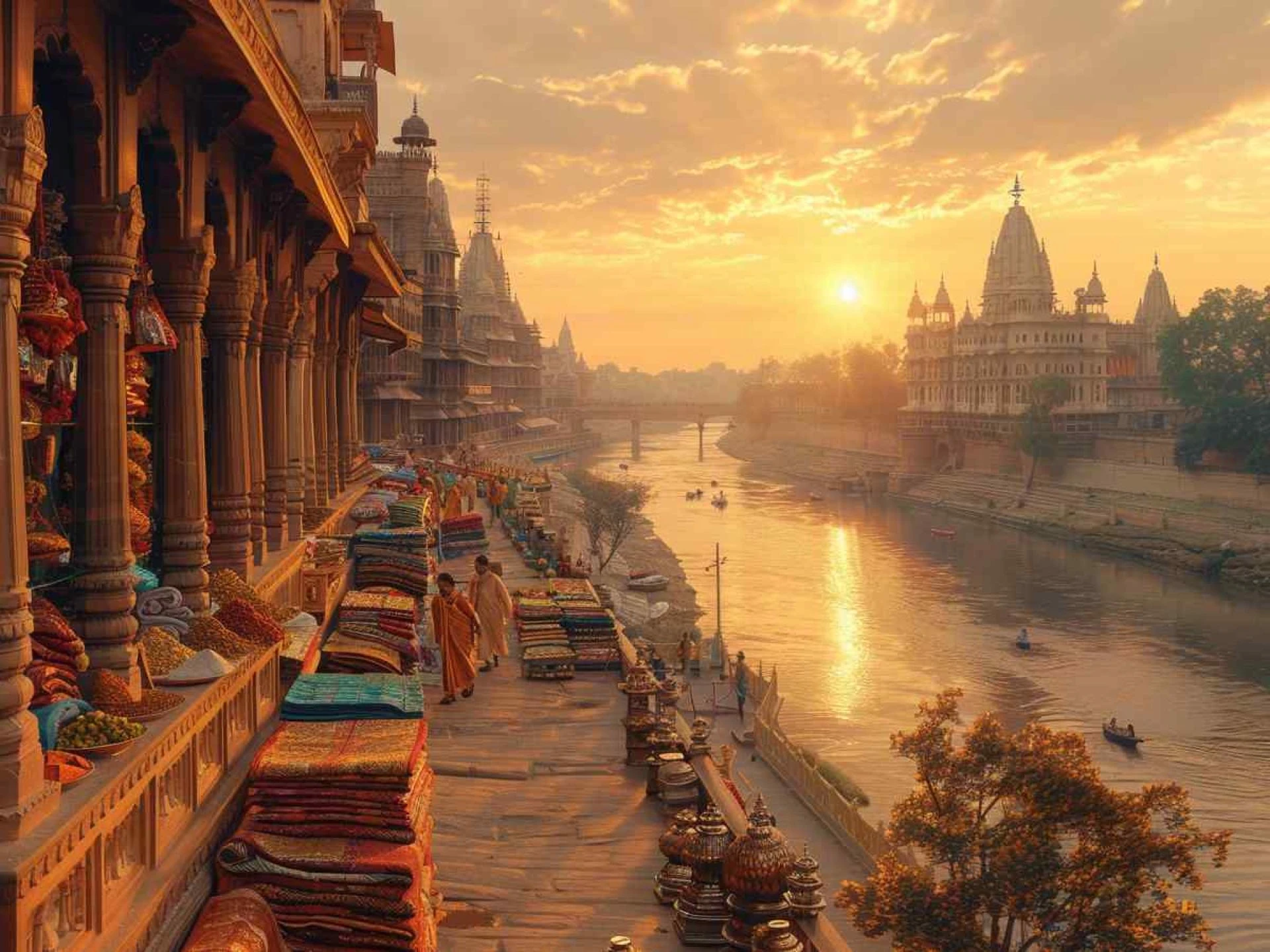
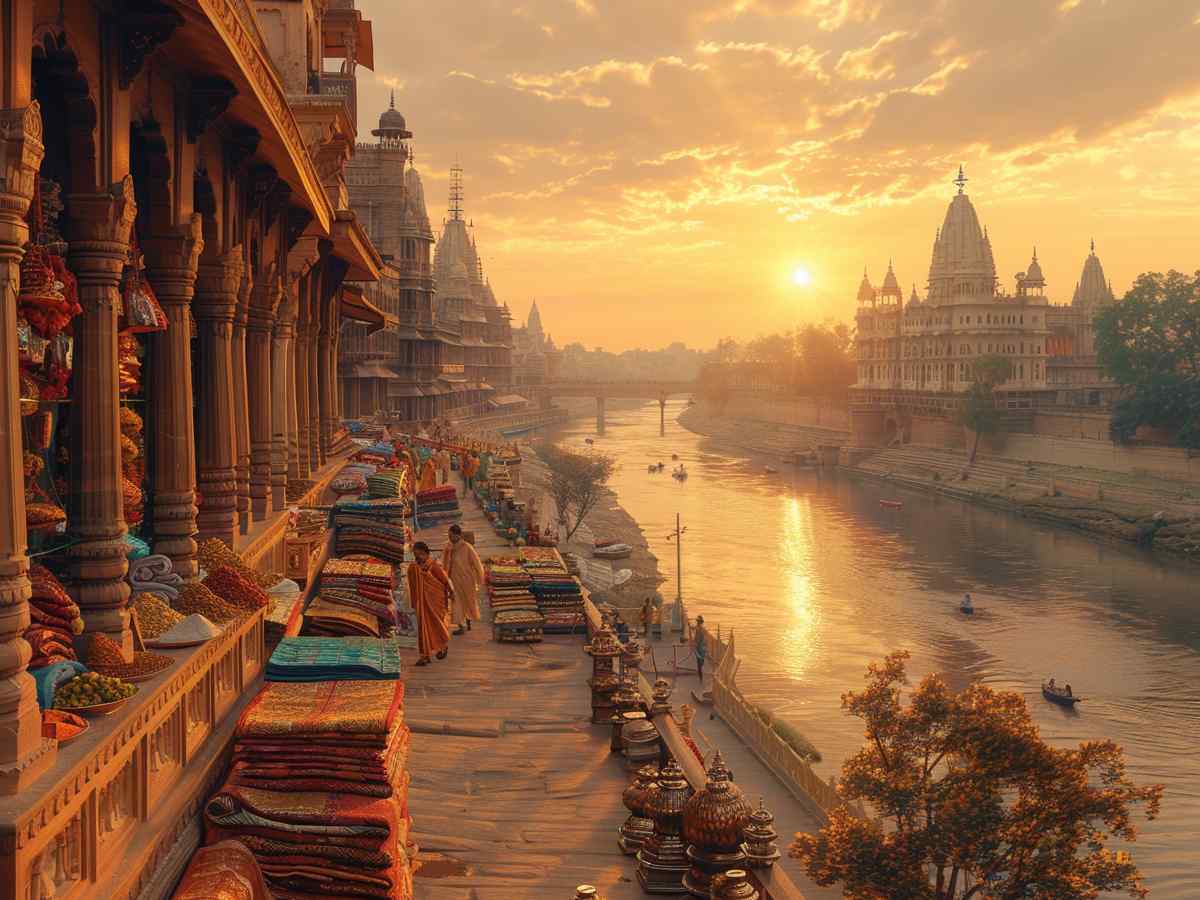
- The Timing Secret: Go to the Vishram Ghat at sunset. While everyone else is fighting for a spot at a buffet in Agra, you’ll be watching oil lamps float down the Yamuna River. It’s quiet. It’s profound. It’s exactly why you came to India.
Is Mathura Actually Better for Your Travel Budget?
Actually, yes.
Because it’s a pilgrimage hub first and a "tourist" hub second, things are priced for locals. The street food is cheaper (and usually better). The local hand-printed textiles are a fraction of what you’ll pay in the high-end boutiques of Jaipur.
You can find incredible "Havelis", traditional mansions turned into guest houses, that give you a far more authentic experience than a generic chain hotel. You get more "story" for your dollar.
Why Does Including Mathura Make Your Logistics Smoother?
You might think adding another city makes things more complicated. It’s actually the opposite.
Agra can be heavy. Trying to do the Taj Mahal and the Agra Fort in one day after a long drive from Delhi is a lot. By stopping in Mathura, you break the journey.
You leave Delhi, spend a few hours in the vibrant energy of the temples, and arrive in Agra in the evening. You’re relaxed. You’ve stretched your legs. You’ve had a local lassi in a clay cup. By the time you see the Taj Mahal the next morning, you’re in a much better headspace to actually appreciate it.
How Do You Spot the Difference Between a Sight and an Experience?
A "sight" is something you take a photo of. An "experience" is something that changes how you feel.
In Jaipur, you’ll take a photo of the Hawa Mahal. It’s beautiful. In Mathura, you’ll find yourself caught in a "Holi" celebration or a random evening chant where people are genuinely, purely happy. You might not even take your phone out. You’ll be too busy being part of the moment.
As a traveler, you have to decide: do you want a camera roll full of buildings, or a mind full of moments?
How Do You Finally Pull the Trigger on Your Itinerary?
The problem with most "standard" trips is that they are built for the average person. But you aren't average. You’re the person who wants to see the hidden corners. You want the history, but you also want the heartbeat.
Planning this balance is where people usually trip up. They get overwhelmed by train schedules that don't make sense or drivers who don't know the local shortcuts. You shouldn't have to spend your vacation being a logistics manager.
That’s where we step in. We don't just sell seats on a bus. We create journeys that actually mean something. Most people just look for the easiest package holidays to india golden triangle and end up seeing the same three things as everyone else. If you want the version of India that is deeper, more colorful, and infinitely more memorable, you need to look for a golden triangle with mathura tour. We handle the traffic, the temple timings, and the "oops" moments so you can just focus on the magic.



















Sign in to leave a comment.