

Many homeowners walk into an electronics store, point at the most expensive camera on the shelf, and assume that price alone guarantees good security. Then a few months later, an incident happens just outside the frame, and the expensive camera captures nothing useful at all.
The Common Assumption That Leads Homeowners Astray
It feels logical to think a higher price tag means better protection. Manufacturers market resolution numbers, night vision range, and AI detection features as if these specs solve everything on their own.
The reality looks different once you actually review footage from a poorly placed camera. A four megapixel camera angled correctly will outperform an eight megapixel camera pointed at the wrong section of your driveway every single time.
What Position Actually Controls Surveillance
Camera position determines three things that no amount of resolution can fix afterward. It decides what enters the frame, what angles faces are captured at, and whether lighting conditions help or hurt the final footage.
A camera mounted too far from a doorway captures a person's general shape but rarely a clear enough face for identification. Distance and angle work together, and getting either one wrong undermines even premium hardware.
Where Most Placement Mistakes Happen
These mistakes show up again and again across different properties:
- Mounting cameras facing directly into the morning or evening sun glare
- Placing cameras too high, which only captures the top of someone's head
- Leaving gaps between camera zones that create blind corridors
- Pointing cameras at decorative features instead of actual access points
Each of these mistakes is invisible until footage is actually needed, which is usually the worst possible time to discover a gap.
Why Professional CCTV Camera Installation Changes the Outcome
A proper CCTV camera installation starts with a walk-through of the property, not a guess based on where an outlet happens to be located. A trained installer studies sightlines, checks how sunlight moves across the property through the day, and maps overlapping coverage zones before a single screw goes into the wall.
This process catches issues a homeowner would never think to check, such as a tree that will grow taller within a year and eventually block a key angle, or a streetlight that creates glare during certain hours.
Resolution Still Matters, Just Not First
This is not an argument against buying decent equipment. Resolution, low-light performance, and storage capacity all matter once placement is locked in correctly. The order of priority simply needs to flip from what most people assume.
Get the position right first, then choose hardware that fits the lighting and distance requirements of that specific spot. A camera bought to match its location performs far better than one bought purely on marketing specs.
Comparing Two Common Approaches
High-End Cameras with Self-Installation
High-end security cameras are capable of capturing clear, high-resolution footage. However, installing them without professional planning can result in poor camera positioning and missed viewing angles. Even with premium hardware, important entry points or vulnerable areas may remain outside the camera's field of view.
Mid-Range Cameras with Professional Installation
Mid-range cameras often deliver excellent value when they are installed by professionals. Proper placement ensures that critical zones are covered effectively, allowing homeowners and businesses to achieve reliable surveillance at a lower overall cost than investing in premium equipment alone.
Premium Cameras with Professional Installation
Pairing premium cameras with professional installation offers the highest level of protection. Expert installers carefully assess the property's layout, position cameras to minimise blind spots, and optimise system settings for maximum performance. Although this option involves the highest upfront investment, it delivers the most comprehensive security coverage.
Budget Cameras with Self-Installation
Budget cameras can provide basic surveillance, but self-installation often limits their effectiveness. Poor placement, insufficient coverage, and unreliable footage may leave gaps in security, reducing the overall value of the system even for everyday monitoring.
Professional installation plays a significant role in the effectiveness of any CCTV system. While camera quality is important, correct positioning and coverage planning have an even greater impact on the final result. In many cases, professionally installed mid-range cameras outperform premium cameras that have been installed without a clear surveillance strategy.
How This Connects to Your Broader Home Network Setup
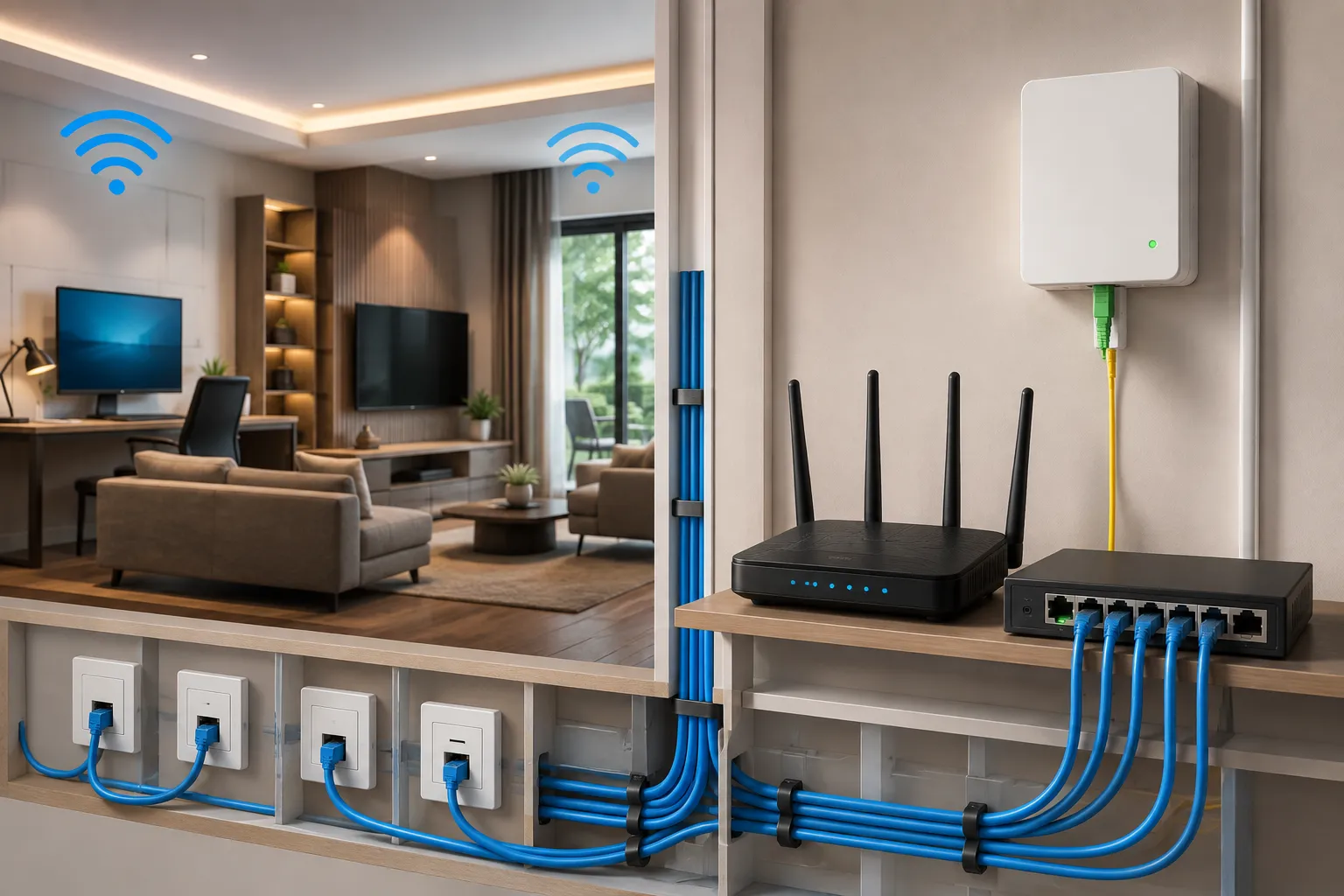
Surveillance does not exist in isolation. Modern cameras stream footage continuously, which places real demand on your home network setup, especially if you run several cameras alongside other connected devices.
A home with weak WiFi coverage in the area where cameras are mounted will see dropped recordings or delayed alerts, regardless of how well the cameras themselves are positioned. This is why a complete project usually looks at both surveillance placement and network capacity together, rather than treating them as separate purchases.
Homes with a stable network backbone tend to see far fewer missed recordings, since cameras stay connected consistently instead of buffering or disconnecting during peak usage hours.
Planning Your Installation the Right Way
Before buying any equipment, walk your property and note every entry point, blind corner, and area with valuables. Bring this list to a consultation rather than starting with a product catalogue.
A site survey typically takes under an hour and saves significant rework later. Drilling holes, running cables, and mounting hardware are far more disruptive to redo than to plan correctly from the start.
Ask specifically about overlap coverage between cameras, since gaps between zones are the most common reason footage misses an actual incident even when individual cameras work perfectly fine on their own.
Final Thoughts on Getting It Right
Price tags create a false sense of security when placement gets ignored. A thoughtful installation plan, backed by a site walk-through and proper angle testing, delivers far more practical protection than chasing the highest spec sheet available.
Pair that plan with a network capable of supporting continuous streaming, and the entire system works as intended instead of failing quietly in the background.
FAQs
Should I prioritise camera resolution or placement when on a budget?
Placement should always come first. A correctly positioned mid-range camera captures more useful footage than a premium camera pointed at the wrong angle.
How often should camera angles be reviewed after installation?
A yearly check is reasonable, especially if trees, signage, or new structures have changed the sightlines since the original installation.
Does adding more cameras always improve coverage?
Not necessarily. Adding cameras without addressing overlap and blind spots often just duplicates coverage in one area while leaving others exposed.
























Sign in to leave a comment.