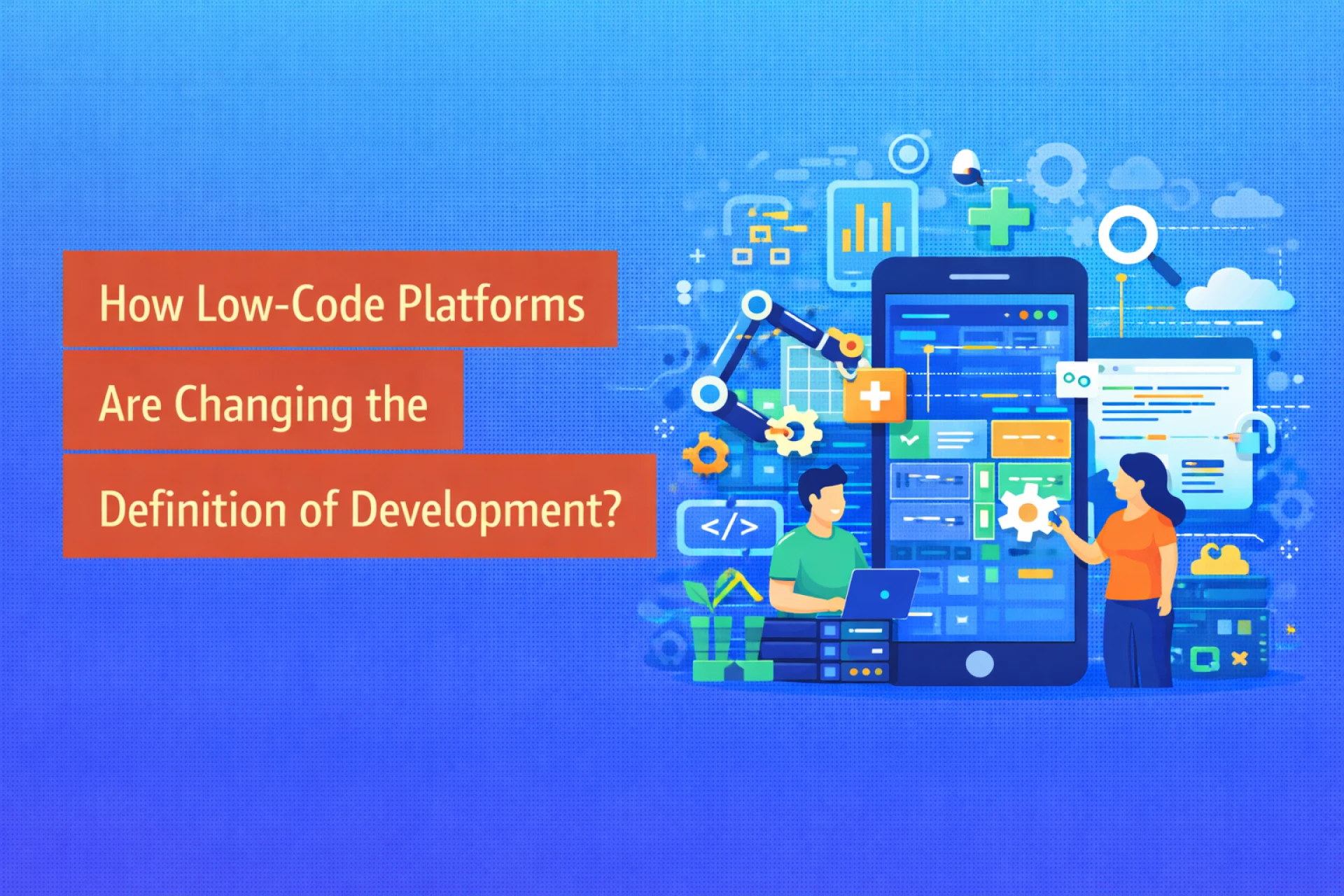

Low-code platforms are rapidly transforming the way software is built, deployed, and scaled. What once required large development teams, months of coding, and significant budgets can now be accomplished in a fraction of the time.
This shift is redefining what “development” truly means. Businesses are no longer limited to traditional coding environments. Instead, they are blending visual builders, automation tools, and professional engineering to create faster, smarter digital solutions.
For companies exploring mobile app development Miami, low-code platforms are introducing new possibilities—while also raising important questions about scalability, customization, and long-term growth.
What Are Low-Code Platforms?
Low-code platforms are software development environments that allow users to build applications using visual interfaces, drag-and-drop components, and pre-built templates with minimal manual coding.
Popular platforms such as OutSystems, Mendix, and Microsoft Power Apps have made it easier for businesses to build applications without requiring extensive programming knowledge.
Instead of writing thousands of lines of code, developers (and even non-technical users) can assemble applications through modular components.
The Traditional Definition of Development
Historically, development meant:
- Writing code from scratch
- Managing backend infrastructure
- Designing databases manually
- Handling deployment environments
- Conducting extensive QA testing cycles
This process required highly specialized engineers and significant financial investment. Development cycles were long, complex, and often rigid.
Low-code platforms are challenging this model.
How Low-Code Is Redefining Development
1. Democratization of Software Creation
One of the biggest changes is accessibility. Business analysts, marketers, and operations managers can now contribute to app creation without deep coding knowledge.
This democratization reduces bottlenecks and speeds up innovation.
However, it doesn’t eliminate the need for professional developers—it changes their role. Engineers now focus more on:
- Architecture
- Security
- API integrations
- Performance optimization
2. Faster Time-to-Market
Speed has become a competitive advantage. Low-code platforms allow rapid prototyping and deployment.
Businesses seeking mobile app development Miami solutions often use low-code tools to:
- Test MVPs (Minimum Viable Products)
- Launch internal apps quickly
- Validate ideas before full-scale development
This agile approach minimizes risk while maximizing experimentation.
3. Cost Efficiency
Traditional development can be expensive due to:
- Developer salaries
- Infrastructure costs
- Long development timelines
Low-code platforms reduce initial development costs by streamlining processes. For startups and small businesses, this lowers the barrier to entry into digital markets.
4. Integration with Existing Systems
Modern low-code tools offer built-in connectors and APIs that integrate with major ecosystems such as Salesforce and Shopify.
This integration flexibility allows businesses to create applications that fit seamlessly into their operational workflows.
The Role of Professional Development in a Low-Code Era
While low-code platforms are powerful, they are not a universal replacement for traditional development.
Limitations may include:
- Restricted customization
- Performance constraints
- Vendor lock-in risks
- Scalability challenges for high-traffic applications
For businesses planning large-scale consumer apps, custom architecture built by experienced developers remains critical.
That’s why many organizations adopt a hybrid model:
- Low-code for internal tools
- Custom coding for customer-facing applications
In competitive tech markets like Miami, companies often blend low-code tools with professional engineering to achieve optimal performance and flexibility.
How Low-Code Impacts Mobile App Development
The mobile-first economy demands performance, security, and seamless UX. While some low-code platforms offer mobile app builders, complex applications—such as fintech, real estate, or on-demand service platforms—typically require deeper customization.
For businesses investing in mobile app development Miami, the key questions include:
- Will the app need advanced backend logic?
- Is long-term scalability a priority?
- Are custom integrations required?
- Will high user traffic impact performance?
Low-code may be ideal for prototypes or internal systems, but enterprise-grade applications often require custom engineering expertise.
The Shift in Developer Roles
Low-code platforms are not eliminating developers—they are elevating them.
Developers now focus more on:
- System architecture design
- Advanced feature implementation
- Security hardening
- Performance optimization
- Custom API development
This shift changes the definition of development from pure coding to solution engineering.
Future Trends in Low-Code Development
The evolution of low-code platforms is accelerating due to:
- AI-assisted app building
- Automated testing features
- Enhanced security frameworks
- Cloud-native deployment models
As artificial intelligence becomes embedded in development environments, low-code platforms may handle even more complexity.
However, strategic planning and professional oversight will remain essential for sustainable growth.
Benefits of Low-Code for Modern Businesses
- Faster innovation cycles
- Reduced technical barriers
- Lower upfront costs
- Improved cross-team collaboration
- Rapid experimentation
Challenges to Consider
- Limited deep customization
- Potential scalability restrictions
- Dependency on third-party vendors
- Long-term cost implications
Careful evaluation ensures the platform aligns with business goals.
Conclusion
Low-code platforms are changing the definition of development by making software creation faster, more accessible, and more collaborative. They reduce friction between ideas and execution, allowing businesses to innovate at unprecedented speed.
However, low-code is not a replacement for traditional development—it is an evolution of it.
For organizations exploring mobile app development Miami, understanding when to use low-code, when to use custom development, and when to combine both is essential. The future belongs to businesses that strategically balance speed with scalability.
Development is no longer just about writing code—it’s about building intelligent, adaptable digital ecosystems.
FAQs
Are low-code platforms suitable for enterprise applications?
They can support enterprise tools, but highly complex or high-traffic applications may require custom development for optimal performance.
Do low-code platforms eliminate the need for developers?
No. They shift developers into higher-level roles focused on architecture, security, and optimization.
Is low-code good for startups?
Yes. It enables rapid MVP creation and idea validation at lower cost.
How does low-code impact mobile app scalability?
It depends on the platform. Some offer scalable solutions, but custom development often provides greater long-term flexibility.
Would you like a tailored keyword strategy for this topic to strengthen your SEO rankings, PPC campaigns, and content marketing efforts? I can also generate related blog ideas to build topical authority around low-code and mobile app development.




















Sign in to leave a comment.