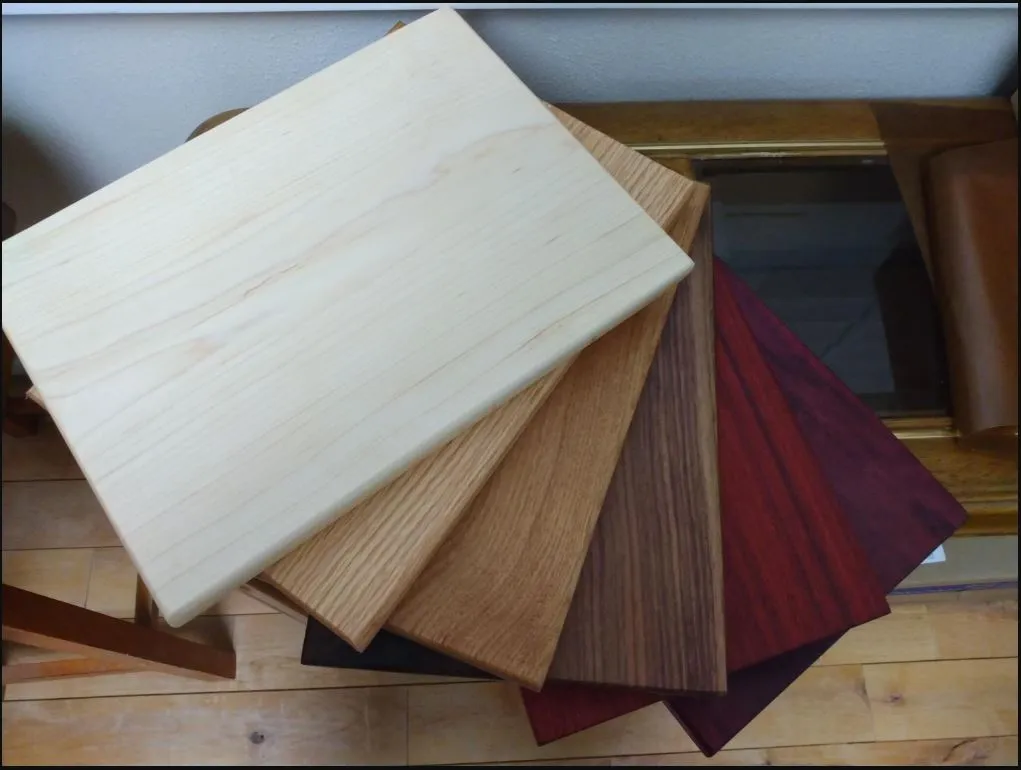

If you've spent any time researching wooden cutting boards, you've probably heard the same advice repeated over and over: end grain is the best.
While end grain cutting boards certainly have advantages, they're not automatically the right choice for every kitchen, every cook, or every budget. In many situations, edge grain or face grain boards can actually be the more practical option.
The best cutting board isn't determined by a single construction method—it's determined by how you plan to use it.
What Is an End Grain Cutting Board?
An end grain cutting board is made by standing pieces of wood upright so the exposed ends of the wood fibers form the cutting surface.
Instead of slicing across the grain, your knife slips between the wood fibers. Once the blade is removed, those fibers naturally close back together, making the surface appear to "heal" over time.
This self-healing characteristic is the biggest reason end grain boards have earned such a strong reputation.
The Advantages of End Grain
There are several legitimate reasons professional chefs and serious home cooks appreciate end grain boards.
Gentle on Knife Edges
Because the blade cuts between the wood fibers instead of across them, there's generally less resistance. This can help reduce wear on high-quality kitchen knives over years of use.
Reduced Visible Knife Marks
Small cuts tend to disappear more easily than they do on edge grain boards, allowing the surface to maintain its appearance longer.
Thick and Stable
Many end grain boards are built thicker than other styles, providing additional weight and stability during heavy chopping.
Where End Grain Falls Short
Although end grain has benefits, it's not perfect.
Higher Cost
Building an end grain board requires significantly more material, more machining, more glue joints, and substantially more labor.
This often makes end grain boards two to four times more expensive than a comparable edge grain board.
For many home cooks, that extra investment simply isn't necessary.
Heavier to Move
A large end grain board can weigh well over 15 pounds.
While that weight keeps it from sliding around, it also makes it less convenient to wash, dry, rotate, or store after each meal.
If you cook daily, lifting a heavy board multiple times a day may become inconvenient.
More Maintenance
Because end grain exposes thousands of wood fibers, it tends to absorb oil more readily than edge grain.
That's not necessarily a disadvantage, but it usually means you'll spend more time maintaining the board to keep it looking its best.
Why Edge Grain Is Often the Better Choice
Edge grain boards are sometimes treated as the "budget" option, but that doesn't mean they're lower quality.
Many commercial kitchens and experienced home cooks prefer edge grain because it offers an excellent balance of durability, maintenance, and value.
More Affordable
Less labor-intensive construction keeps costs lower while still providing decades of reliable service when properly maintained.
Easier to Handle
Edge grain boards are often lighter, making them easier to move from countertop to sink and back again.
Excellent Durability
Modern hardwoods like walnut, maple, cherry, oak, padauk, and purpleheart are already extremely durable.
For everyday meal preparation, many users won't notice a meaningful performance difference between edge grain and end grain.
What About Face Grain?
Face grain boards showcase the widest surface of the wood, highlighting beautiful natural grain patterns.
They're commonly used for:
- Serving boards
- Charcuterie boards
- Cutting boards
- Cheese boards
- Bread boards
- Display pieces
Although face grain boards can certainly be used for food preparation, many people reserve them for presentation because they showcase the natural beauty of the wood.
Choosing the Right Board for Your Kitchen
Instead of asking which construction method is "best," consider asking which one fits your lifestyle.
End grain may be the right choice if you:
- Cook every day
- Own premium kitchen knives
- Don't mind regular maintenance
- Prefer a heavier work surface
Edge grain may be the better choice if you:
- Want excellent value
- Prefer a lighter board
- Need easier maintenance
- Cook for your family several times a week
- Want a durable board that still looks great for years
Face grain may be ideal if you:
- Entertain guests frequently
- Serve charcuterie or appetizers
- Want to highlight beautiful hardwood grain
- Need a versatile serving board
Hardwood Matters More Than Grain Direction
One factor often overlooked is the species of wood itself.
High-quality hardwoods such as walnut, maple, cherry, white oak, padauk, and purpleheart each offer unique advantages in durability, appearance, density, and maintenance.
A well-crafted edge grain board made from premium hardwood will almost always outperform a poorly constructed end grain board made with inferior materials.
Good craftsmanship, proper drying, careful sanding, and regular maintenance often have a greater impact on longevity than grain orientation alone.
Final Thoughts
End grain cutting boards deserve their reputation, but they're not automatically the best choice for everyone.
Edge grain boards provide outstanding durability, easier maintenance, lighter weight, and a more affordable price point while still delivering years—often decades—of dependable performance.
Rather than chasing trends, choose a cutting board that fits your cooking habits, maintenance preferences, and budget. The right board is the one you'll enjoy using every day, whether it's end grain, edge grain, or face grain.
A quality hardwood cutting board from WoodsandWax.com, cared for properly with regular oiling and prompt drying after washing, can become one of the longest-lasting tools in your kitchen.



















Sign in to leave a comment.