

I still remember the moment our train pulled into Amritsar at dawn. The air smelled of marigolds and chai, and somewhere in the distance, a kirtan was playing from the direction of the Golden Temple. That morning changed how I thought about travel in India — and it made me realize that the classic golden triangle tour with Amritsar extension isn't just a popular itinerary. It's genuinely one of the most complete travel experiences you can have on the subcontinent.
If you've been thinking about planning a north India tour, this guide is for you. We'll walk through what makes this route so compelling, how to plan it well, and what to actually expect on the ground — not the glossy brochure version, but the real thing.
What Is the Golden Triangle, and Why Does Amritsar Belong in It?
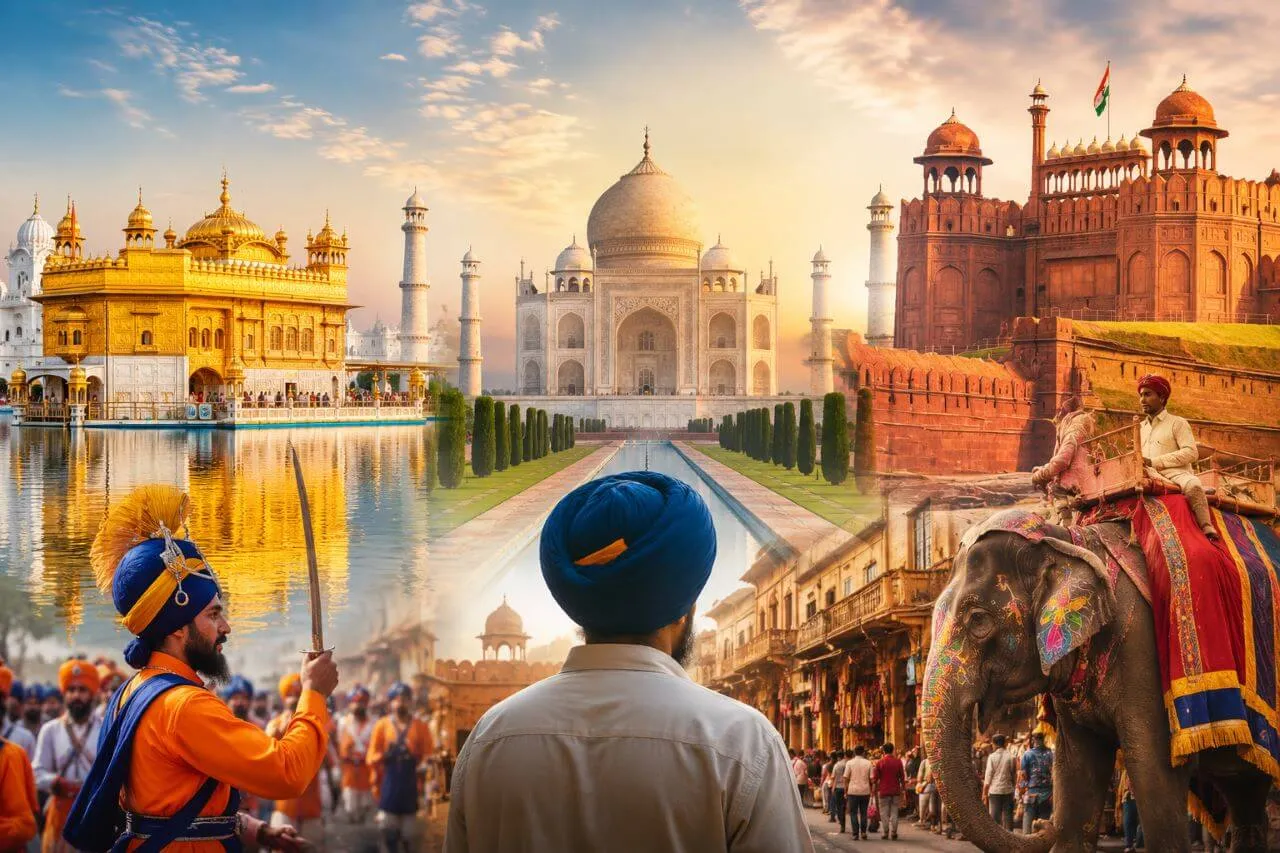
The golden triangle is India's most famous tourist circuit, connecting three cities: Delhi, Agra, and Jaipur. The name comes from the roughly triangular shape these cities form on a map. Most travelers can comfortably cover all three in about six to eight days, which makes it an ideal choice for people with limited time but unlimited curiosity.
Delhi brings the chaos, the history, and the food. Agra brings the Taj Mahal (and the crowds, fair warning). Jaipur brings the pink-hued palaces, the bazaars, and a kind of regal beauty that's hard to describe without sounding like you're overselling it.
But here's the thing — the standard golden triangle, as wonderful as it is, can feel a little predictable if you've read enough travel blogs. That's where Amritsar changes the equation entirely.
Adding Amritsar to the itinerary transforms a sightseeing trip into something more layered. The city sits near the Pakistan border in Punjab, and it carries a weight — historical, spiritual, and emotional — that is unlike anywhere else in India. The Golden Temple, known as Harmandir Sahib, is the holiest shrine in Sikhism, and even if you have no particular connection to the faith, the experience of visiting it is profound. Tens of thousands of pilgrims come every day. The langar (community kitchen) feeds everyone who walks through the gates, free of charge. That kind of radical hospitality is rare in the world, and you feel it immediately.
Planning Your North India Tour: The Route That Works
The most efficient version of a golden triangle tour with Amritsar looks something like this:
Delhi (2–3 days) → Agra (1–2 days) → Jaipur (2 days) → Delhi → Amritsar (2 days)
Or, if you're flying in and out of different cities, some travelers do:
Delhi → Agra → Jaipur → Delhi → Amritsar with a return from Amritsar's Sri Guru Ram Dass Jee International Airport.
The total trip works well in 10 to 14 days, though seasoned backpackers have done it in eight with careful planning. If you have more time, slow down in Jaipur — the surrounding region (Pushkar, Ranthambhore) rewards those who linger.
Delhi: More Than a Gateway City
Most people treat Delhi as the entry point and not much else. That's a mistake.
Delhi is one of the oldest continuously inhabited cities in the world, and it shows. Old Delhi — specifically the lanes around Chandni Chowk — is an assault on the senses in the best way possible. Narrow alleys, centuries-old havelis, street food that has been perfected over generations. Try the chole bhature at any roadside stall. Try the jalebi. Try the dahi bhalle. Just eat your way through it.
New Delhi, by contrast, is wide boulevards, colonial-era architecture, and the grand sweep of Rajpath (now Kartavya Path) leading to India Gate. Humayun's Tomb, which predates the Taj Mahal and served as its architectural inspiration, is quietly magnificent and far less crowded than its more famous cousin.
The Qutub Minar complex is worth a morning. So is Hauz Khas Village if you want to see a very different side of the city — boutique cafes and art galleries beside a medieval reservoir.
Agra: Yes, It's Worth It
Everyone goes to the Taj Mahal. Not everyone leaves knowing how to see it properly.
First, arrive early. The gates open at sunrise, and the light in those first forty minutes is genuinely different from anything you'll see later in the day. The monument turns soft shades of pink and gold that photographs only partially capture.
Second, don't skip Agra Fort. It's a short auto-rickshaw ride from the Taj, and the views of the mausoleum from its towers are spectacular. The fort also tells a tragic story — Shah Jahan spent his final years imprisoned here, looking out at the tomb he'd built for his wife.
Third, cross the Yamuna River and walk to Mehtab Bagh at sunset. The garden sits directly opposite the Taj Mahal, and the view from there — the white marble glowing in the failing light — is the image most people have in their minds when they imagine it.
Jaipur: The Pink City Does Not Disappoint
Jaipur has a color scheme — the old city was painted terracotta pink in 1876 to welcome the Prince of Wales, and the tradition stuck. Walking through the old bazaars, you're surrounded by that warm hue on every wall, and it gives the city a visual coherence that's genuinely distinctive.
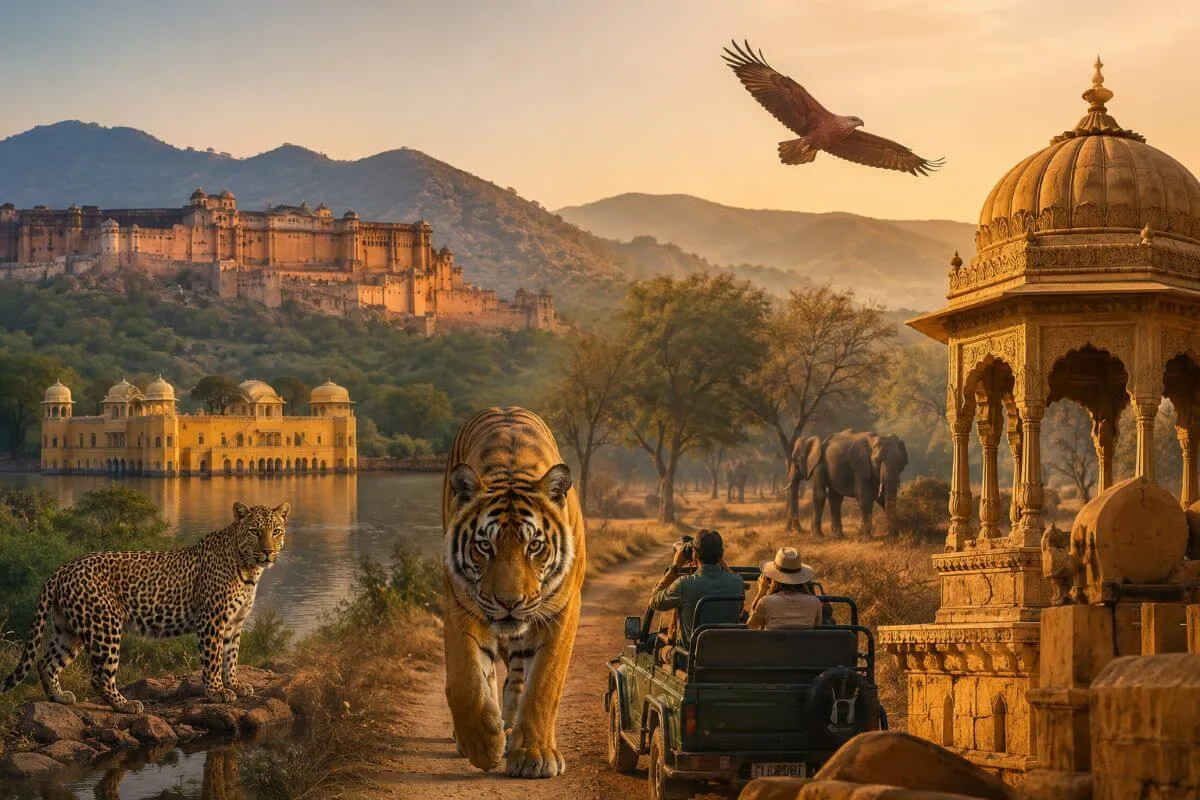
The Amber Fort is the jewel of Jaipur's historical attractions. It sits atop a hill outside the city and is best reached by jeep or, if you're feeling adventurous, by elephant (check the welfare practices of the operator before booking). The fort's architecture is a blend of Rajput and Mughal styles, with mirrored halls and intricate tilework that rewards slow exploration.
The City Palace is still partially inhabited by the royal family, which gives it an atmosphere of lived-in grandeur. The Jantar Mantar observatory next door — a UNESCO World Heritage Site — is one of the most unusual sights in India, a collection of enormous stone astronomical instruments that still function accurately.
Block time in your Jaipur itinerary for shopping. The markets here sell some of the best textiles, gemstones, and handcrafts in Rajasthan. Johari Bazaar for jewelry, Bapu Bazaar for fabric and shoes, Nehru Bazaar for traditional jutis (embroidered footwear). Bargaining is expected and half the fun.
Amritsar: The Soul of Punjab
The Golden Temple complex is open around the clock, to everyone. There's no admission fee. You remove your shoes, cover your head, and walk through shallow water to purify your feet before entering. Then the causeway opens up — and there it is, the Harmandir Sahib, its gold-covered upper floors reflecting in the Amrit Sarovar (Pool of Nectar) that surrounds it.
There are no words that really do it justice. People come from every part of India and the world. Some are weeping. Some are singing. Some are just sitting quietly by the water. The temple operates twenty-four hours a day because, as the Sikh philosophy holds, God's door is never closed.
The langar is worth a separate mention. This is the community kitchen that operates continuously, cooking and serving free vegetarian meals to all visitors regardless of religion, caste, or background. Upwards of one hundred thousand meals are served every day, prepared by volunteers. Eating in the langar hall — sitting cross-legged on the floor, being served by strangers who are doing it out of devotion — is one of those experiences that quietly recalibrates something in you.
A short drive from the city is the Wagah Border, where India and Pakistan conduct the daily flag-lowering ceremony as the border closes at sunset. The ceremony is performed by soldiers from both sides with an intensity and theatricality that's somewhere between military drill and performance art. The bleachers fill up with thousands of Indian spectators, cheering with a fervor that feels like a cricket match crossed with a national holiday. Whatever your feelings about borders and politics, the energy is electric.
Also visit Jallianwala Bagh, the garden where British troops massacred hundreds of unarmed civilians in 1919. It is a sober, necessary counterpoint to the celebration and spirituality elsewhere in the city. The bullet marks in the walls are still there.
Practical Tips for Your North India Tour
Best time to visit: October to March. Summers in north India are brutal (Delhi regularly hits 45°C), and the monsoon (July–September), while beautiful in parts, disrupts travel. Winter mornings can be cold and foggy, which occasionally delays the sunrise views at the Taj Mahal — but the crowds are smaller and the days are comfortable.
Getting around: The Delhi–Agra–Jaipur triangle is well-connected by road and rail. The Shatabdi Express between Delhi and Jaipur is comfortable and reliable. For Agra, the Gatimaan Express from Delhi Hazrat Nizamuddin station is the fastest option. Amritsar is best reached from Delhi by the Swarna Shatabdi or a short domestic flight.
Where to stay: Budget travelers will find excellent guesthouses in all four cities. For mid-range and above, Jaipur has the most interesting options — heritage hotels in converted havelis and palaces are widely available and worth the slight premium. In Amritsar, staying close to the Golden Temple means you can walk there at any hour of the night, which you'll want to do.
Hiring a guide: Worth it in Agra and Jaipur, where historical context transforms what you're seeing. At the Golden Temple, guides are available but not necessary — the experience speaks for itself.
Final Thought
A north India tour built around the golden triangle with Amritsar gives you something rare in modern travel: genuine variety. In two weeks, you move through Mughal grandeur, Rajasthani royalty, Sikh spirituality, and Punjabi warmth. You eat differently in every city. The architecture changes. The pace changes. The feel of the streets changes.
It's a route that's been done thousands of times, by millions of travelers — and it keeps delivering because the places themselves are that good. There's a reason the golden triangle has remained the backbone of tourism in north India for decades. And there's a reason Amritsar, once you've been, feels less like an add-on and more like the whole point.























Sign in to leave a comment.