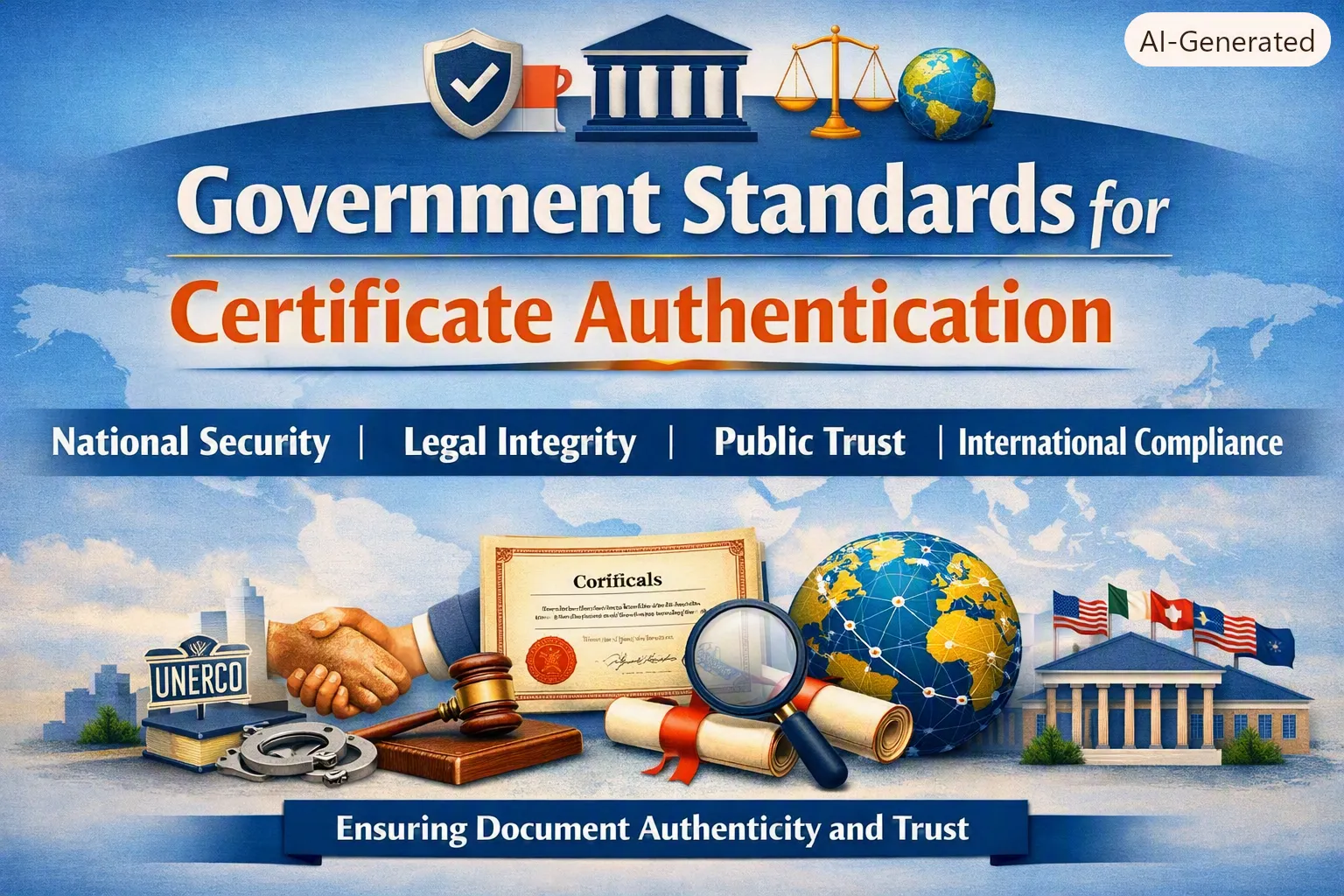

Governments across the world rely on authenticated documents to verify identities, qualifications, legal relationships, and business activities. Whether someone is planning to study abroad, accept an overseas job offer, migrate with family, or expand a business internationally, document authentication ensures that certificates presented in another country are genuine and legally acceptable. This is why governments continue to maintain strict standards for certificate authentication.
Understanding Certificate Authentication
Certificate authentication is the official process of verifying that a document has been issued by a recognized authority and is valid for international use. Depending on the destination country, this may involve notarization, state-level verification, MEA Apostille, or embassy attestation.
Governments follow a structured verification process because different certificates are issued by different authorities. Educational, personal, and commercial documents each require specific verification before they can be accepted overseas.
Preventing Document Fraud
One of the biggest reasons governments enforce strict authentication standards is to prevent the use of forged or altered documents. Fake educational degrees, fraudulent marriage certificates, and manipulated commercial papers can create serious legal and security concerns.
Authentication helps authorities confirm that:
- The certificate is genuine.
- The issuing authority is legitimate.
- The information has not been altered.
- The document belongs to the correct individual or organization.
Supporting International Trust
Countries frequently exchange information through international agreements and diplomatic cooperation. These relationships depend on mutual trust regarding official documents.
When someone applies for higher education, employment, or residency abroad, authorities expect authenticated certificates that meet internationally recognized standards. Individuals seeking Certificate Apostille in Hyderabad often complete the required verification process before submitting their educational or personal documents for overseas acceptance.
Without standardized authentication procedures, every document would require lengthy manual investigations, significantly delaying approvals.
Protecting Immigration Systems
Immigration authorities handle thousands of applications every day. Strict certificate authentication helps them verify applicant information quickly while reducing the risk of identity fraud.
Authenticated certificates support applications for:
- Student visas
- Employment visas
- Family visas
- Permanent residency
- Business immigration
Ensuring Educational Integrity
Universities invest considerable effort in evaluating international applicants. They need confidence that submitted degrees, diplomas, transcripts, and certificates are authentic.
Certificate authentication helps educational institutions verify:
- Academic qualifications
- University recognition
- Graduation records
- Supporting educational documents
Safeguarding Employment Standards
Many professions require verified educational qualifications before candidates can begin working. Employers rely on authenticated documents to confirm that applicants possess the necessary skills and credentials.
Healthcare professionals, engineers, teachers, accountants, and other licensed professionals often need authenticated certificates before receiving employment approval in another country.
Maintaining Legal Consistency
Personal documents such as birth certificates, marriage certificates, divorce certificates, and police clearance certificates are frequently required for international legal procedures.
Strict authentication standards help governments ensure that:
- Family relationships are correctly established.
- Legal identities remain consistent.
- Official records match government databases.
- Rights and responsibilities are properly recognized across borders.
Supporting International Business
Commercial documents require accurate authentication before businesses can expand internationally or establish partnerships.
Governments verify commercial certificates to ensure:
- Business legitimacy
- Legal registration
- Authorized signatures
- Compliance with international regulations
Reducing Administrative Delays
Although authentication involves multiple verification stages, standardized procedures actually reduce delays over time.
When every document follows the same verification framework:
- Authorities process applications more efficiently.
- Verification becomes more predictable.
- Errors are easier to identify.
- International acceptance becomes smoother.
Applicants seeking Certificate Apostille in Bangalore often benefit from following the correct authentication sequence, helping avoid unnecessary delays caused by incomplete or incorrectly verified documents.
Building Confidence Between Countries
International mobility continues to grow each year. Students pursue education abroad, professionals seek global career opportunities, and businesses expand into new markets.
Governments depend on certificate authentication because it creates confidence that official documents can be trusted regardless of where they were issued. This trust supports international cooperation, educational exchange, skilled migration, and global commerce.
Without strict authentication standards, countries would face greater risks of fraud, inconsistent documentation, and prolonged verification procedures.
The Importance of Following the Correct Process
Every country has its own documentation requirements, but the underlying goal remains the same—ensuring that official certificates are genuine and legally recognized.
Applicants should always ensure that:
- Documents are complete and accurate.
- Certificates are in good condition.
- Required supporting documents are available.
- Authentication follows the correct sequence for the destination country.
- Verification is completed before international submission.
Proper preparation helps avoid unnecessary delays and improves the likelihood of successful document acceptance.



























Sign in to leave a comment.