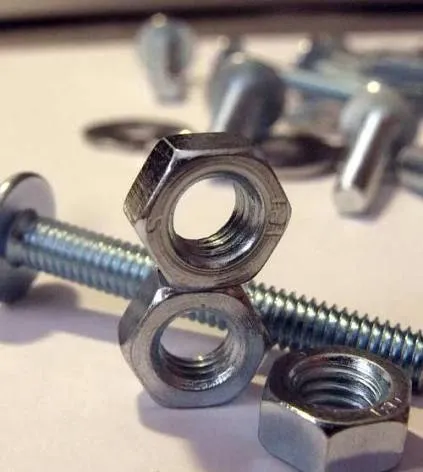

Chemical processing plants are run in a challenging and tightly controlled environment. Reactors cycle through aggressive acids, piping networks carry chlorinated solvents at elevated temperatures, and pressure fluctuations hit equipment joints many times. In that environment, every bolted connection carries serious responsibility. A fastener that corrodes, cracks, or loosens under thermal stress compromises the seal on a process line carrying hazardous media, triggering shutdowns that cost far more than the hardware itself.
That is precisely why engineers across chemical processing, petrochemical refining, pharmaceutical manufacturing, pollution control, and power generation specify Hastelloy Fasteners when standard materials cannot hold up. Hastelloy fasteners for chemical processing industries have earned a strong specification record because the alloy combines nickel-base corrosion resistance with the mechanical strength to stay tight under load.
What are Hastelloy Fasteners?
Hastelloy fasteners are nickel-alloy bolts, nuts, studs, screws, washers, and threaded rods manufactured from a family of alloys built primarily around nickel, with molybdenum content running between 13% and 16% and chromium additions of 14.5% to 22%, depending on the grade. Molybdenum drives resistance to reducing acid attack and localized corrosion. Chromium builds the passive film that protects against oxidizing media. Two grades dominate process industry fastener specifications: Hastelloy C276, rated for continuous service up to 1,038°C and resistant to wet chlorine and most mineral acids, and Hastelloy C22, which adds improved resistance to oxidizing acids like nitric and chromic acid while maintaining strong performance in mixed acid streams. Together, these grades cover the majority of aggressive chemical service conditions.
Challenges Faced by Fasteners in Chemical Processing Plants
Fasteners in chemical processing facilities are exposed to very harsh environments. No single degradation mechanism acts alone; the conditions stack, and each one accelerates the others.
- Exposure to corrosive acids: Sulfuric, hydrochloric, phosphoric, and nitric acids attack fastener surfaces at molecular level, thinning thread profiles and reducing clamp load.
- Chloride-rich environments: Chloride ions penetrate passive films on stainless steel and initiate pitting at stress concentrations around bolt holes.
- High-temperature processing: Process temperatures above 300°C reduce yield strength and accelerate oxidation, particularly in carbon steel and low-alloy grades.
- Chemical contamination risks: Cross-contamination from process leaks around corroded joint faces creates both safety hazards and product quality failures.
- Stress corrosion cracking: The combination of tensile stress, a corrosive environment, and a susceptible material triggers cracking that propagates faster than visible surface damage suggests.
- Moisture and humidity exposure: Condensation on external bolt surfaces creates galvanic and crevice corrosion at nut-to-flange interfaces.
- Continuous operational loads and vibration: Vibration of the pump over time will cause fasteners to loosen, particularly when corrosion has already reduced the strength of thread engagement.
Carbon steel fasteners corrode rapidly in acid service and require replacement every few months in many chemical plants. Standard 304 and 316 stainless performs better but fails by stress corrosion cracking in chloride environments above 60°C.
Key Properties That Make Hastelloy Fasteners Ideal for Chemical Processing Applications
Hastelloy fasteners bring a combination of properties that address the full range of failure modes common in chemical plants.
- Exceptional corrosion resistance: The alloy resists attack from reducing acids, oxidizing media, and mixed-acid streams that destroy stainless steel.
- Excellent acid resistance: Hastelloy C276 maintains structural integrity in concentrated hydrochloric acid at temperatures up to 40°C and in dilute sulfuric acid across a broad concentration range.
- High-temperature stability: Both C276 and C22 retain their tensile strength and oxidation resistance at service temperatures up to 1,038°C.
- Superior mechanical strength: Hastelloy fasteners deliver tensile strengths in the range of 760 to 895 MPa, sufficient for high-pressure flange joints on reactors and pressure vessels.
- Resistance to pitting and crevice corrosion: High molybdenum content suppresses pit initiation even under deposits and in stagnant process areas.
- Durability under cyclic loading: The alloy maintains fatigue resistance in applications where thermal cycling and vibration create repeated stress on fastener shanks.
- Long service life: In documented chemical plant installations, Hastelloy fasteners routinely outlast carbon steel alternatives by a factor of five to ten.
These properties work together to keep bolted joints tight and leak-free across full plant operating cycles.
Corrosion Resistance Advantages of Hastelloy Fasteners
Corrosion resistance is an important aspect of every Hastelloy fastener specification decision. Chemical plants run process streams that include 98% sulfuric acid at 80°C, 35% hydrochloric acid at ambient temperatures, 85% phosphoric acid in fertilizer production units, and mixed nitric/hydrofluoric acid in metal pickling baths. Such conditions destroy carbon steel within days and pit 316 stainless within a single operating season. Hastelloy C276 resists all four acid types because nickel stabilizes the base structure against reducing attack, molybdenum at 16% by weight suppresses pit nucleation by keeping the passive film intact under chloride loading, and chromium at 15.5% builds the oxidizing-acid resistance that allows the alloy to handle mixed-acid environments. This results in no measurable pitting in hydrochloric acid service at concentrations up to 20%, and corrosion rates below 0.1 mm per year in sulfuric acid across the 10% to 70% concentration range. Stress corrosion cracking is the failure mode that ends the service life of austenitic stainless fasteners in chloride environments above 60°C. Here, it does not initiate in Hastelloy under normal chemical plant operating conditions. Plants that switch from 316 stainless to Hastelloy C276 bolting on heat exchanger covers and reactor flanges consistently report maintenance intervals extending from 12 months to five years or longer, cutting fastener-related maintenance costs by 60% to 75% over a ten-year asset life.
Why Hastelloy Fasteners Perform Well in Chemical Processing Industries
Chemical processing plants face high temperatures, pressure, and corrosive chemicals that can weaken ordinary fasteners. Hastelloy fasteners are strong, corrosion resistant and keep a tight seal during temperature fluctuations and exposure to harsh chemicals. They are found in reactors, heat exchangers, storage tanks and other critical equipment where leaks can cause serious problems. Because they offer both durability and chemical resistance in one alloy, engineers choose Hastelloy for the most demanding applications.
Conclusion
Hastelloy fasteners for chemical processing industries solve the core problem that no other common fastener material addresses completely: how to maintain a leak-free bolted joint in an environment that attacks metal from every direction at once. The alloy's nickel-molybdenum-chromium composition resists the full spectrum of process chemicals, holds its strength through wide temperature cycles, and eliminates the stress corrosion cracking failure mode that shortens stainless steel service life in chloride-bearing plant environments. Plants that use Hastelloy bolting on their critical flanges, reactor covers, and heat exchanger heads spend less on maintenance, schedule fewer unplanned shutdowns, and carry a lower risk of process leaks than facilities relying on conventional materials.
Higher alloy cost at purchase pays back quickly when fastener service life extends from one year to five or more and when a single avoided shutdown saves more than the cost of a full bolting kit. For application-specific guidance on grade selection, dimensional standards, and stock availability, contact Sagar Prakash Alloys, a Mumbai-based ISO 9001:2015 certified manufacturer, stockist, and exporter with direct supply experience across refineries, petrochemical plants, pharmaceutical facilities, and power generation projects worldwide.


























Sign in to leave a comment.