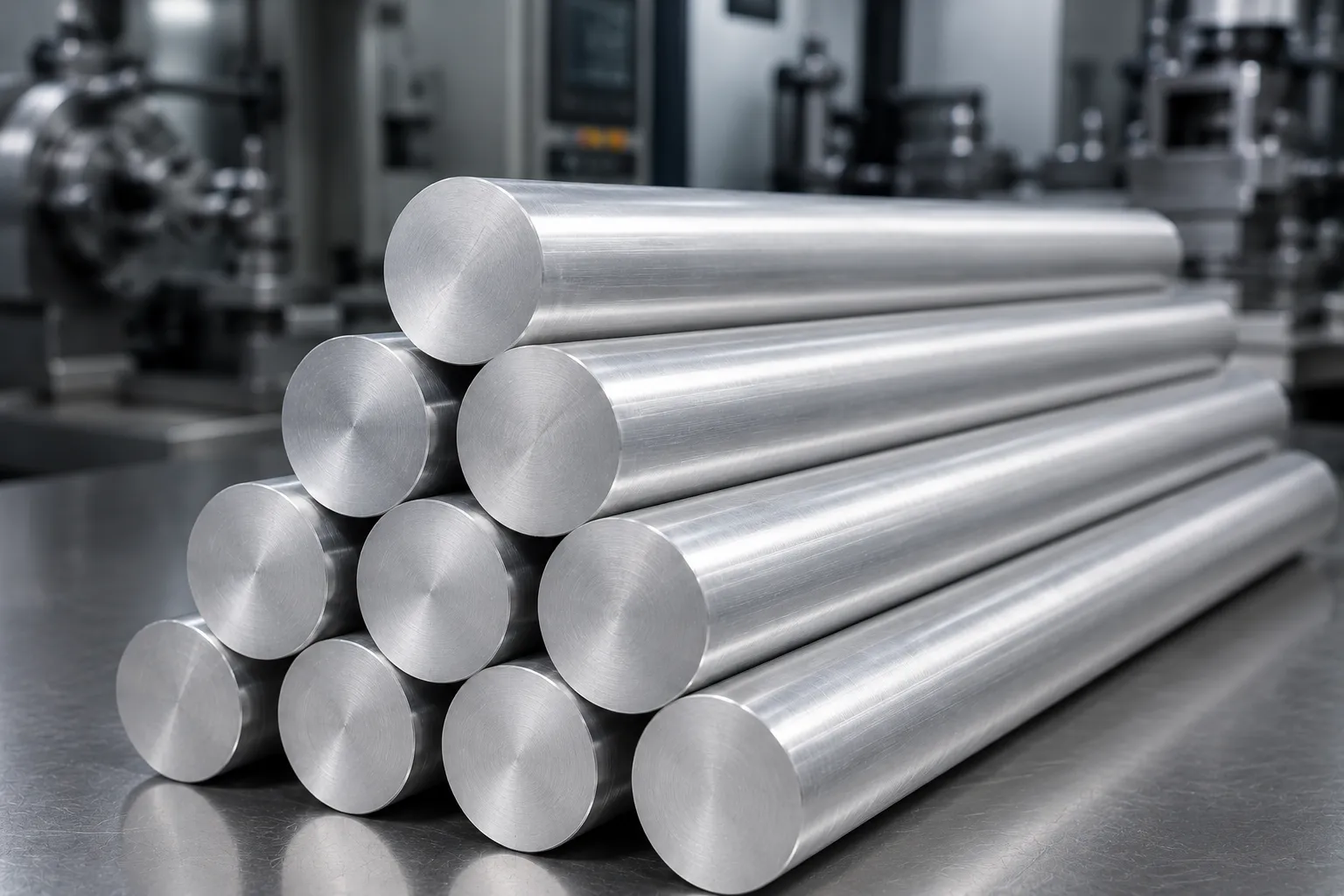

Precision engineering runs on tolerances measured in microns, not millimetres. A single dimensional shift changes how a part fits, moves, or fails under load. Manufacturers turn to aluminium alloy round bars for precision engineering because the material removes stock predictably, holds size across long production runs, and cuts component weight without sacrificing the strength a machined part needs in service.
What Are Aluminium Alloy Round Bars for Precision Engineering?
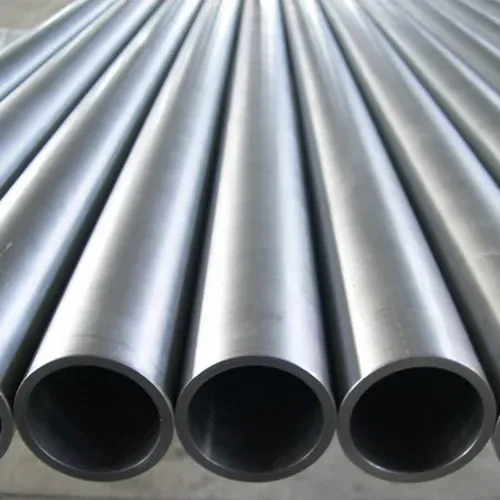
Aluminium alloy round bars are cylindrical stock made by mixing aluminium with elements like magnesium, silicon, or copper, and then heat-treating the mix using solution treatment and artificial ageing. This precipitation-hardening process spreads fine intermetallic particles throughout the metal, and these particles block dislocation movement, increasing strength well above pure aluminium's baseline. Grades like 6061-T6 and 2011-T3 supply the machinability CNC shops depend on, while 7075-T6 covers parts that call for higher yield strength. Bar diameters run from 5mm to 500mm, giving machinists stock close to the finished part size before the first cut. This near-net-size availability shortens roughing time and reduces the volume of scrap swarf a shop must clear per part.
Key Properties That Support Precision Work
Six characteristics decide whether a round bar earns a place on a machinist's stock rack. 6061-T6 carries a tensile strength near 310 MPa at roughly one-third the density of steel, 2.70 g/cm³ against 7.85 g/cm³, so parts machined from it weigh less without losing load capacity. The alloy cuts cleanly at high spindle speeds. It forms a stable oxide layer that resists corrosion without plating, conducts heat at about 167 W/m·K, and holds tolerances of ±0.05mm across repeat batches once tooling is set.
Benefits of Aluminium Alloy Round Bars for Precision Engineeringare achieved from
Each property above turns into a concrete advantage on the shop floor.
Excellent Machinability
- Chips break cleanly at cutting speeds above 300 m/min, which reduces tool changeovers.
- Surface finishes of Ra 0.8 microns are achieved from standard turning passes without a secondary grinding step.
Lightweight Yet Strong
- A 50mm 6061-T6 bar weighs roughly a third of an equivalent steel bar.
- Yield strength of 276 MPa still covers most structural and mounting applications in machinery builds.
Good Corrosion Resistance
- The native oxide layer self-repairs when scratched, protecting parts exposed to coolant or humidity.
- Components run through multi-year service cycles without a protective coating.
Dimensional Accuracy and Consistency
- Extruded and drawn stock arrives straight enough that most batches can skip a facing pass.
- Repeat orders from one heat-treatment batch machine to match dimensions.
Versatile Fabrication Capability
- Bars accept turning, milling, drilling, and threading without the pre-heating that alloy steel requires before a heavy cut.
- The same stock feeds prototype runs and full production batches alike.
Cost-Effective for High-Volume Manufacturing
- Lower cutting forces reduce carbide insert wear to well below what alloy steel requires.
- Shorter cycle times per part bring per-unit machining cost down across long runs.
Industries That Use Aluminium Alloy Round Bars
Precision shops supply finished parts to five main sectors: automotive manufacturing, aerospace structural and fastener components, electrical and electronics housings, industrial machinery, and tooling and fixture fabrication. Each sector draws on the same core advantage: a bar that machines fast, weighs little, and holds its size. A design engineer specifying a bracket or housing rarely thinks about alloy chemistry first; the decision starts with the tolerance the part must hold and the weight budget the assembly can carry.
Conclusion
Aluminium alloy round bars are important in precision engineering because they are easy to machine, save weight, stay stable in size, and resist corrosion, which together reduce production time and the risk of long-term part failure. Source your next batch of aluminium alloy round bars for precision engineering from a supplier who confirms grade, temper, and mill certification before the material reaches your shop floor.






















Sign in to leave a comment.