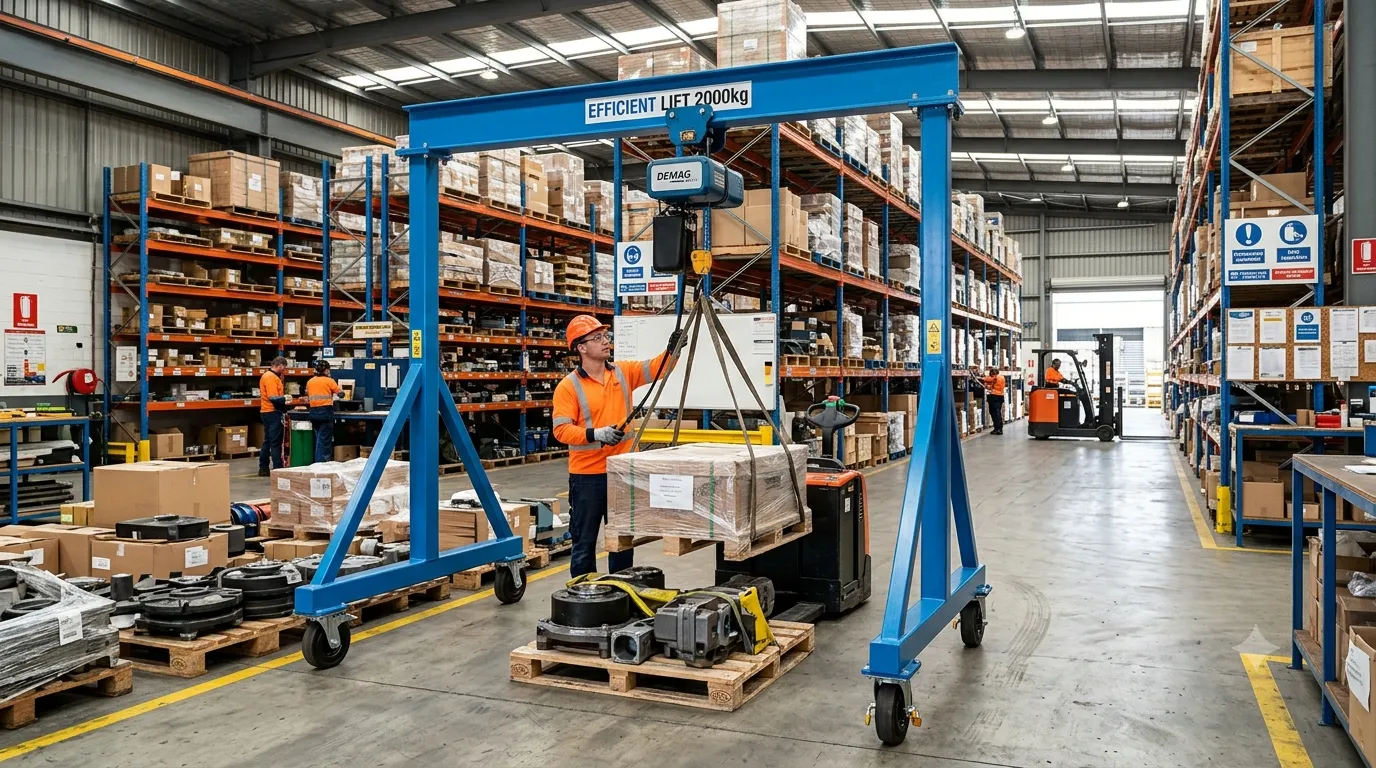

Warehouse efficiency depends on more than moving products from one location to another. Every lift, transfer, staging activity, and loading operation affects productivity, worker safety, and operating costs. When heavy components need to be moved frequently, relying only on forklifts or fixed overhead cranes can create bottlenecks.
This is where portable beam cranes can provide a practical solution.
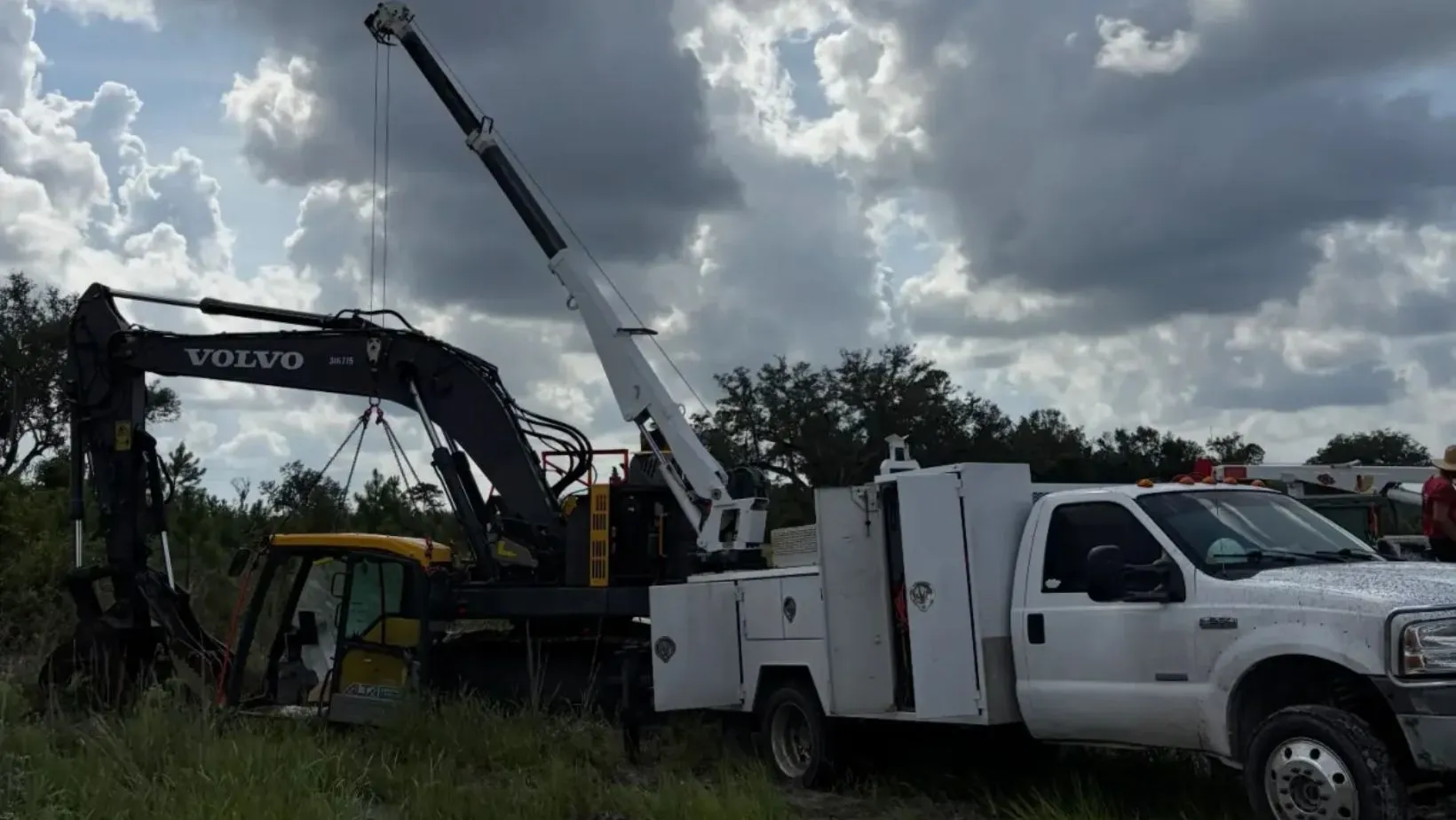
Designed to deliver lifting capability where it is needed, portable beam cranes can help warehouses handle heavy materials without requiring permanent overhead crane infrastructure. Their mobility and flexible installation make them particularly useful for maintenance areas, production support, loading zones, storage facilities, and other locations where lifting requirements change regularly.
What Is a Portable Beam Crane?
A portable beam crane is a movable lifting system designed to support hoists or other lifting equipment for handling materials. Unlike permanently installed overhead cranes, portable systems can typically be repositioned when workflow requirements change.
Depending on the design, a portable beam crane can be used for lifting machinery, components, tooling, dies, containers, and other heavy loads that cannot be safely handled manually.
The key advantage is flexibility. Instead of bringing every heavy load to a fixed lifting station, operators can position the crane closer to the work area.
How Portable Beam Cranes Improve Material Flow
Material flow refers to how efficiently products, components, raw materials, and equipment move through a facility. Poor material flow can result in unnecessary travel, waiting time, congestion, and additional handling.
Portable beam cranes can address several of these challenges.
1. Reduce Unnecessary Material Movement
One of the biggest warehouse inefficiencies occurs when heavy materials must be transported to a specific lifting location simply because that is where the available equipment is installed.
For example, a maintenance team may need to remove a heavy motor from equipment located away from the facility's primary crane system. Moving the motor or the entire machine to another area may require a forklift, additional personnel, and significant preparation.
A portable beam crane allows lifting equipment to be brought closer to the load. This can reduce unnecessary transportation and help create a more direct material-handling process.
2. Support Flexible Warehouse Layouts
Warehouse layouts frequently change as companies add inventory, modify production lines, or introduce new equipment. A permanent lifting system may not always align with future requirements.
Portable beam cranes provide greater flexibility because they can be repositioned as operational needs evolve.
This can be particularly valuable for facilities with:
- Changing production layouts
- Multiple maintenance areas
- Seasonal inventory requirements
- Temporary workstations
- Equipment installation projects
- Limited overhead crane coverage
Instead of designing the entire facility around a fixed lifting point, businesses can adapt lifting capability to the workflow.
3. Improve Loading and Unloading Operations
Loading and unloading heavy equipment can become a bottleneck when suitable lifting equipment is unavailable near the receiving or shipping area.
Portable beam cranes can provide localized lifting support for certain material-handling applications, helping operators transfer heavy components between storage areas, workstations, vehicles, or staging zones.
The result can be a smoother movement of materials through receiving and shipping operations, particularly when loads are too heavy or awkward for manual handling.
4. Reduce Dependence on Forklifts for Certain Tasks
Forklifts are essential warehouse equipment, but they are not the ideal solution for every lifting application.
Using a forklift for specialized lifting tasks can require additional maneuvering space and may involve moving pallets or loads through areas with pedestrian traffic.
A portable beam crane can provide a dedicated lifting point without requiring a large vehicle to enter the workspace. This can help reduce congestion and allow forklifts to focus on pallet transportation and other tasks where they are most effective.
However, the right equipment depends on the load, lifting height, workspace, frequency of use, and applicable safety requirements.
Portable Beam Cranes and Warehouse Safety
Improving material flow should never come at the expense of safety. Heavy loads can present serious risks when they are moved without appropriate lifting equipment or procedures.
Portable beam cranes can help create controlled lifting points for specific applications. When properly selected, installed, operated, and maintained, they can support safer handling of heavy materials while reducing the need for manual lifting.
Facility managers should consider factors such as load weight, load dimensions, lifting height, travel requirements, floor conditions, crane stability, and the type of hoist being used.
Operators should also follow the manufacturer's operating instructions and applicable workplace safety standards.
Applications Across Industrial Warehouses
The flexibility of portable beam cranes makes them suitable for a range of industrial environments.
In manufacturing warehouses, they can support the movement of dies, tooling, motors, machine components, and production equipment.
In maintenance facilities, portable lifting equipment can help technicians remove and position heavy components during repair work.
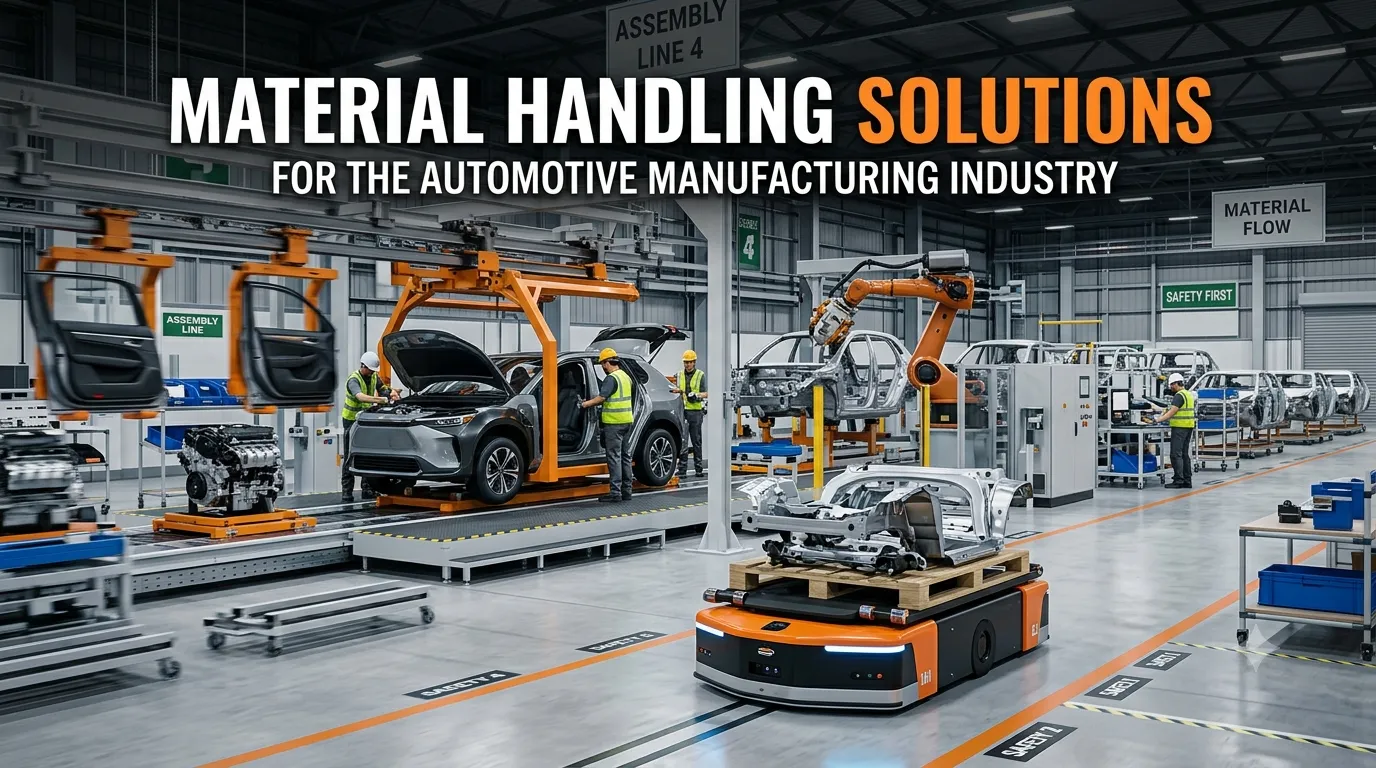
In automotive and transportation operations, they can assist with handling engines, assemblies, and other heavy components.
They can also be useful in industrial storage facilities, equipment service areas, fabrication shops, and distribution environments where occasional heavy lifting is required.
What Should You Consider Before Choosing a Portable Beam Crane?
Not every portable crane is appropriate for every warehouse. Before selecting a system, facility managers should evaluate the actual lifting requirements.
Start with the maximum load weight and determine the required lifting capacity. Next, consider the dimensions of the load and the necessary lifting height.
The available floor space is equally important. A crane may need sufficient room for positioning, operation, and load movement. Floor conditions and the facility's operating environment should also be considered.
Finally, think about how frequently the crane will be used. A system for occasional maintenance work may have different requirements from equipment supporting repetitive production activities.
Why Portable Lifting Can Be a Smart Investment
The value of a portable beam crane goes beyond the lifting operation itself. By positioning lifting capability closer to where materials are handled, warehouses can potentially reduce unnecessary movement, improve workstation flexibility, and make better use of existing material-handling resources.
For facilities that do not need a permanent overhead crane in every area, portable lifting equipment can provide a more adaptable approach.
The goal is not simply to move heavier loads. It is to create a material flow system in which loads can move safely and efficiently with fewer unnecessary steps.
Conclusion
Efficient warehouse material flow depends on having the right equipment in the right location. Portable beam cranes can help businesses overcome the limitations of fixed lifting infrastructure by bringing lifting capability directly to areas where heavy materials need to be handled.
From reducing unnecessary material movement to supporting flexible layouts, maintenance operations, loading activities, and specialized lifting tasks, these cranes can contribute to a more efficient warehouse workflow.
For facilities managing changing workloads or multiple lifting locations, a portable beam crane can be a practical way to improve flexibility without redesigning the entire material-handling system.
Frequently Asked Questions
What is a portable beam crane used for?
A portable beam crane is used to lift and position heavy materials, machinery, components, tooling, and equipment in locations where permanent crane infrastructure may not be practical.
How does a portable beam crane improve warehouse efficiency?
It can reduce unnecessary material movement by bringing lifting capability closer to the load. This can help minimize handling steps, improve workflow flexibility, and reduce certain material-transfer bottlenecks.
Can portable beam cranes replace forklifts?
Not generally. Portable beam cranes and forklifts serve different material-handling purposes. A crane can provide controlled lifting for certain heavy or awkward loads, while forklifts are primarily designed for transporting palletized materials.
Where can portable beam cranes be used?
They can be used in manufacturing facilities, warehouses, maintenance areas, fabrication shops, equipment service areas, and other industrial environments where flexible lifting capability is required.
What factors should be considered when selecting a portable beam crane?
Important factors include load weight, lifting height, load dimensions, workspace, floor conditions, operating frequency, mobility requirements, hoist compatibility, and applicable safety requirements.























Sign in to leave a comment.