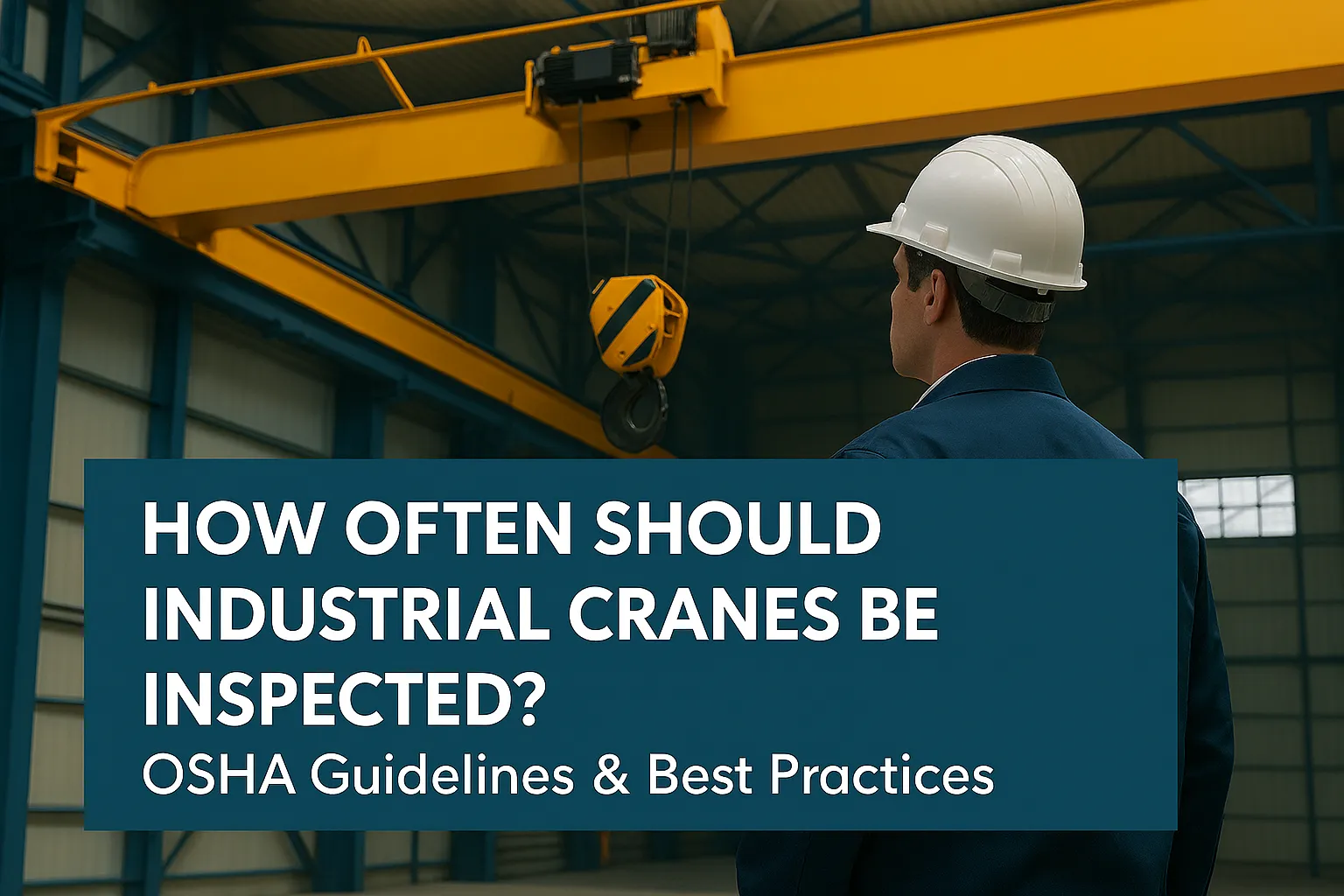

Industrial cranes are critical to daily operations in manufacturing plants, warehouses, aerospace facilities, and heavy fabrication environments. But one question we hear often from plant managers and maintenance teams is simple — how often should industrial cranes be inspected?
The answer is not one-size-fits-all. Inspection frequency depends on crane usage, load capacity, operating conditions, and most importantly, compliance with OSHA regulations and industry best practices. From years of working with industrial crane systems in demanding environments, one thing is clear: regular inspections are not just a safety requirement — they are essential for preventing downtime, avoiding costly repairs, and ensuring long-term equipment reliability.
Even minor issues like worn wire ropes, brake wear, or loose components can quickly escalate into serious failures if they are not identified early. That’s why OSHA has established specific inspection guidelines covering daily, frequent, and periodic crane inspections.
In this complete guide, we will break down OSHA crane inspection requirements, explain how often industrial cranes should be inspected, and share real-world best practices followed by experienced manufacturers to keep operations safe, compliant, and efficient.
Why Regular Industrial Crane Inspection Matters
Every industrial crane works under stress. Loads shift, motors heat up, moving parts wear down, and operators use the equipment repeatedly throughout the day. Even a high-quality crane system will develop wear over time.
From our experience in material handling and custom crane manufacturing, facilities that follow a strict crane inspection schedule usually have fewer breakdowns and lower repair costs. They also avoid unexpected downtime that can stop production for hours or even days.
Regular crane inspections help:
- Identify wear before failures happen
- Reduce costly emergency repairs
- Improve workplace safety
- Maintain OSHA and industry compliance
- Extend crane service life
- Improve lifting performance and reliability
Facilities using heavy-duty lifting systems such as overhead cranes, gantry cranes, jib cranes, and custom lifting equipment should always follow a documented inspection process.
Daily Industrial Crane Inspection Requirements
Daily crane inspections are the first line of defense against equipment failure. In most industrial facilities, operators should perform a visual and functional inspection before using the crane.
A daily industrial crane inspection typically includes checking:
- Hook condition and safety latch
- Wire rope wear or broken strands
- Pendant controls and emergency stop function
- Brakes and limit switches
- Oil leaks or unusual sounds
- Load chain condition
- Warning labels and safety markings
On many manufacturing floors, experienced operators can spot issues quickly because they work with the crane every day. We have seen operators prevent major failures simply by reporting unusual noises or jerky movement early.
If anything looks unsafe during a daily crane inspection, the crane should be removed from service immediately until repairs are completed.
Frequent Crane Inspection Schedule
Frequent crane inspections are more detailed than daily checks. These inspections are usually performed weekly or monthly depending on crane usage and operating conditions.
For example:
- Heavy-use industrial cranes may require weekly inspections
- Moderate-use cranes may need monthly inspections
- Cranes operating in harsh environments may need more frequent checks
During a frequent crane inspection, maintenance teams typically inspect:
- Hoist mechanisms
- Brake systems
- Electrical connections
- Wire ropes and sheaves
- Load chains
- Crane rails and runway systems
- Safety devices and warning systems
In facilities with continuous production shifts, components wear faster than many managers expect. We often recommend increasing inspection frequency for cranes operating around the clock or handling near-capacity loads regularly.
Periodic Industrial Crane Inspection Requirements
A periodic industrial crane inspection is a comprehensive inspection completed at scheduled intervals. This inspection is more detailed and often documented for compliance records.
Periodic inspections are commonly performed:
- Every 3 months for heavy service cranes
- Every 6 months for moderate service cranes
- Annually for lighter service cranes
During a periodic crane inspection, inspectors examine:
- Structural components for cracks or fatigue
- End trucks and wheels
- Gearboxes and drive systems
- Electrical panels and wiring
- Load testing requirements
- Corrosion or structural damage
- Alignment and rail conditions
Many facilities also use non-destructive testing methods during periodic inspections to detect hidden structural problems.
A detailed inspection report should always be documented and stored for maintenance records.
OSHA and Crane Inspection Compliance
OSHA crane inspection requirements exist to reduce workplace accidents and improve operational safety. Facilities using overhead cranes must follow inspection standards based on crane type and usage conditions.
Ignoring crane inspection requirements can lead to:
- OSHA violations
- Expensive penalties
- Workplace injuries
- Equipment failure
- Production shutdowns
An experienced industrial crane manufacturer understands that compliance is not just paperwork. Proper inspections protect workers and keep operations running safely.
For facilities upgrading lifting systems, it is also important to work with experienced crane manufacturers that understand OSHA standards and industrial safety requirements.
Common Crane Problems Found During Inspections
Over the years, we have seen recurring issues during industrial crane inspections. Some of the most common problems include:
- Worn wire ropes
- Damaged hooks
- Brake wear
- Loose electrical connections
- Misaligned runway systems
- Hoist overheating
- Cracked welds
- Worn load chains
Many of these issues start small. Without routine crane inspections, they become much more expensive problems later.
For example, a worn wire rope caught during inspection may only require replacement. If ignored, it could lead to load failure and severe equipment damage.
How Custom Crane Systems Affect Inspection Frequency
Custom crane systems often require specialized inspection procedures depending on the application. Facilities using engineered lifting systems for aerospace, automotive manufacturing, or heavy industrial production may have additional inspection requirements.
At Air Technical Industries, custom material handling systems are built for demanding industrial applications where reliability is critical. Specialized lifting systems handling oversized or sensitive loads often require more detailed inspection planning.
Facilities using custom lifting equipment should work closely with manufacturers to establish the correct inspection schedule based on operating conditions.
You can also review custom lifting and handling solutions from Air Technical Industries to understand how engineered systems support safer material handling operations.
Best Practices for Industrial Crane Inspection
Based on real manufacturing and material handling experience, these practices help improve crane safety and equipment reliability:
- Train operators to report issues immediately
- Keep detailed inspection records
- Never ignore unusual noises or movement
- Schedule preventive maintenance regularly
- Replace worn parts before failure occurs
- Use qualified crane inspectors
- Follow manufacturer inspection guidelines
Facilities that treat crane inspections as part of daily operations usually experience fewer breakdowns and safer working conditions.
Conclusion
So, how often should you inspect an industrial crane?
The answer depends on crane usage, operating conditions, load capacity, and the environment where the crane operates. Daily inspections, frequent inspections, and periodic inspections all play a critical role in crane safety and equipment performance.
From years of working with industrial lifting systems, one thing remains consistent. Preventive crane inspections always cost less than emergency repairs and downtime.
A strong industrial crane inspection program helps protect workers, improve productivity, extend equipment life, and keep operations running safely every day.




















Sign in to leave a comment.