

Monitoring an oil and gas facility is not straightforward when equipment operates in areas where flammable gases or vapours may be present. Processing units, storage terminals and transfer points often require regular observation, yet sending personnel into potentially hazardous locations can introduce additional risks. Conventional CCTV equipment may also be unsuitable if it has not been designed and approved for the area's specific hazards.
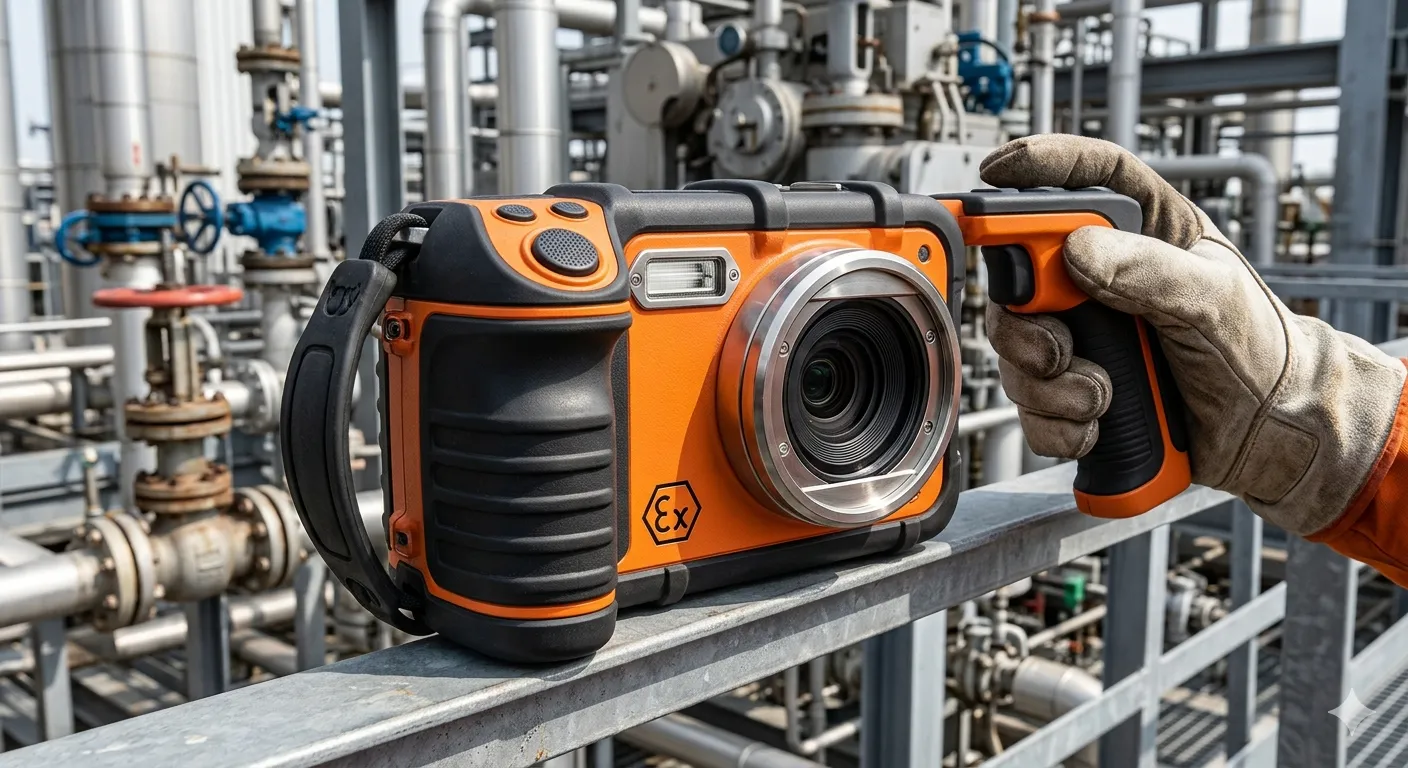
An Explosion Proof CCTV Camera provides a way to monitor designated hazardous locations using equipment engineered for the relevant explosive-atmosphere risks. When selected and installed correctly, it can help operators observe industrial processes, review site conditions and investigate visible abnormalities without approaching every location.
For UK oil and gas businesses, choosing a suitable camera involves more than image clarity. Hazardous-area classification, equipment certification, environmental conditions, installation quality and maintenance arrangements all influence suitability. Understanding these factors helps safety managers and procurement teams make informed decisions about industrial surveillance.
1. Why CCTV Monitoring Is Challenging in Oil and Gas
Oil and gas facilities contain interconnected equipment, including pipelines, pumps, compressors, storage vessels and loading infrastructure. Some locations may be classified as hazardous because an explosive atmosphere could occur during normal operations or under foreseeable conditions.
Operators need clear views of relevant areas to support routine supervision and incident investigation. However, fixed cameras may have limited viewing angles, while difficult access, poor lighting, weather and airborne contaminants can affect visibility.
A well-planned surveillance system can reduce the need for some routine visual checks and help teams assess situations remotely. It should complement, rather than replace, physical inspections, gas detection and established safety procedures.

2. How an Explosion Proof CCTV Camera Works
An explosion-protected CCTV camera is designed using a specified protection concept to reduce the risk of igniting an explosive atmosphere under its assessed conditions of use.
Depending on its design, protection may involve containing an internal explosion or preventing an ignition source from coming into contact with the surrounding hazardous atmosphere. The exact method depends on the equipment's construction and certification; the term explosion proof alone does not identify the protection method.
The camera captures images and transmits them to an authorised monitoring point. Operators can then observe equipment, review activities and assess visible changes. Depending on the system, cameras may provide fixed views or remote pan, tilt and zoom functions.
These systems have important limitations. Ordinary CCTV cannot reliably detect every gas leak, internal equipment defect or temperature-related problem. Other monitoring technologies may be necessary where the hazard cannot be assessed visually.
3. What to Consider When Selecting Hazardous-Area CCTV
A camera must suit the actual location in which it will operate. Procurement teams should begin with the site's hazardous-area assessment instead of choosing equipment based on price or image resolution alone.
Key considerations include:
- Hazardous-area classification: Confirm whether the location presents gas, vapour or combustible-dust risks and identify the required equipment category or protection level.
- Certification and marking: Check the equipment's documentation, protection concept, gas or dust group and temperature classification against site requirements.
- Image performance: Consider lighting, viewing distance, required detail, camera positioning and whether fixed or remotely adjustable coverage is needed.
- Environmental suitability: Assess exposure to moisture, dust, corrosion, vibration and temperature extremes.
System compatibility: Verify that power supplies, cabling, network connections and video management systems work together as intended.
No single feature establishes suitability on its own. The equipment must meet the combined safety, operational and environmental requirements of the installation.
4. Where Explosion-Protected CCTV Is Useful
The technology can support monitoring across different parts of an oil and gas operation, provided the equipment is suitable for the location.
At processing plants, cameras can provide views of pumps, pipework and process equipment. At storage terminals, they can help operators observe tank surroundings, loading bays and transfer areas. On offshore installations, remote monitoring may help teams assess visible conditions in locations where access is difficult.
For example, if an operator receives an alert about an abnormal process condition, a camera may help establish whether there is a visible change around the relevant equipment. The camera does not establish the cause of the alert, but its images can help personnel decide what further investigation is required.
5. Installation and Environmental Considerations
A suitable camera can still create problems if it is installed incorrectly. Mounting positions should provide useful coverage while accounting for structural obstructions, lighting, vibration and access for future maintenance.
The installation must also preserve the equipment's specified protection. Cable glands, entries, junction boxes, power connections and other associated components should be compatible with the installation design. Modifying an enclosure or using unsuitable accessories can compromise its protective properties.
Before deployment, businesses should assess:
- Location and coverage: Check viewing angles, blind spots, mounting strength and access requirements.
- Environmental exposure: Consider salt-laden air, moisture, dust, chemical exposure and temperature variations.
Maintenance arrangements: Establish inspection intervals, cleaning procedures, spare-parts requirements and competent servicing arrangements.
These decisions should involve the relevant electrical, instrumentation and hazardous-area specialists, not just the CCTV installer.
6. UK Safety and Compliance Requirements
In Great Britain, the Dangerous Substances and Explosive Atmospheres Regulations 2002 (DSEAR) require employers to assess and control relevant risks from dangerous substances. Hazardous areas must be classified where necessary, and equipment must be selected and installed appropriately for those conditions. The Health and Safety Executive's guidance on explosive atmospheres explains these responsibilities.
ATEX-related equipment requirements and conformity markings should be checked against the applicable rules for the intended market. Great Britain has specific equipment regulations, and the required conformity assessment and marking depend on the circumstances. The UK Government's guidance on equipment for explosive atmospheres provides further detail.
An IECEx certificate should not automatically be treated as a substitute for meeting the applicable UK regulatory requirements. Procurement teams should verify the precise certificate, product marking, declaration of conformity and installation instructions before approving equipment.
7. Evaluating an ATEX CCTV Camera for UK Sites
When comparing a hazardous area ATEX CCTV camera UK supplier or product range, businesses should look beyond general claims of explosion protection. Ask for documentation that identifies the equipment's intended application, certified protection method, permitted zones and environmental limitations.
The SharpEagle explosion-proof CCTV camera solutions range can be reviewed as part of this process. Any particular model should be assessed against the facility's hazardous-area classification and technical requirements rather than assumed suitable solely because it is described as explosion-proof.
A structured procurement process also makes it easier to compare suppliers consistently and identify missing documentation before installation begins.
8. Conclusion: Making CCTV Part of a Wider Safety Strategy
An explosion proof CCTV camera can improve visibility across oil and gas facilities, helping operators monitor equipment and assess visible conditions without routinely approaching every location. Its effectiveness depends on correct equipment selection, suitable installation, reliable integration and planned maintenance.
For UK businesses, the sensible starting point is a documented assessment of monitoring needs and hazardous-area requirements. By involving competent specialists early and verifying the equipment's certification and limitations, organisations can make surveillance a useful part of their wider operational and safety strategy.
Frequently Asked Questions
What is an explosion proof CCTV camera?
It is a camera designed and assessed for use in specified hazardous environments, using a defined protection concept intended to reduce the risk of ignition. Suitability depends on its certification and operating conditions.
Can standard CCTV cameras be installed in hazardous areas?
Not unless they are specifically suitable for the classified location and applicable requirements. Ordinary CCTV equipment should not be assumed safe for areas where explosive atmospheres may occur.
What is the difference between ATEX and IECEx?
ATEX refers to applicable European regulatory requirements for equipment intended for explosive atmospheres. IECEx is an international certification scheme. Their roles differ, so businesses must check the applicable UK requirements and equipment documentation.
Can explosion-protected CCTV detect gas leaks?
Conventional CCTV generally cannot reliably detect gas itself. Dedicated gas detectors or specialist optical gas imaging equipment may be needed, depending on the substance and monitoring objective.
What should businesses check before purchasing?
Verify the hazardous-area classification, equipment markings, certificates, environmental suitability, installation requirements, system compatibility and maintenance arrangements before approving a model.




















Sign in to leave a comment.