
Introduction
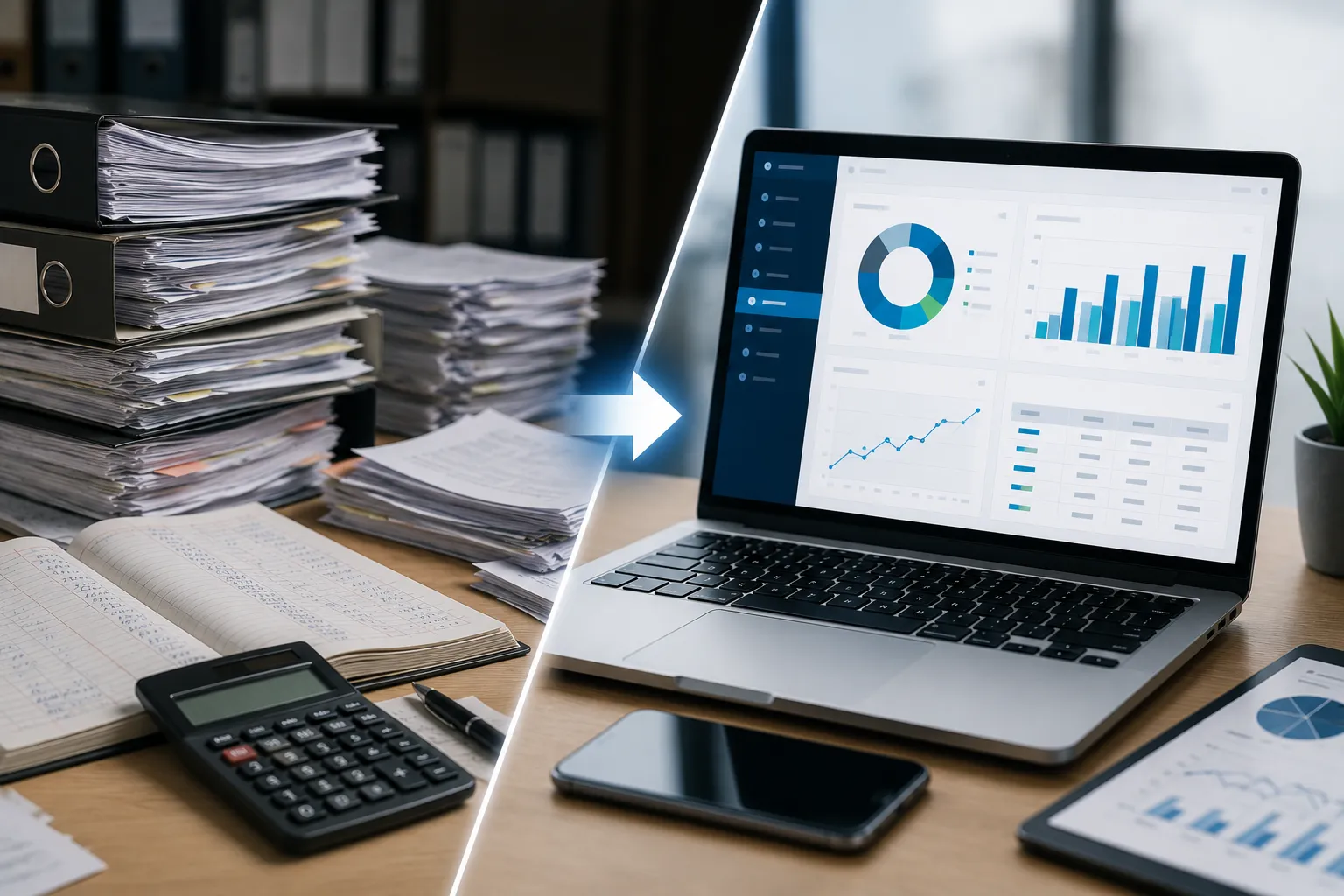
India runs on its MSMEs. They power manufacturing, employ millions, and form the backbone of the country's supply chains. Yet a large share of these businesses still manage their finances across a patchwork of spreadsheets, standalone billing tools, and a separate compliance app bolted on at the end of every month. In 2026, that approach is quietly costing them money, time, and peace of mind.
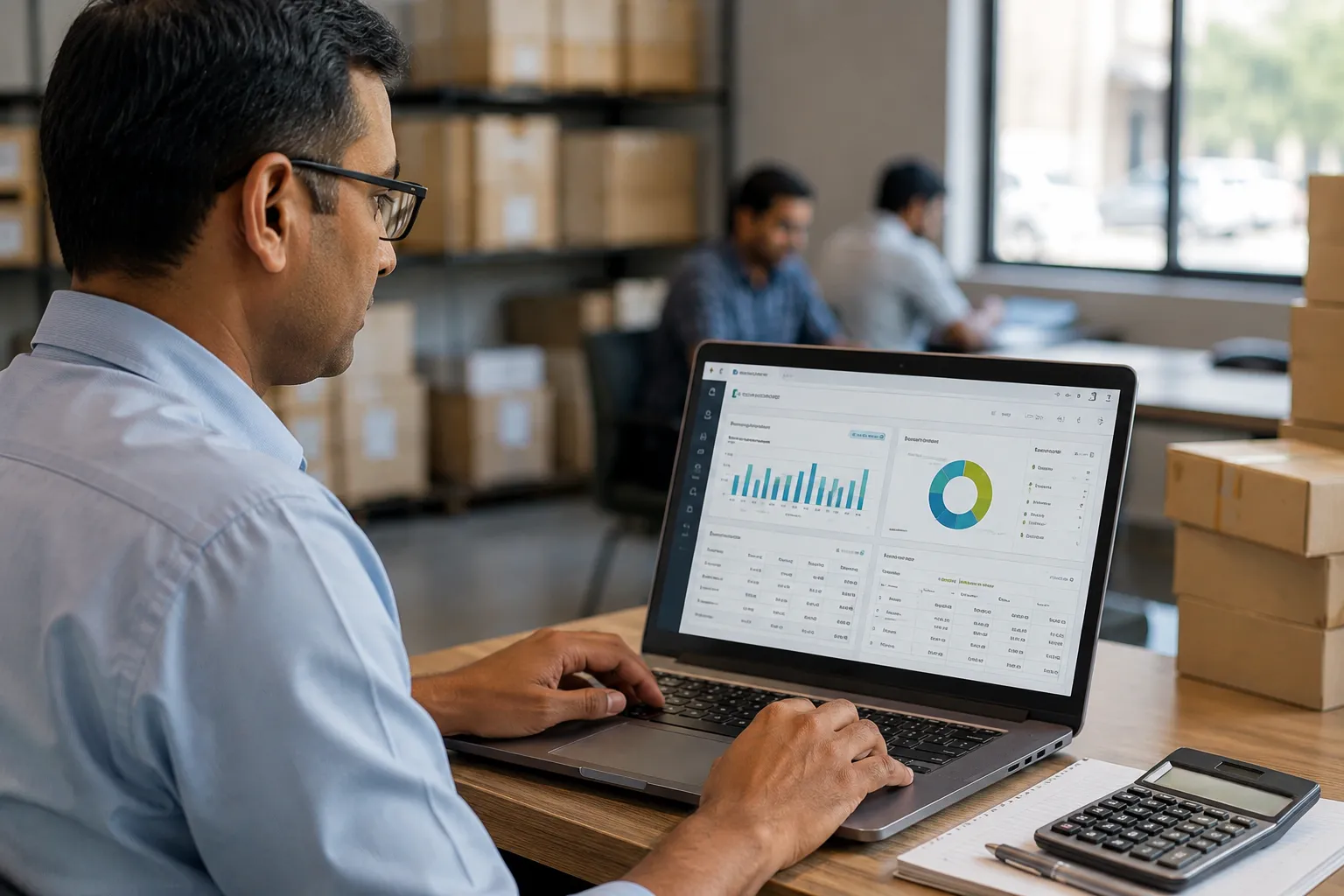
This is where integrated accounting software for Indian MSMEs changes the equation. Instead of stitching together disconnected tools, an integrated system keeps accounting, invoicing, reporting, and tax data in one connected place. The result is fewer errors, faster compliance, and a real-time view of the numbers that actually matter. In this guide we break down what integrated accounting software is, why 2026 makes it close to non-negotiable for Indian businesses, the features and benefits that matter most, and how to choose the right platform for a growing MSME.
What Is Integrated Accounting Software?
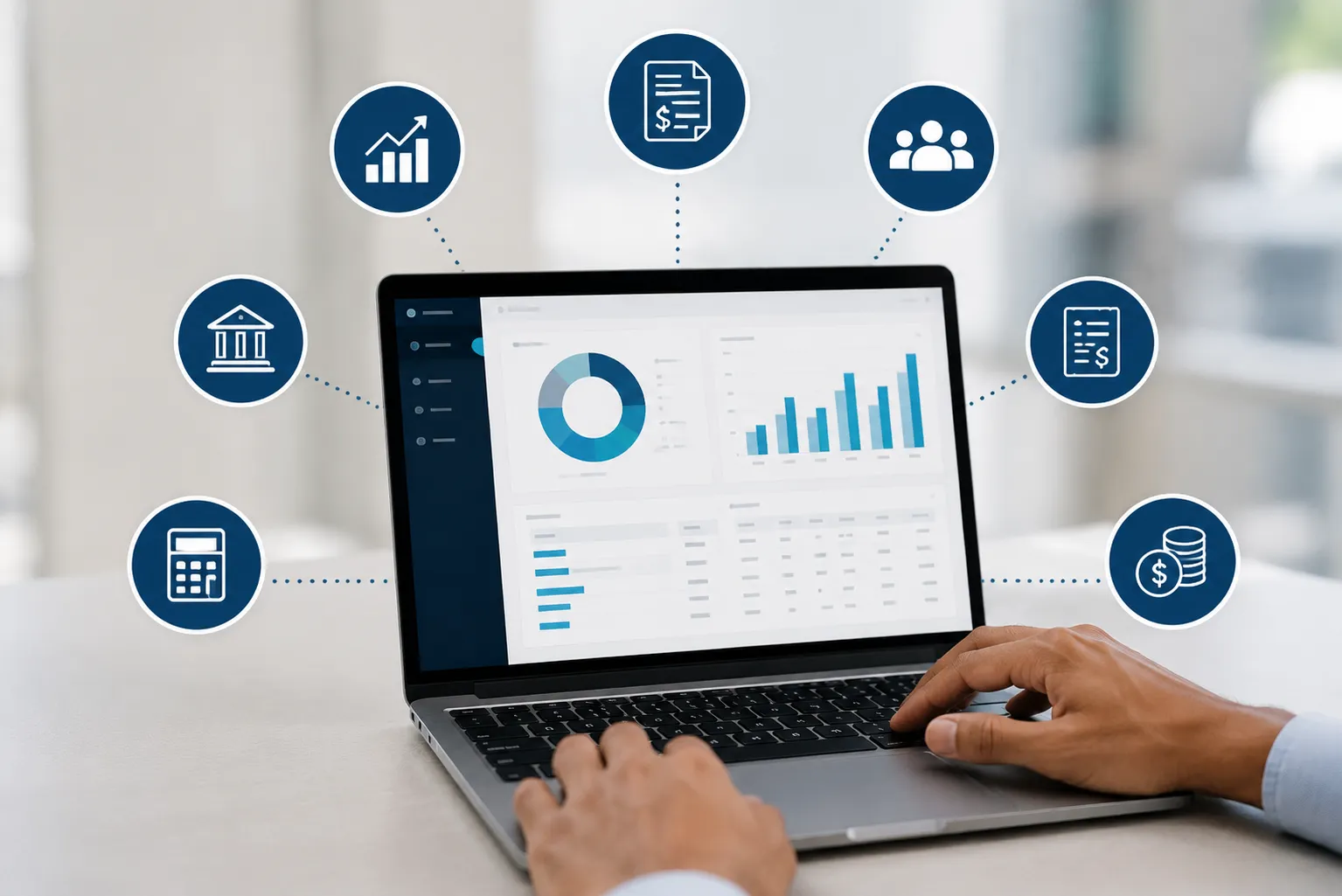
Integrated accounting software is a single platform that combines bookkeeping, invoicing, GST and tax workflows, inventory, banking, and financial reporting so that data flows automatically between every function. When you raise an invoice, the sale, the receivable, the tax liability, and the ledger entry update together, without anyone re-keying the same figure four times.
Compare that with a fragmented setup, where billing lives in one tool, the books in a spreadsheet, and GST accounting software sits somewhere else entirely. Every handoff between those tools is a chance for a number to be typed wrong, missed, or recorded late. An integrated accounting platform removes those gaps by making one record the single source of truth for the whole business.
Integrated vs Fragmented: The Core Difference
The contrast becomes obvious when you put the two side by side.
| What it affects | Fragmented tools | Integrated accounting software |
|---|---|---|
| Data entry | Same figures re-entered across tools | Entered once, flows everywhere |
| GST & compliance | Manual export, reconcile, then file | Returns and e-invoice data built from live books |
| Cash flow view | Pieced together at month end | Real-time across receivables and payables |
| Errors & reconciliation | Frequent mismatches to chase | Fewer breaks, faster reconciliation |
| Scaling up | Breaks as volume and branches grow | Handles more users, units, and locations |
| Audit readiness | Records scattered and hard to trace | Connected trail from invoice to ledger |
The 2026 Context: Why Spreadsheets and Standalone Tools No Longer Cut It
Three forces have come together to make integrated finance systems a practical necessity for Indian MSMEs this year.
1. Tighter GST and E-Invoicing Obligations
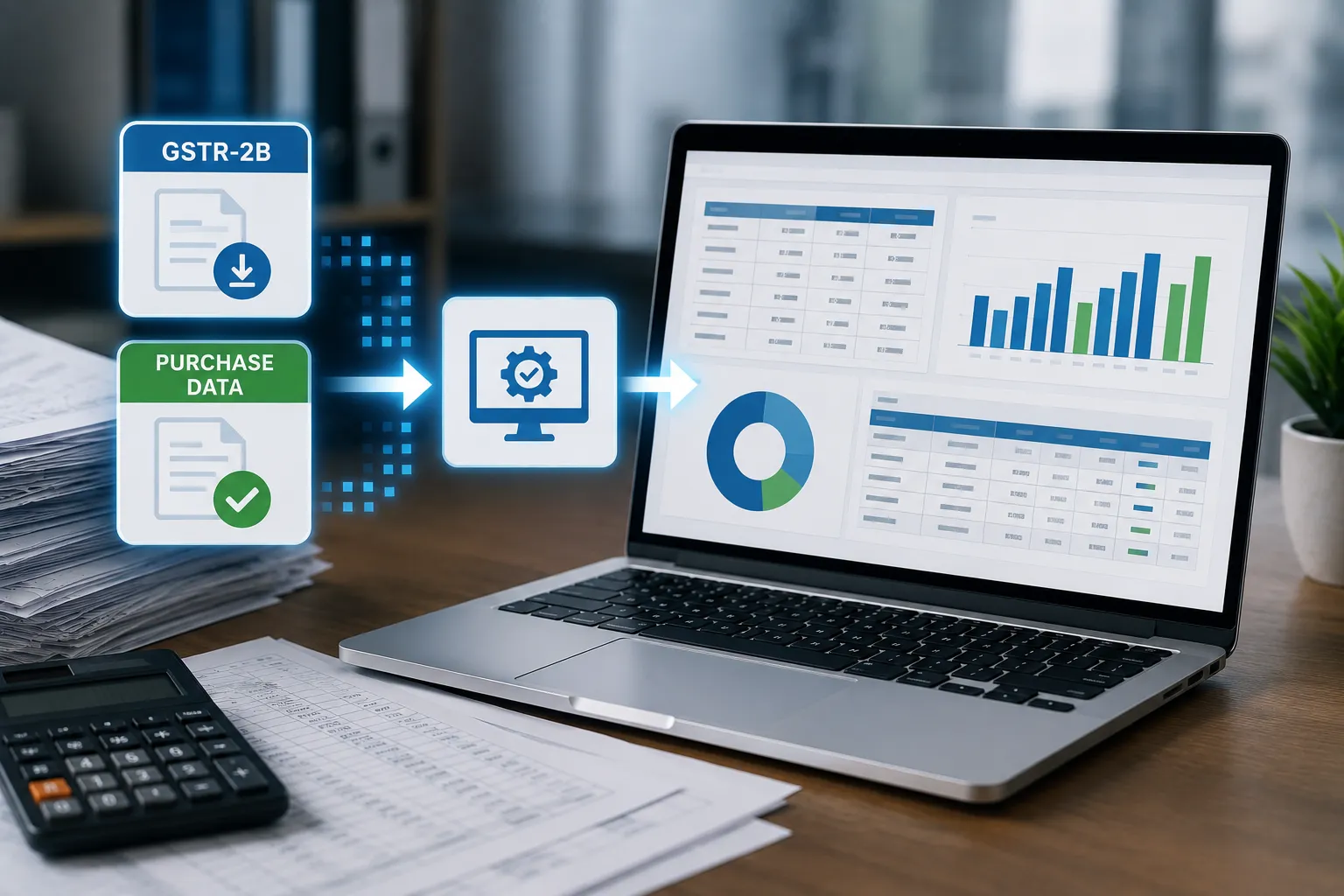
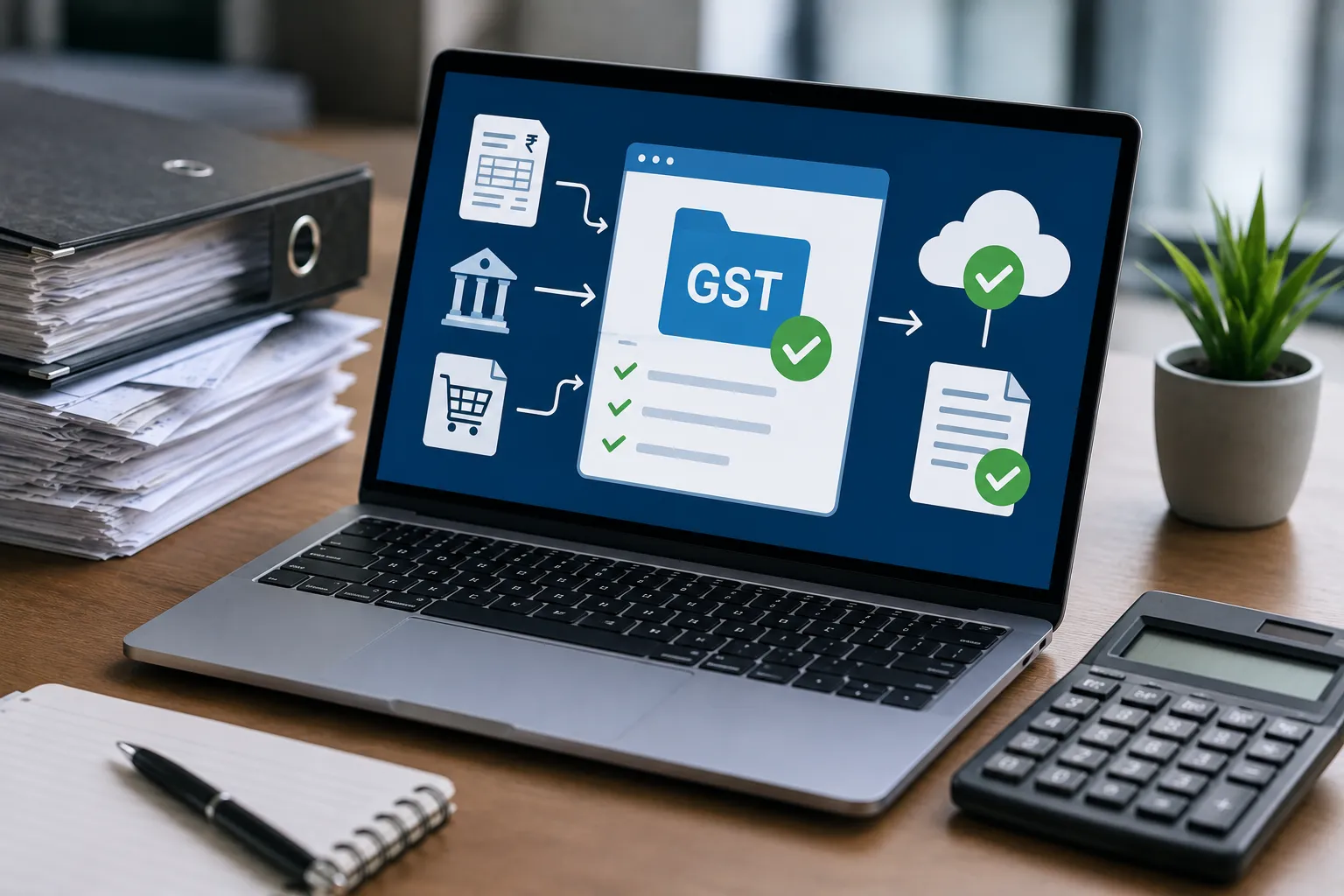
India's e-invoicing net has widened steadily. The mandatory turnover threshold has been lowered in stages over the years, from very large enterprises down toward smaller ones, which means more MSMEs fall into scope with each revision. When e-invoice generation, GST returns, and your books are disconnected, every filing cycle becomes a scramble. With GST accounting software built into the same platform as your ledgers, invoice data, tax computation, and return-ready summaries stay in sync by default.
2. The Shift to Cloud and Real-Time Finance
Founders and finance teams expect to check numbers from a phone, share access with their accountant instantly, and see today's position rather than last month's. Cloud accounting software makes that normal. Desktop-only, single-machine tools simply cannot offer the same visibility, backups, or multi-user access that distributed teams now rely on.
3. Rising Data Volumes and Audit Scrutiny
As an MSME grows, so does the volume of transactions, vendors, and GSTINs it has to track. Manual methods that worked at fifty invoices a month buckle at five hundred. At the same time, regulators and lenders expect cleaner, traceable records. An integrated system absorbs that growth instead of cracking under it.
Core Accounting Software Features Indian MSMEs Should Expect
Not every platform labelled "accounting" is built for the realities of an Indian MSME. When you evaluate accounting software features, these are the capabilities that genuinely move the needle.
| Feature | Why it matters for an MSME |
|---|---|
| Automated bookkeeping | Sales, purchases, and journal entries post automatically, cutting manual data entry and errors. |
| GST-ready invoicing | Tax-correct invoices and return-ready data, with GST filing and e-invoicing available as add-on modules. |
| Bank reconciliation | Match bank statements to books quickly so cash position is always accurate. |
| Financial reporting | P&L, balance sheet, and cash flow on demand, ready for owners, lenders, and investors. |
| Receivables & payables | Track who owes you and what you owe, with ageing views to protect cash flow. |
| Inventory & manufacturing | Stock and production tracking for makers and traders, available as an add-on for manufacturing MSMEs. |
| Audit trail | A tamper-evident edit log, now a legal expectation for companies maintaining digital books in India. |
| Multi-user, role-based access | Owner, accountant, and staff work in the same data with the right permissions. |
A note on accuracy: a strong core platform covers bookkeeping, invoicing, reconciliation, and reporting out of the box, while specialised needs like GST filing, e-invoicing, and manufacturing are typically offered as paid add-ons. Always confirm what is included in your plan versus what is an add-on before you commit.
Key Benefits of an Integrated Accounting Platform for MSMEs
Choosing an integrated accounting platform is not about chasing features for their own sake. It is about the outcomes those features unlock.
One Source of Truth
When every team works from the same connected data, there is no debate about which spreadsheet is current. Decisions are made on one set of numbers, not five conflicting copies.
Faster GST and Compliance Workflows
Because the books, invoices, and tax data already live together, GST accounting software inside an integrated platform turns return preparation from a multi-day reconciliation exercise into a review-and-file routine. Less last-minute panic, fewer notices, and a cleaner trail if questions ever come up.
Better Cash Flow Visibility
Cash, not profit on paper, is what keeps an MSME alive. Integrated receivables, payables, and bank data give owners an honest, real-time view of money in and money out, so they can act before a shortfall becomes a crisis.
Scalability for Manufacturers and Growth-Stage Businesses
For manufacturers and fast-growing firms, manufacturing ERP software in India capabilities matter because production, inventory, and finance cannot stay in separate silos. An integrated system lets a workshop in Coimbatore or a distributor in Chennai add branches, users, and volume without ripping out and replacing the whole setup.
Legal and Compliance Importance in India
Beyond convenience, there is a genuine legal dimension that Indian MSMEs cannot ignore.
- Maintaining proper books of account. Indian businesses are expected to keep accurate, accessible financial records under income tax and company law. Integrated software makes those records consistent and easy to produce.
- Audit-trail obligations. Companies maintaining their accounts in software are now expected to use a tool with a working audit trail, or edit log, that records changes to the books. Integrated platforms are built with this in mind.
- GST and e-invoicing readiness. As thresholds tighten, return-ready and e-invoice-ready data stops being optional. Keeping it inside the books reduces filing risk.
- Formalisation and Udyam-registered MSMEs. Once a business registers under Udyam and starts accessing MSME benefits, lenders and government schemes expect clean, verifiable financials. Disorganised books can hold up loans, subsidies, and tenders.
In short, registering and formalising an MSME is only half the job. The other half is keeping books that stand up to a lender's, an auditor's, or a tax officer's review, and that is exactly where integrated accounting earns its place.
Practical Examples: How It Plays Out
A Manufacturing MSME
A small auto-components maker tracks raw material, work in progress, and finished goods alongside its ledgers. Because inventory and accounting are connected, the cost of every batch flows into the books automatically, and the owner sees true margins per order rather than a rough monthly guess.
A Distributor or Trader
A regional distributor handling hundreds of GST invoices a month uses integrated invoicing so that each sale updates receivables, stock, and tax data at once. Month-end filing becomes a review rather than a rebuild, and overdue payments are flagged early.
A Services Startup
A growth-stage services firm shares live access with its external accountant. Instead of emailing spreadsheets back and forth, both sides work in the same cloud books, and investor-ready reports are a click away when due diligence begins.
Business Advantages: From Compliance to Growth
- Lower cost of finance operations. Less manual re-entry and reconciliation means fewer hours lost and fewer expensive errors.
- Faster, better decisions. Real-time dashboards turn accounting from a rear-view mirror into a steering tool.
- Investor and lender readiness. Clean, traceable financials shorten due diligence and build trust with anyone funding the business.
- Room to scale. The system grows with the business instead of becoming the bottleneck that forces a painful migration later.
A Global Perspective: Why This Matters Beyond India
The case for integration is not unique to India. MSMEs and growth-stage companies worldwide are moving away from disconnected tools toward cloud accounting software for the same reasons: real-time visibility, remote collaboration, and audit-ready records. For Indian businesses that sell across borders or plan to, integrated books make multi-location operations, multi-currency transactions, and country-specific compliance far easier to manage from one place.
Wherever a business is registered, the underlying principle holds. Formalised, registered companies are expected to keep proper financial records, and an integrated system is the most reliable way to meet that expectation while staying ready to grow into new markets.
How to Choose the Right Integrated Accounting Software in 2026
Use this short checklist when you evaluate options.
- India-first compliance. Confirm GST, e-invoicing, and audit-trail support, and check what is core versus a paid add-on.
- Cloud and multi-user by design. Anywhere access, secure backups, and role-based permissions for your team and accountant.
- Genuine integration. Invoicing, books, banking, inventory, and reporting should share one data layer, not just sit in one menu.
- Vertical fit. Manufacturers should look for inventory and production capabilities; service firms for project and receivables depth.
- Scalability and support. It should handle more volume and locations over time, with responsive help when you need it.
Conclusion
For Indian MSMEs, 2026 is the year fragmented finance stops being a manageable inconvenience and starts being a real risk. Tighter GST rules, the move to cloud, and growing audit scrutiny all reward businesses that keep their numbers connected and punish those that do not. Integrated accounting software for Indian MSMEs is the practical answer: one platform where bookkeeping, compliance, cash flow, and reporting work as a single system rather than a fragile chain of separate tools.
The businesses that adopt it now will spend less time fixing mistakes and more time growing. If you are weighing your options, start by mapping where your current tools break, then look for a platform that closes those gaps end to end. To see how a modern, cloud-native MSME Finance ERP brings these pieces together, explore the accounting software features built for Indian businesses.
Frequently Asked Questions
What is integrated accounting software?
It is a single platform that combines bookkeeping, invoicing, GST and tax workflows, banking, inventory, and reporting so data flows automatically between them. You enter information once and it updates everywhere, instead of re-keying the same figures across separate tools.
Why do Indian MSMEs specifically need it in 2026?
Tighter GST and e-invoicing obligations, the shift to cloud and remote work, and growing audit scrutiny all favour connected records. An integrated system keeps compliance data return-ready and gives owners a real-time view of cash flow, which fragmented tools cannot reliably do.
Does integrated accounting software handle GST filing and e-invoicing?
A good platform produces GST-correct, return-ready data inside the books. The actual GST filing and e-invoicing capabilities are often delivered as paid add-on modules, so confirm what is included in your plan and what is an add-on before you decide.
Is it suitable for manufacturing MSMEs?
Yes. Manufacturers benefit most from integration because inventory, production, and accounting stay connected. Look for platforms that offer inventory and manufacturing capabilities, which may be available as add-on modules, so batch costs and true margins flow straight into the books.
Is cloud-based accounting software safe for a small business?
Reputable cloud accounting software offers secure, backed-up storage, controlled multi-user access, and an audit trail, which is usually safer than a single desktop machine that can fail or be lost. Always check the provider's security and data-handling practices.
How do I choose the right platform?
Prioritise India-first compliance, true cloud and multi-user access, genuine integration across invoicing, books, banking and reporting, a fit for your industry, and room to scale. Trial the shortlist with your own data before committing.

























Sign in to leave a comment.