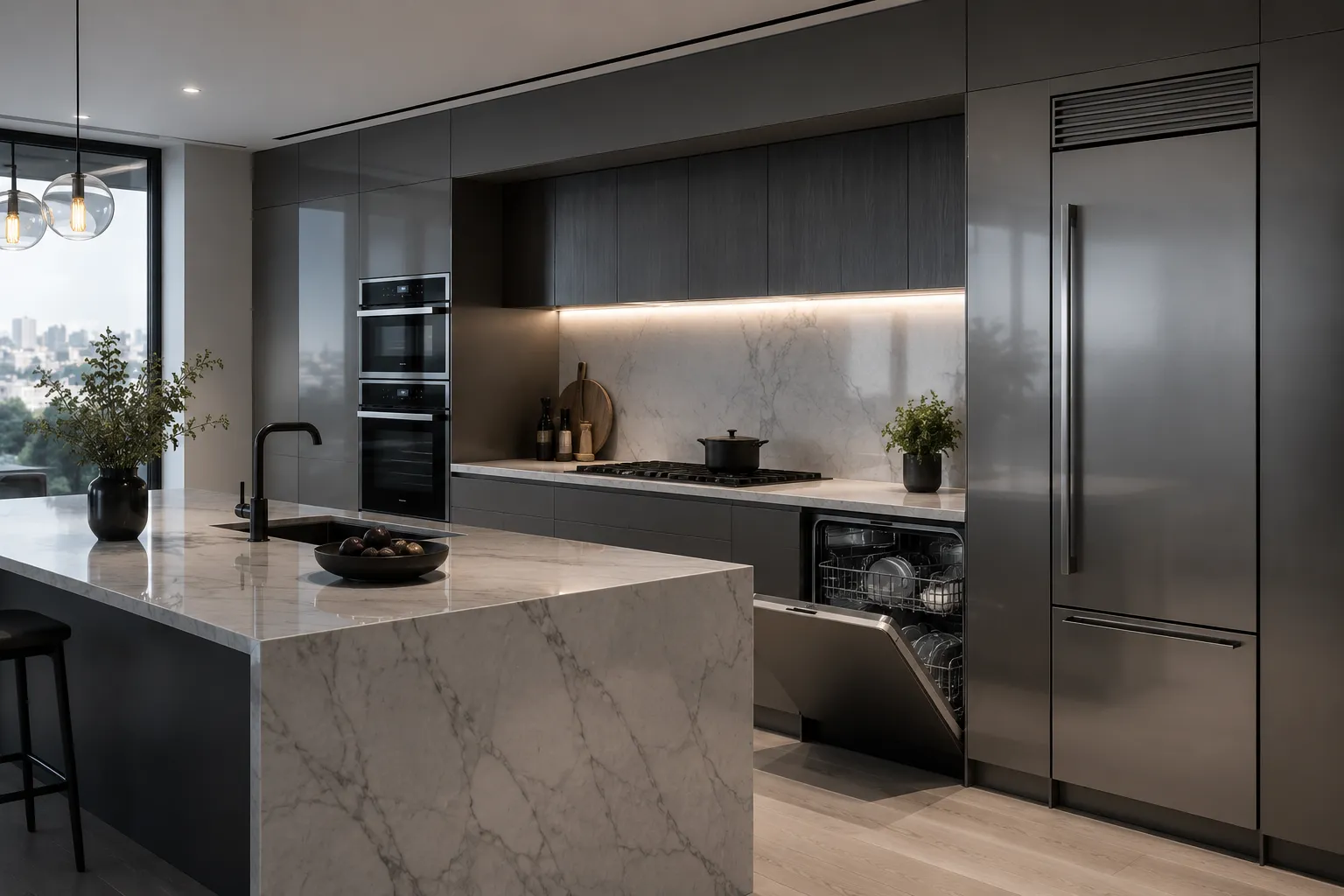

If you walk into a newly renovated kitchen, you’ll probably notice a big trend: appliances are less visible. Refrigerators, dishwashers, and freezers often hide behind cabinet panels, which gives the kitchen a smooth, seamless look. This shift isn’t just about style. Many homeowners pick integrated appliances because they look modern and are practical for daily use.
The kitchen is more than a place to cook. It’s where families gather, kids do homework, and guests chat over coffee. As kitchens become the heart of the home, people want them to feel organized, open, and comfortable. Integrated appliances fit into the cabinets but work just as well as regular ones. Popular options include integrated refrigerators, panel-ready freezers, and built-in dishwashers, which help keep the kitchen tidy and convenient. If you’re planning a renovation or building a new home, understanding the benefits of integrated appliances can help you make a better design choice.
What Are Integrated Appliances?
Integrated appliances are designed to fit inside your kitchen cabinets instead of standing out. Unlike freestanding models, integrated appliances are hidden behind cabinet panels that match your kitchen. This creates a smooth, unified look where appliances blend in. Examples include refrigerators, freezers, dishwashers, and wine coolers. People sometimes confuse built-in and integrated appliances, but there’s a difference. Built-in appliances are installed in cabinets but usually have a visible front, while integrated appliances blend in almost completely for a seamless finish.
Because integrated appliances require careful planning, they are usually added during a new kitchen build or a full renovation. Designing cabinets and appliances together from the start makes it easier to create a kitchen that looks polished and works well every day.
Create a Flawless and Modern Kitchen Design
A well-designed kitchen feels balanced, not crowded. Integrated appliances help by letting the cabinets, countertops, and storage stand out instead of large appliance doors. When a fridge or dishwasher is hidden behind matching panels, the kitchen looks more organized and thoughtfully arranged.
This style works especially well in open-plan homes where the kitchen is visible from the dining or living room. Instead of breaking up the look with stainless steel or different finishes, integrated appliances keep everything consistent and natural. As a result, the space feels calmer and less cluttered.
Another benefit is design flexibility. Whether you prefer a minimalist kitchen with handleless cabinets, a classic shaker style, or warm wood finishes, integrated appliances let your cabinets set the style. You don’t have to choose appliances to match your cabinets. Instead, you can design the kitchen around your favorite look without worrying about visible appliance finishes. This is one reason integrated kitchens are so popular in modern homes and high-end renovations.
Expand Space Without Losing Style
Integrated appliances can make a kitchen feel larger, even if the room size stays the same. When appliance fronts match the cabinets, your eyes follow smooth lines across the kitchen, making the space feel more open. This is especially helpful in apartments, condos, and smaller homes where every bit of space matters.
Planning is also easier. Designers can place appliances next to storage areas to use space more efficiently and keep often-used items close. Instead of fitting standard appliances into an old kitchen, the cabinets are built around the appliances from the start. This creates a cleaner and more practical setup.
A tidy kitchen layout doesn’t mean you lose storage space. Many integrated fridges, freezers, and dishwashers hold as much as freestanding ones. The main difference is appearance. By hiding large appliance fronts, the kitchen feels less crowded and more open, without losing any function.
Improve Kitchen Functionality and Everyday Workflow
A great kitchen should make daily tasks easier. Integrated appliances help you plan the layout based on how you use the space. During a renovation, designers often place the fridge, sink, dishwasher, and stove close together to reduce extra steps. This makes cooking and cleaning up faster and simpler.
Integrated dishwashers are a good example. When they’re placed next to the sink and hidden in the cabinets, it’s easy to load dishes and keep the kitchen looking neat. Fridges and freezers can also be placed where they’re most useful for cooking, not just where a freestanding appliance would fit. The benefit is consistency. Cabinet doors, handles, and appliance panels line up neatly, reducing gaps that collect dust and making the kitchen easier to clean. With fewer visual breaks, homeowners often find the space feels calmer, especially during busy mornings or when entertaining guests. Careful planning and a smart layout make daily life easier and help the kitchen work as well as it looks.
Enhance Contemporary Interior Design Trends
Kitchen design trends have changed a lot in the past ten years. Instead of making appliances stand out, many people now want a cleaner, more unified look where the cabinets, lighting, and materials set the style. Integrated appliances fit this trend because they keep the design consistent and don’t draw attention to themselves. This approach works across many kitchen styles. In minimalist kitchens, hidden appliances help keep cabinet lines uninterrupted. In Scandinavian-inspired spaces, they go well with light timber finishes and simple layouts. Even traditional shaker kitchens benefit from integrated appliances because they keep the cabinetry’s character while adding modern convenience.
Another advantage is that design trends change more slowly when you focus on timeless materials instead of appliance finishes. Stainless steel, black, or colored appliances can look outdated after a while, but cabinet panels are easier to update as styles change. If you plan to stay in your home for years, this helps your kitchen look fresh and put together with fewer big changes—just good looks. Integrated appliances add value by making the kitchen feel custom-built, not just put together from separate pieces.
While integrated appliances and custom cabinets can cost more at first, many homeowners feel the results are worth it for the polished look and better use of space. A well-planned kitchen usually stays functional for years, so you won’t need to change the design or layout often.
When you sell your home, buyers are often drawn to kitchens that look organized, modern, and well-designed. While integrated appliances alone may not determine your home’s value, they add to the overall sense of quality when combined with strong cabinets, smart storage, and good finishes.
You’ll get the best value by planning carefully, not just by choosing the most expensive appliances. Picking reliable models that fit your family’s needs usually brings more long-term satisfaction than just following the latest trends.
Are Integrated Appliances the Right Choice for Every Home?
Integrated appliances have many benefits, but they aren’t the best choice for everyone. The right option depends on your budget, lifestyle, and renovation plans.
If you’re doing a full kitchen renovation or building a new home, it’s easier to include integrated appliances because you can design the cabinets around them from the start. This helps everything fit well and keeps the kitchen looking consistent. If you’re updating a few appliances, switching from freestanding to integrated models can be trickier. You might need to change your cabinets, which can add to the cost. Also, think about future repairs or replacements. Picking standard integrated sizes from trusted brands can make maintenance and upgrades easier.
Before you decide, think about how you use your kitchen every day. The best design isn’t always the most expensive one. It’s the one that looks good, works well, and will last in your home.
Expert Tips for Choosing Integrated Appliances
Choosing integrated appliances starts with careful planning. Before picking specific models, finish your kitchen layout and cabinet design. Double-check appliance sizes before the cabinets are built, since even small differences can affect how everything fits.
Focus on the appliances you use most often. Refrigerators, dishwashers, and freezers usually have the biggest impact on both function and appearance, so they’re good starting points for an integrated kitchen.
It’s also important to think beyond looks. Check door-opening clearances, ventilation needs, energy-efficiency ratings, and warranty support before buying. Work with an experienced kitchen designer or appliance specialist who can help coordinate cabinetry, plumbing, and electrical needs early in the project.
Planning these details helps avoid installation problems and creates a kitchen that works as well as it looks for years to come. Integrated appliances have become a popular choice because they offer more than a modern appearance. They help create kitchens that feel organized, maximize available space, and support a layout designed for everyday living. When planned as part of a complete kitchen design, they can improve both functionality and visual appeal while giving the room a polished, custom-built finish.
Although they take more planning than freestanding appliances, the long-term benefits often outweigh the extra effort. By understanding your space, budget, and daily needs, you can decide if integrated appliances are the right investment for your next kitchen renovation and create a space that stays practical and stylish for years.






















Sign in to leave a comment.