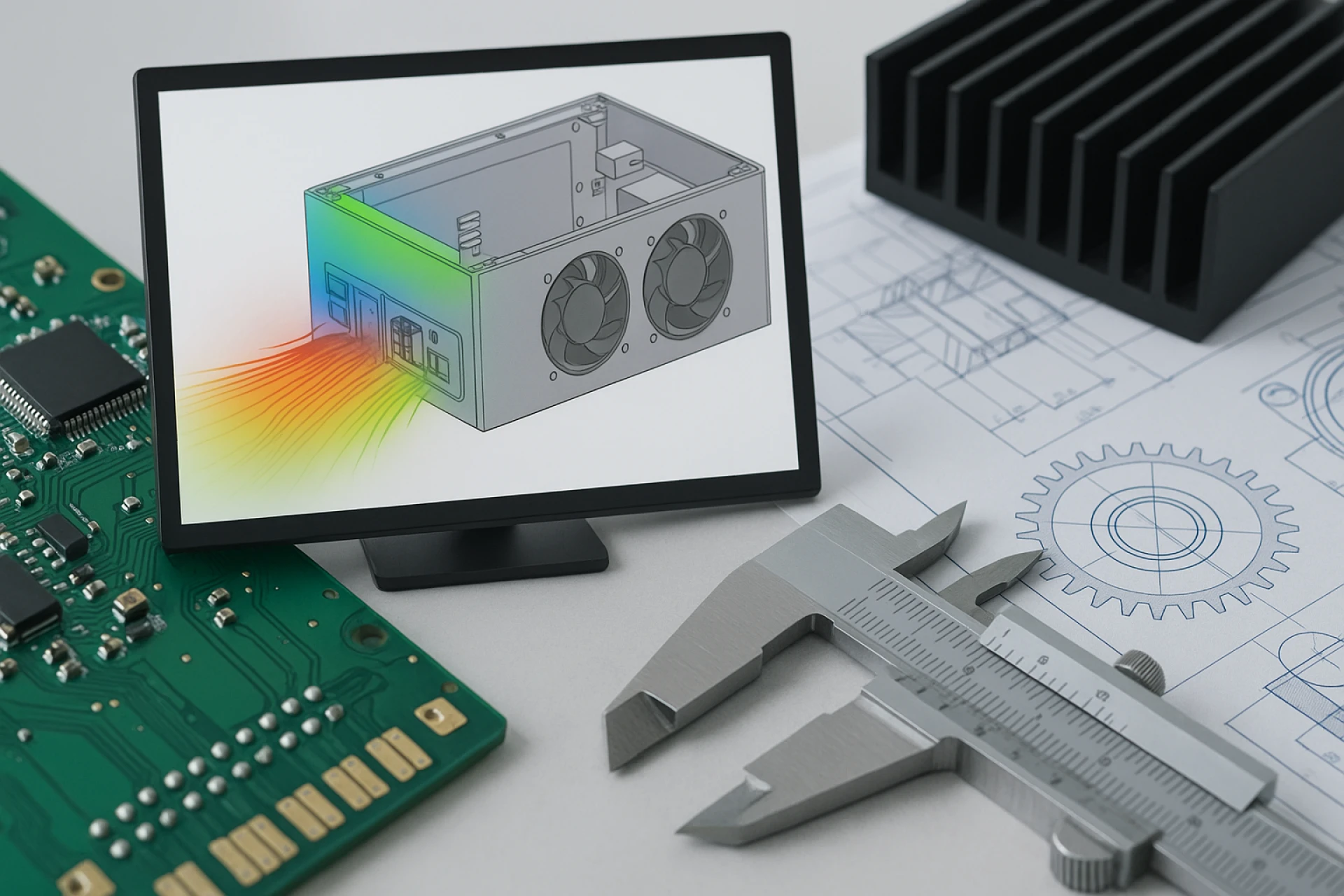

It’s Not Just About the Board
Ask any hardware engineer what makes a great product, and they’ll likely point to a perfectly optimized PCB layout. But that’s only half the story. The Mechanical & Thermal Design of your system plays just as vital a role in overall performance, reliability, and manufacturability.
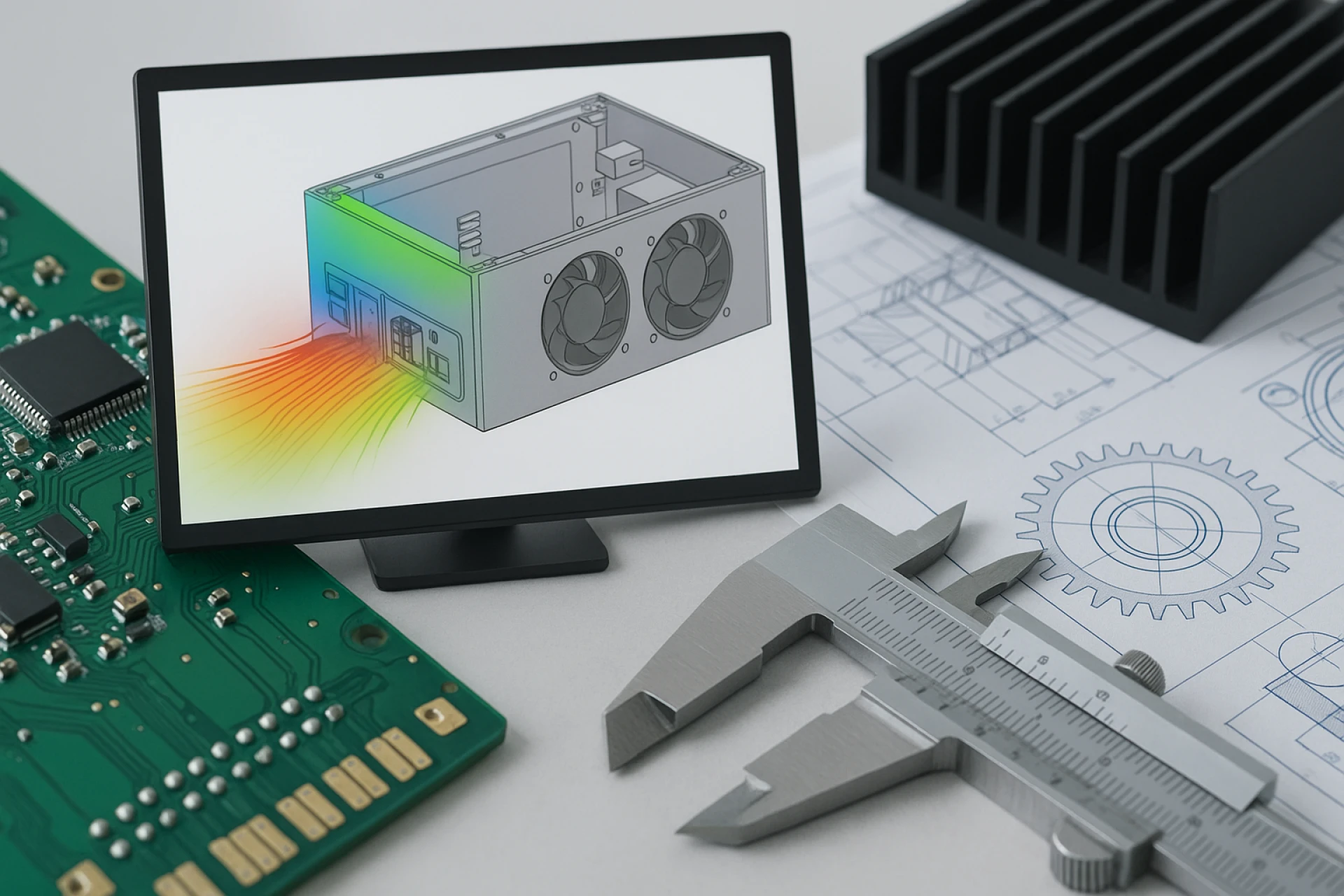
You can have the most advanced board layout, but without a solid enclosure, effective cooling, or structural integrity, your product could be dead on arrival—literally. Let’s explore why these two disciplines should always go hand in hand.
Electrical + Mechanical = Complete Design
A successful product marries the electrical design with its mechanical environment. They are two sides of the same coin.
Why it matters:
- Misalignment between PCB and enclosure can lead to interference or damaged components
- Connectors might not line up if not co-designed
- Cooling might be inadequate if thermal loads aren’t considered early
This is where Mechanical & Thermal Design steps in—not just to “wrap” the electronics but to ensure everything works together smoothly.
Thermal Considerations Start on Day One
Overheating isn’t just a nuisance—it’s a silent killer. That’s why thermal analysis needs to be factored in right from the design phase.
How good thermal design helps:
- Prevents hotspots
- Ensures even airflow and heat dissipation
- Extends component lifespan
With proper Mechanical & Thermal Design, you can simulate airflow, identify risk areas, and create a passive or active cooling strategy tailored to your layout.
The Role of Enclosure Design
Think of the enclosure as more than a box—it’s the frontline defense.
Benefits of thoughtful enclosure design:
- Structural support during drops or vibrations
- Protection against dust, moisture, and tampering
- Aesthetic appeal and brand alignment
The enclosure also impacts compliance, such as EMI shielding and thermal performance. That’s why enclosure modeling is an essential part of Mechanical & Thermal Design.
Integrated Workflows Are Game-Changers
When PCB layout teams and mechanical engineers collaborate early, the results are transformative.
What this collaboration enables:
- Real-time checks for part clearances
- Efficient routing of cables and airflow channels
- Optimized board shapes and mounting positions
Using integrated tools and IDF data exchange, designers can avoid late-stage redesigns and ensure better synergy. That’s the real power of tight Mechanical & Thermal Design workflows.
Materials & Mounting Matter
Material selection and mounting strategy are two often-overlooked aspects.
What to consider:
- Thermal conductivity of metals or plastics
- Mounting vibration tolerance
- Surface treatments for heat or corrosion resistance
Whether it’s pole-mounting for outdoor equipment or compact plastic housing for consumer devices, Mechanical & Thermal Design ensures the product thrives in its real-world environment.
Don’t Wait Until the End to Think Mechanical
Leaving enclosure or thermal planning until the end can spell disaster.
Last-minute mechanical fixes can lead to:
- Costly design revisions
- Assembly issues
- Field failures
A balanced focus from day one, with Mechanical & Thermal Design as a parallel stream to electrical layout, is how robust products are born.
Final Thoughts
When mechanical and electrical teams work in silos, products suffer. When they work together, innovation accelerates. No matter how advanced your circuit is, its performance will be limited by how well it’s supported mechanically and thermally.
If you want to build smarter, start thinking about your Mechanical & Thermal Design as a core part of the design process—not an afterthought.
FAQs
Q1: When should mechanical design start in a project timeline?
A: Ideally, mechanical and electrical design should start in parallel. This ensures better coordination and avoids rework.
Q2: What’s included in a typical mechanical & thermal design process?
A: It often includes enclosure modeling, PCB-integration, thermal simulation (CFD), structural analysis (FEA), and material selection.
Q3: Do I need thermal analysis for small devices too?
A: Yes, even compact electronics can overheat. Efficient Mechanical & Thermal Design ensures safe temperatures and long-term reliability.





























Sign in to leave a comment.